The History of Chemical Engineering at Lehigh University
Chemical and Biomolecular Engineering is one of the oldest programs at Lehigh University. It first appeared at Lehigh in the late nineteenth century, when the Department of Chemistry began to offer a degree in Industrial Chemistry (1895-1907). In 1907, Lehigh granted its first Bachelor's degrees in Chemical Engineering.
As the profession progressively distinguished itself from chemistry in the early twentieth century, the Department of Chemistry hired Professors Simmons and Theis as Professors of Chemical and Biomolecular Engineering (1927). These early chemical and biomolecular engineering faculty members typically held baccalaureate degrees in chemical and biomolecular engineering, with doctoral degrees in chemistry. The chemical and biomolecular engineering degree program continued through the depressionand by the Second World War, the graduate program had been initiated, granting mostly masters degrees and a few Ph.Ds. The undergraduate program is accredited by the Engineering Accreditation Commission of the Accreditation Board for Engineering and Technology (ABET) since 1936.
Prompted by suggestions from an industrial review board in the early 1950s, Lehigh University took steps to organize a formal chemical engineering department. In 1951, Professor Harvey Neville - then head of the Department of Chemistry and Chemical and Biomolecular Engineering Degree Program - hired Professors Leonard Wenzel and Alan Foust to form the Department of Chemical and Biomolecular Engineering. Professor Foust served as the first department head.
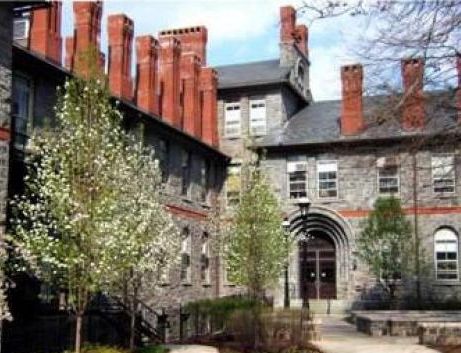
From the time of its official formation in the early 1950's, the department was housed on the lower Asa Packer Campus in the Chandler-Ullmann building. In the photo to the right, you can see the multitude of natural-draft ventilation stacks adorning the original home of the department.
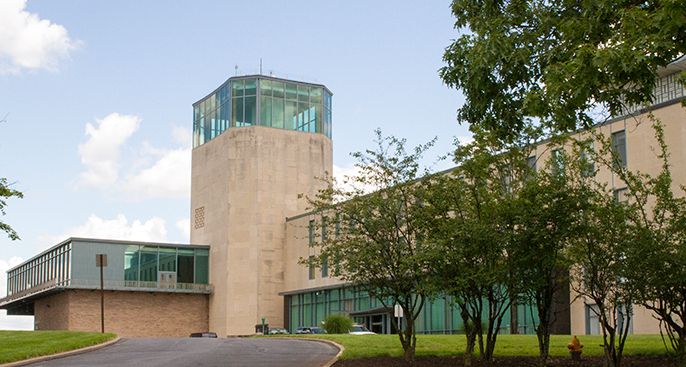
The Martin Dewey Whitaker Laboratory housed the department between 1967 and 1987. In the late 1980's the university acquired Bethlehem Steel's Homer Research Laboratories, and renamed the primary building on the Mountaintop Campus Iacocca Hall (right) in honor of Lee Iacocca '45 who led the campaign to acquire and endow the facility. Iacocca Hall is the department's current residence.
On an annual basis, the department grants approximately 40 bachelor's and 20 graduate degrees , and attracts close to $3.5 million per year in extramural research support.
Continuing its tradition of leadership, the department is bringing the practice of chemical and biomolecular engineering to bear upon some of the most complex and significant issues of our times, including challenges in energy, biotechnology, polymeric materials, "green" chemical processing and catalysis.