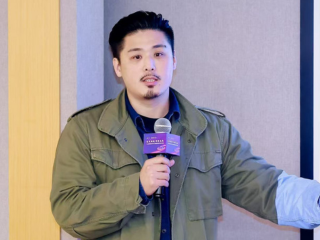
When Yu Xin was researching graduate programs in 2013, information about American universities was harder to come by online than it is today. He learned about Lehigh University the same way many students did at the time: through a friend’s recommendation and his own research, discovering that Lehigh was already known online as a “Hidden Ivy.” He was drawn not just to that reputation, but to Lehigh’s setting — close enough to major cities to be convenient, yet quiet enough to focus fully on his studies — and to a cost of living he considered reasonable for the quality of education.
A well-researched decision, backed by family
Yu Xin’s parents were supportive of his decision to study in the United States, though he says their openness wasn’t a coincidence. The family had been planning for it for years, dating back to Yu Xin’s involvement in international exchange programs during his undergraduate studies.
“My parents were never against studying abroad,” he says. “We’d actually been planning for it for years, ever since I got involved in international exchange activities in college.”
That early exposure to international opportunities, including a Model United Nations program, made the choice to study abroad feel like a natural continuation rather than a leap. Looking back, Yu Xin’s parents have no doubts about whether the experience was worth it — they noticed the difference the moment he returned to China after graduating and working in the United States.
“They could tell it was a completely different experience,” he says. “It’s always better to go out and see the world than not to.”
Yu Xin describes his own application process as relatively smooth, though he doesn’t credit grades alone.
“My grades weren’t the very best, but they were solid enough,” he says. “I think what really helped my application was the international exchange activities I’d done, including a Model United Nations competition. If you’re only looking at academic performance, I think a well-rounded application matters just as much.”
When his offer from Lehigh arrived, Yu Xin didn’t wait to hear from other schools.
“I got my offer from Lehigh and I didn’t even check my other applications,” he says. “I just thought, that’s the one, and I went.”
Adjusting to a new academic culture
Yu Xin entered Lehigh’s Healthcare Systems Engineering program, offered under the Department of Industrial and Systems Engineering, in 2013. Everyday conversation in English was never a problem for him, but sitting in his first academic lectures was a different story.
“Speaking English day-to-day was fine,” he says. “But sitting in a lecture for the first time was still painful. It probably took me about a quarter of a semester to really adjust.”
At the same time, Yu Xin had to learn to manage the practical realities of living independently in a new country: finding an apartment, buying a car, and navigating health insurance and campus resources like Lehigh’s Office of International Students and Scholars.
“There’s no one to walk you through it the way a counselor might back home,” he says. “You have to figure out the process yourself, find the right office, the right person. It really does help you grow. You become a lot more independent.”
Coursework in Yu Xin’s program was demanding across the board, he says, with the exception of a single introductory class.
“Except for one introductory class on the American healthcare system, most of our courses required a strong math foundation, and every professor taught differently,” he says. Yu Xin also wants prospective students to know that concerns about safety in the United States shouldn’t discourage them from considering Lehigh.
“The campus itself is completely welcoming. I never experienced anything like discrimination,” he says. “Off campus, you do have to take responsibility for yourself, the way you would anywhere, but most students live within a couple of blocks of campus, and it’s safe.”
He credits the program’s two directors, Professors Nabaa and Alexandrescu, with going out of their way to support students.
“They were incredibly generous with their time,” he says. “They would invite you into their offices just to check in and see what you needed. The faculty are genuinely invested in helping students succeed.”
Yu Xin also found Lehigh’s mix of domestic, Chinese, and international classmates to be a source of mutual respect and a rich campus life for those willing to participate, from student organizations to the recreational programs and facilities at Taylor Gym.
Solving a real hospital’s problems before graduation
One of the most valuable parts of Yu Xin’s education came through Lehigh’s practical, project-based coursework — an experience he says gave him more than a typical internship could.
“Instead of a professor giving you a problem to solve, you go out to the actual site, interview people, and see the real problems in a hospital’s day-to-day operations,” he says. “Then you use your engineering tools to solve them.”
For his capstone project, Yu Xin’s team partnered with a Lehigh Valley Health Network hospital to address long wait times in its emergency department.
“We started by mapping out the entire patient flow to identify which steps added value and which didn’t,” he says. “Then we built a simulation model, tested about four different scenarios, and gave the hospital a complete plan to solve the problem. It was genuinely interesting work.”
Beyond technical skills, Yu Xin says the program also sharpened the interpersonal skills that define his work as an industrial engineer today.
“A big part of the job is knowing how to have the right conversation, to figure out what people actually need rather than just what they say they want,” he says. “Our professors, and even upperclassmen, walked us through that process on real projects. Industry conferences did the same thing, and they helped me build my networking skills too.”
Those skills paired well with the recruiting opportunities available to Lehigh students. Yu Xin recalls firms including PwC and Deloitte hosting dedicated recruiting dinners on campus, rather than a typical career fair.
“Lehigh is a target school for the Big Four,” he says. “They come to campus every year. If you take the initiative to get involved, the opportunities are there.”
An engineering career spanning healthcare in two countries
After graduating, Yu Xin built a career entirely within healthcare, applying his engineering training across very different systems in two countries.
He began in data analytics for Blue Cross Blue Shield, working on projects related to the Affordable Care Act. About a year later, a connection through a fellow Lehigh alumnus led him to a role in Pennsylvania’s state capital of Harrisburg, supporting operations for a lobbying group that represents hospitals and health networks, while on Optional Practical Training.
He then found a full-time, visa-sponsored position with Presbyterian Healthcare Services in New Mexico, where he started in quality before moving into operations analytics across the health system’s hospitals — work he describes as a natural continuation of the process-optimization and digitalization skills he built at Lehigh.
“I’ve never really strayed from process optimization and digitalization,” he says. “I’ve always used my professional training to help solve real problems in the industry.”
Yu Xin returned to China in early 2022, taking a position managing hospital operations in Shenzhen. He found that China’s public healthcare system operates on a different model than what he’d seen in the United States, and adapting to it required a steep learning curve of its own.
A chance connection eventually led him back to more familiar work. Years earlier, while still a student, Yu Xin had represented Lehigh at a student competition at an IISE conference, where he built a connection with the professor of the Tsinghua team. After Yu Xin reached out during his transition back into engineering, that same connection offered him a new role.
“I told him I was working in a hospital in China and wanted to reconnect,” Yu Xin says. “He offered me a job as a data analyst.”
Yu Xin continues to apply his engineering background today, including ongoing collaboration with a Tsinghua-affiliated team on operations research and simulation work. Reflecting on how a single graduate degree could translate across such different roles and countries, he points to something less tangible than any one class or project.
“The specific subject matter isn’t really the point,” he says. “What Lehigh teaches you is a way of thinking: how you approach a problem you’ve never seen before, find its core, and work out a solution. That framework transfers to any field.”
Advice for prospective students, and a candid view of the alumni network
Yu Xin has stayed in touch with a modest number of fellow Lehigh alumni since graduating, mostly through professional events. He describes Lehigh’s engineering alumni as sharing a particular kind of quiet, hardworking character.
“I think Lehigh engineering alumni share something like an engineering spirit,” he says. “Everyone just quietly does their own work and doesn’t make a big deal out of it. It’s different from our business school alumni, who tend to organize more actively. I’d love to see engineering alumni build something similarly organized someday.”
That same directness shapes how Yu Xin talks to prospective students about Lehigh. He doesn’t recommend the university to just anyone he meets.
“I think Lehigh is best suited to people who are determined and willing to put in the hard work, whether that means industry, academia, or just balancing a busy life with serious study,” he says. “You shouldn’t choose a school for the brand name alone.”
For students preparing to start their own Lehigh journey, Yu Xin’s advice is simple: be ready for a real challenge, but don’t let that scare you away.
“Come in mentally prepared,” he says. “But you’ll end up enjoying it far more than you expect.”
More than a decade after choosing Lehigh, Yu Xin continues to draw on the problem-solving foundation it gave him — across an insurance company, two hospital systems, and two countries — proof, he says, of just how far a Lehigh engineering education can carry a career.
2013年,Yu Xin在研究美国研究生项目时,网络上关于美国大学的信息还远不如今天丰富。他和当时许多学生一样,通过朋友推荐和自己上网搜索了解到理海大学——并发现理海大学在网络上早已被称为“隐藏常春藤”。吸引他的不仅是这一声誉,还有理海大学的地理位置——离大城市足够近,方便出行,又足够安静,能让人心无旁骛地专注学业——以及他认为与教育质量相比十分合理的生活成本。
深思熟虑的选择,积极准备的家庭
Yu Xin的父母对他赴美留学的决定十分支持,但他表示,这并非偶然。事实上,早在他本科阶段参与国际交流项目时,一家人就已经为此做了多年的规划。
“我父母从未反对我出国留学,”他说,“其实我们早就有这个长期规划,从我大学参加国际交流活动那时候就开始了。”
正是这段国际交流经历,加上他参与的模拟联合国项目,让出国留学更像是水到渠成,而非一时冲动的决定。回顾这段经历,Yu Xin的父母对这段经历是否值得毫无疑虑——他们在他从理海大学毕业、并在美国工作后回国时,立刻感受到了变化。
“他们能感觉到这完全是不一样的环境,”他说,“出去见见世面,总比没见过要好。”
Yu Xin形容自己的申请过程相对顺利,但他并不认为这仅仅归功于成绩。
“我的成绩不算最拔尖,但也说得过去,”他说,“我觉得真正帮到我申请的是我参加过的国际交流活动,包括一次模拟联合国比赛。不是只看学习成绩,我觉得综合发展同样重要。”
收到理海大学的录取通知后,Yu Xin没有再等其他学校的消息。
“我收到理海的offer后,甚至都没再去看其他学校的申请结果,”他说,“我当时就想,就是它了,然后就去了。”
适应新的学术环境,用了大约四分之一个学期
Yu Xin进入了理海大学工业与系统工程系下设的医疗系统工程(Healthcare Systems Engineering)项目,于2013年入学。日常英语交流对他来说从来不是问题,但第一次真正坐进课堂,情况却完全不同。
“日常用英语交流没问题,”他说,“但第一次听课的时候真的很痛苦。我大概花了四分之一个学期才真正适应过来。”
与此同时,Yu Xin还要学着独自应对在异国生活的各种现实问题:找房子、买车,还要搞定医疗保险以及像理海大学国际学生与学者办公室(OISS)这样的校园资源。
“不会有人像在国内那样,有辅导员带着你一步步走流程,”他说,“你得自己去搞清楚整个流程,找到对的部门、对的人。这个过程其实很锻炼人,你会变得更独立。”
Yu Xin所在项目的课程普遍难度不小,他说,唯一的例外是一门入门课程。
“除了一门介绍美国医疗体系的入门课以外,我们大部分课程都要求比较扎实的数学基础,而且每位教授的授课风格都完全不同,”他说,“有些课程难度适中,你会很享受这个挑战;难度再往上一点,就会变得很痛苦。”
Yu Xin也希望未来的申请者知道,不必因为对美国治安的担忧而对理海大学望而却步。
“校园本身非常友好,我从未经历过任何歧视,”他说,“出校园以后,你确实需要像在任何地方一样对自己的安全负责,但大部分学生都住在离学校两三个街区以内,其实很安全。”
他也很感激理海大学的教师,尤其是项目的两位主任,在支持学生方面倾注了大量心力。
“Nabaa教授和Alexandrescu教授对我们非常慷慨,愿意花很多时间,”他说,“他们会主动邀请你去办公室,只是想看看你需要什么帮助。老师们是真心希望帮助学生取得成功。”
Yu Xin还表示,理海大学的同学们——无论是美国本土学生、中国留学生还是其他国际学生——都非常互相尊重,对于愿意主动参与的学生来说,从学生社团活动到Taylor Gym的各项体育设施与项目,校园生活也十分丰富。
毕业前就解决了一家真实医院的实际问题
Yu Xin教育经历中最有价值的部分之一,来自理海大学以实践项目为导向的课程设置——他表示,这带给他的收获,甚至超过了一段典型的实习经历。
“不是由教授出题让你去解决,而是你要真正走进现场,去做访谈,去了解医院日常运营中真实存在的问题,”他说,“然后运用你的工程工具去解决这些问题。”
在毕业设计(capstone)项目中,Yu Xin所在团队与Lehigh Valley Health Network旗下一家医院合作,解决其急诊科等待时间过长的问题。
“我们首先梳理了整个patient flow(患者流程),区分出哪些环节创造价值,哪些环节不创造价值,”他说,“然后我们构建了一个仿真模型,测试了大约四种不同的场景,最终为医院提供了一套完整的解决方案。这项工作确实很有意思。”
除了专业技能之外,Yu Xin表示,这个项目也磨练了他作为一名工业工程师至今仍在运用的沟通能力。
“这份工作很大一部分在于懂得如何进行有效的沟通,去弄清楚人们真正需要的是什么,而不只是他们嘴上说想要什么,”他说,“我们的教授,甚至学长学姐,都会在真实项目中带着我们走一遍这个过程。行业会议也是如此,同时也锻炼了我的人脉拓展能力。”
这些能力也与理海大学提供的招聘机会相得益彰。Yu Xin回忆,普华永道(PwC)和德勤(Deloitte)等公司都曾专门到校举办招聘晚宴,而不是常规的招聘会形式。
“理海大学是四大会计师事务所的目标院校,”他说,“他们每年都会来。只要你主动争取,机会其实很多。”
从美国保险公司到医院运营,再到中国医疗系统的工程职业生涯
毕业后,Yu Xin的职业生涯完全围绕医疗行业展开,将自己的工程训练应用于两个国家截然不同的医疗体系中。
他最初在Blue Cross Blue Shield从事数据分析工作,参与了与《平价医疗法案》(Affordable Care Act)相关的项目。大约一年后,通过一位理海校友的引荐,他OPT(专业实习)期间在州府哈里斯堡的非营利性医疗协会获得了一个数据分析师的职位。
随后,他找到了一份全职且提供工作签证的工作,加入了新墨西哥州的Presbyterian Healthcare Services,最初从事质量管理工作,后来转向该医疗系统旗下多家医院的运营数据分析——他形容这是他在理海大学所学流程优化与数字化技能的自然延伸。
“我一直都没有离开过流程优化和数字化这个方向,”他说,“我一直在用自己的专业训练,帮助这个行业解决实际问题。”
2022年初,Yu Xin回到中国,在深圳一家医院负责运营管理工作。他发现,中国的公立医疗体系与他在美国接触到的模式截然不同,适应这套新模式也经历了一段艰难的学习过程。
一次偶然的机会,让他重新回到了自己熟悉的领域。多年前,还在读书期间,Yu Xin曾代表理海大学参加IISE会议上的一场学生竞赛,并结识了当时的清华大学团队及指导教授。当Yu Xin在回国的职业转型期间主动联系对方时,这位旧识为他提供了一个新的职位。
“我告诉他,我当时在中国一家医院工作,想重新联系一下,”Yu Xin说,“他给了我一份分析师的工作。”
如今,Yu Xin仍在运用自己的工程背景,包括与一支清华关联团队持续合作,从事运筹学与仿真相关的研发工作。谈到一个研究生学位为何能在如此不同的岗位和国家之间灵活转换,他提到了一些比任何一门课程或项目都更深层的东西。
“具体学的是什么专业内容其实并不是重点,”他说,“理海大学教给你的是一种思维方式:如何面对一个你从未见过的问题,找到问题的核心,并找到解决办法。这套思维框架可以迁移到任何领域。”
给未来学生的建议,以及对校友网络的坦率看法
毕业后,Yu Xin与不少理海校友保持着联系,主要是通过各类职业活动结识。他认为理海大学工程学院的校友身上有一种共同的、低调务实的气质。
“我觉得理海工程学院的校友身上有一种共同的‘工程师精神’,”他说,“大家都在安安静静地做好自己的事,不太张扬。这和我们商学院校友不太一样,他们更主动地组织活动。我很希望以后工程学院的校友也能建立起类似的组织。”
同样的坦率也体现在Yu Xin对未来申请者的建议上。他不会随便向任何人推荐理海大学。
“我觉得理海大学更适合那些意志坚定、愿意付出努力的人,无论是想进入工业界、走学术道路,还是想在忙碌的生活中兼顾认真的学习,”他说,“不应该仅仅因为学校的名气就做选择。”
对于即将开启自己理海大学求学之旅的学生,Yu Xin的建议很简单:做好迎接真正挑战的心理准备,但不要因此而退缩。
“提前做好心理准备,”他说,“但你最终会发现,自己享受这段经历的程度,远超你的预期。”
距离选择理海大学已过去十余年,Yu Xin依然在运用这段经历为他打下的解决问题的能力——横跨一家保险公司、两家医院系统、两个国家。他说,这正证明了一段理海大学工程教育,究竟能为一个人的职业生涯带来多远的可能。