Dr. Alban Sauret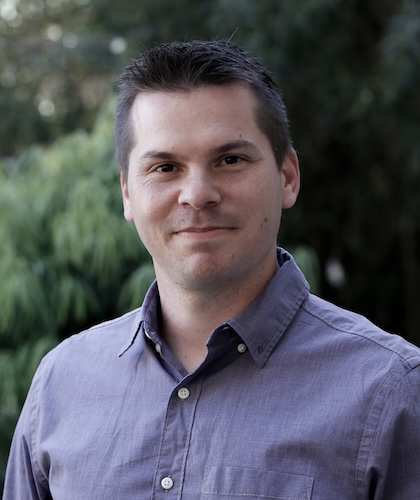
Associate Professor and Clark Faculty Fellow
University of Maryland, College Park
Abstract
From pipes to aquifers to medical devices, stopping the flow is always inconvenient and sometimes dangerous. Clogging can occur in confined flows of particulate suspension that carry either too many particles or particles that are too large or sticky. As a result, clogging is problematic in many engineering systems: printer nozzles, drip irrigation lines, autoinjection devices, pipes, ...
The challenge in studying the clogging of fluid systems by suspensions is that the underlying physics is complex and spans many length scales (from colloids to boulders) and time scales (from less than a second to years). In this talk, we will discuss how and why flowing stuff gets stuck. In particular, we will highlight the role of the different clogging mechanisms at play in various systems and our recent efforts to characterize, model, and prevent - or at least delay - the clogging of fluidic systems. We will also consider different potential methods to limit clogging in some applications. Predicting when clogging is likely to occur and working to prevent it can lead to new design principles to develop clog-resilient systems and improve the reliability of fluidic systems dispensing particulate suspensions.
About Dr. Alban Sauret
Alban Sauret is an Associate Professor and Clark Faculty Fellow in the Department of Mechanical Engineering at the University of Maryland, College Park. After a BS, MS, and PhD in Physics obtained in France and a Postdoctoral Research position at Princeton University, he became a CNRS research scientist in France from 2014 to 2018. He then served on the faculty at UC Santa Barbara from 2018 to 2024 before joining Maryland in 2025. His research sits at the intersection of fluid mechanics, soft matter, interfacial dynamics, and granular physics, with applications ranging from manufacturing to water sustainability and geosciences. His honors include the NSF CAREER Award, the Milton van Dyke Award, a Soft Matter Pioneering Investigator Award. He also and became a Moore Foundation Experimental Physics Investigator in 2025.