
Dr. Daniel Herber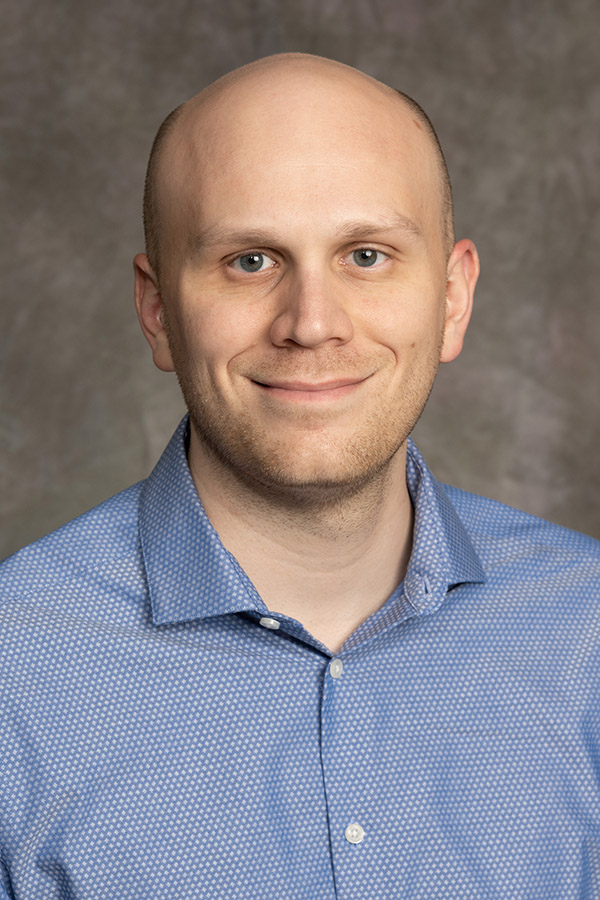
Associate Professor
Colorado State University
https://www.engr.colostate.edu/se/daniel-herber/
Abstract
About Dr. Daniel Herber
Dr. Daniel R. Herber is an Associate Professor in the Department of Systems Engineering at Colorado State University in Fort Collins, CO, USA. His research interests and projects have been in design optimization, model-based systems engineering, system architecture, digital engineering, dynamics and control, and combined physical and control system design (control co-design), frequently collaborating with academia, industry, and government laboratories. His work has involved several application domains, including energy, aerospace, defense, and software systems. He teaches courses in model-based systems engineering, system architecture, controls, and optimization. He is a member of INCOSE, ASME, and AIAA.
He studied at the University of Illinois at Urbana-Champaign, earning his B.S. (2011) in General Engineering and his M.S. (2014) and Ph.D. (2017) in Systems and Entrepreneurial Engineering. He held a postdoctoral position (2018-2019) with the NSF ERC for Power Optimization for Electro-Thermal Systems (POETS).