
Dr. Martin Genet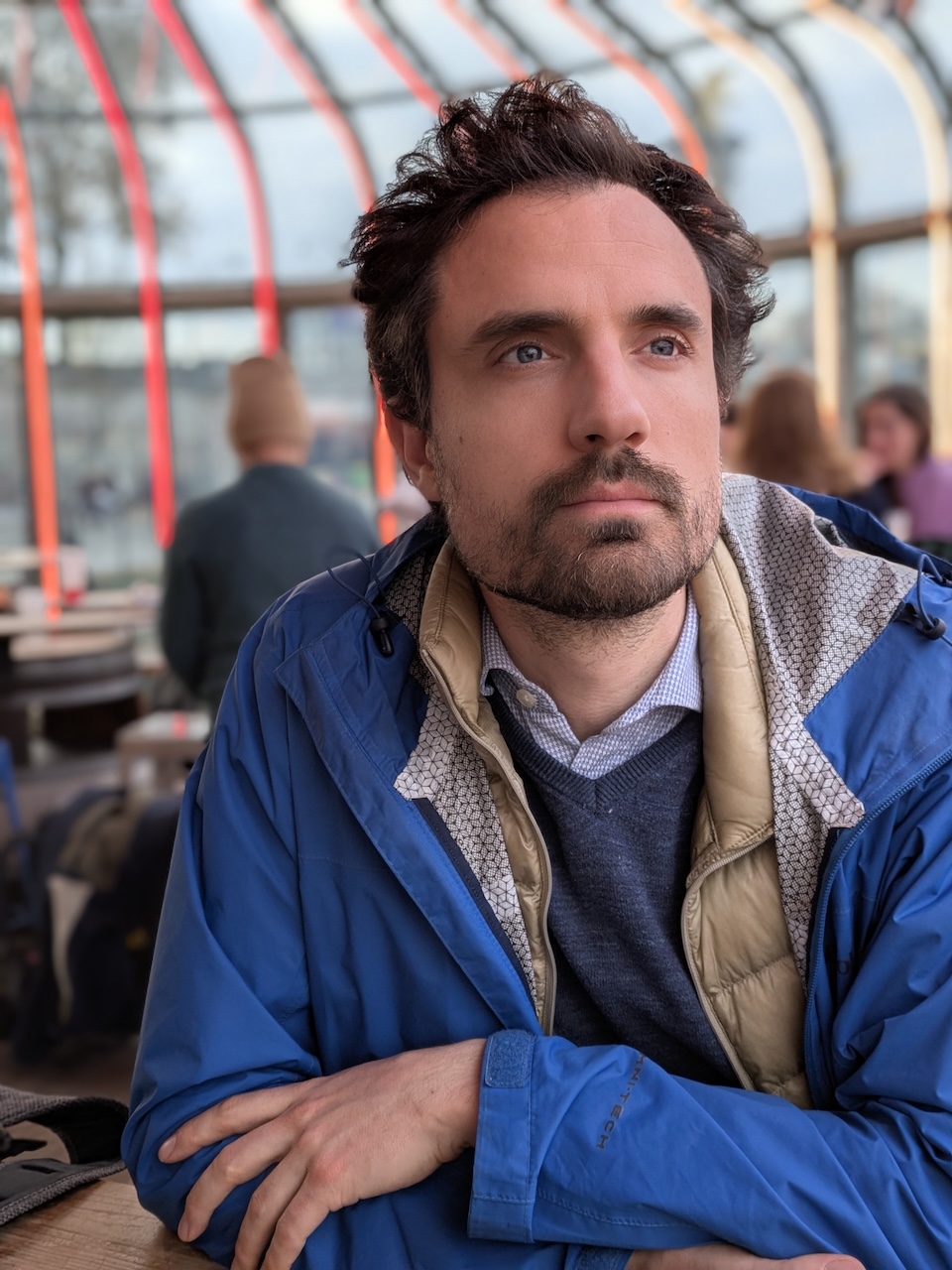
Professor
École Polytechnique
Abstract
This seminar will present our efforts toward a comprehensive framework for creating pulmonary digital twins designed to aid in the diagnosis, prognosis and treatment of various lung pathologies. It will cover the full pipeline from image analysis to reduced-order modeling. First, we will discuss mechanically regularized motion tracking, utilizing the equilibrium gap principle to extract reliable kinematic data from clinical images. Second, we will detail multiscale poromechanical modeling of the lung (from micro-scale parenchyma to organ-scale boundary conditions) and the associated personalization strategies used to create patient-specific models from clinical data (images). Finally, we will explore the intersection of scientific computing and machine learning, specifically the use of Finite Element (FE), Neural Networks (NN) and Tensor Decomposition (notably Proper Generalized Decomposition, PGD) to enable efficient, high-dimensional surrogate modeling.
About Dr. Martin Genet
Martin Genet is a Professor in the Mechanics Department at École Polytechnique (France) and currently a Visiting Professor at Columbia University (USA). After earning his PhD from ENS Cachan in France, he held postdoctoral positions at Lawrence Berkeley National Lab, UCSF, Stanford, and ETH Zurich (as a Marie-Curie Fellow). His research focuses on soft tissue biomechanics and biomedical engineering, specifically integrating multiscale and multiphysics computational modeling with data-driven methods. His work aims to develop personalized digital twins for the in silico analysis of diseases and treatments. A recipient of the Young Investigator Award from the Francophone Society of Biomechanics, he has received multiple grants from French (ANR), Swiss (SNF), and European (EIC) agencies.