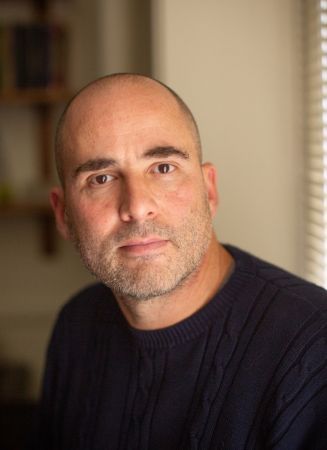
By Editorial Services
Lehigh mechanical engineering alumnus Brian Leard ’20 PhD’26 has been selected for the U.S. Department of Energy’s Fusion Energy Sciences Postdoctoral Research Program, a competitive fellowship that gives recent PhD recipients the opportunity to conduct research supporting DOE’s fusion energy mission.
His two-year project, titled “Machine-Learning-Based Surrogate Modeling for Real-time Observation and Detachment Control,” begins December 1. Leard will be located at Oak Ridge National Lab under the primary supervision of research scientist Dr. Sebastian De Pascuale.
Administered through the Oak Ridge Institute for Science and Education (ORISE), the program provides fellows with opportunities to work alongside scientists and engineers in fusion and plasma science and technology and to use advanced research facilities and equipment.
“It’s a real honor to be chosen for this program. This is an interesting project that could help address some current challenges in the fusion community and advance the state-of-the-art of tokamak operation. I’m excited to combine several of the topics I learned throughout my PhD and continue expanding my skillset,” says Leard.
The fellowship marks the latest step in Leard’s research aimed at addressing some of the scientific and engineering challenges involved in developing nuclear fusion as a viable source of power. Fusion research requires scientists and engineers not only to create the extremely hot plasma in which fusion reactions occur, but also to understand, predict, and precisely control its behavior.
At Lehigh, Leard was a member of the Plasma Control Laboratory led by Eugenio Schuster, professor of mechanical engineering and mechanics. The lab combines plasma physics, control theory, computational modeling, and artificial intelligence to address challenges in fusion energy research.
Leard’s doctoral research has focused on developing faster, more accurate computational tools for modeling and optimizing the operation of tokamaks, devices that use magnetic fields to confine the hot plasma needed for fusion reactions.
Working with Schuster and collaborators, Leard has helped develop simulation methods that integrate plasma-physics models with neural-network-based surrogate models. The approach is designed to retain the predictive capabilities of computationally intensive simulations while operating quickly enough to support plasma-control applications.
That work has already taken Leard beyond Lehigh. Through a previous DOE Office of Science Graduate Student Research award, he spent approximately nine months conducting research at the DIII-D National Fusion Facility operated by General Atomics in San Diego. There, he worked on optimizing tokamak performance using the simulation framework developed with the Lehigh team. He has also gained research experience at the Princeton Plasma Physics Laboratory.
At Oak Ridge, Leard will build on this foundation by developing real-time, multi-input neural network surrogate models of the complex plasma boundary layer. By combining these fast AI surrogates with Extended Kalman Filter state observers and Model Predictive Control (MPC) algorithms, his project aims to accurately estimate plasma states and prevent severe thermal damage to tokamak divertors during operation—a framework he plans to validate on the KSTAR tokamak in South Korea.
“Brian’s research sits at the critical intersection of control theory, machine learning, and plasma physics,” says Schuster. “Translating heavy computational models like SOLPS-ITER into real-time AI surrogates is vital for managing divertor heat loads in future reactors like ITER. His postdoctoral work aligns directly with our laboratory’s DOE Genesis Mission award for project REACT, which focuses on developing AI-driven digital twins for integrated reactor control. This fellowship is a well-deserved recognition of his work, offering him an exceptional opportunity to collaborate with Oak Ridge and pioneer multi-variable real-time control strategies for complex plasma core-edge dynamics.”
Leard earned his bachelor’s degree in mechanical engineering from Lehigh in 2020, with a minor in energy, and remained at the university for his doctoral studies under Schuster. His interest in fusion grew out of nuclear energy courses he took as an undergraduate and developed into research focused on one of the field’s central challenges: predicting and controlling the behavior of fusion plasmas.
The DOE Fusion Energy Sciences Postdoctoral Research Program supports research in areas including the fundamental science of burning plasmas, long-pulse fusion systems, and discovery plasma science. Initial appointments are typically made for up to one year and may be extended for an additional year depending on program needs, funding, and participant eligibility.