
The fluorescent lights of the Lehigh University chemical engineering lab hummed softly as Carly Roche's (ChE '22) studied the reaction schematic in front of her. She loved the logic and precision of engineering, but another question tugged at her mind: How do I figure out what kind of job will let me use these skills in a way that feels meaningful to me?
Carly hadn't stumbled into chemical engineering; she was drawn by the logic of chemistry and math, and fueled by the challenge her AP Chemistry teacher laid out. "It wasn't just about the science," she'd often tell prospective students years later, "it was about choosing a degree that was both rigorous and flexible." She knew that a chemical engineering degree wasn't a rigid map, but a passport—opening doors not just to reactors and refineries, but to business and leadership roles. This initial perspective—that the degree was a versatile tool—became her bedrock.
Her time in the department at Lehigh wasn't defined by just equations. The most influential experience was the human connection: sitting down with Professor Gilchrist, who saw not just an engineer, but a curious mind. He didn't tell her what to do; he listened and then connected her to alumni in consulting. This mentor-driven guidance gave her a critical piece of perspective: the career landscape was vast, and her professors were her first network. Her contribution, helping design the Coffee and Cosmetics course, cemented her belief that engineering could be applied to anything, from polymers to partnerships.
Carly’s hands-on education spanned virtual COVID-era research to her junior year internship at Henkel as a technical sales engineer. She loved the blend of lab work and client-facing business. The most poignant moment wasn't a solved equation, but a sight: standing in a South Carolina factory, watching the small-scale lab solutions she’d developed come to life in massive production batches. The scale-up—the jump from a beaker to a factory floor—showed her the tangible impact of her work and gave her a deep sense of purpose.
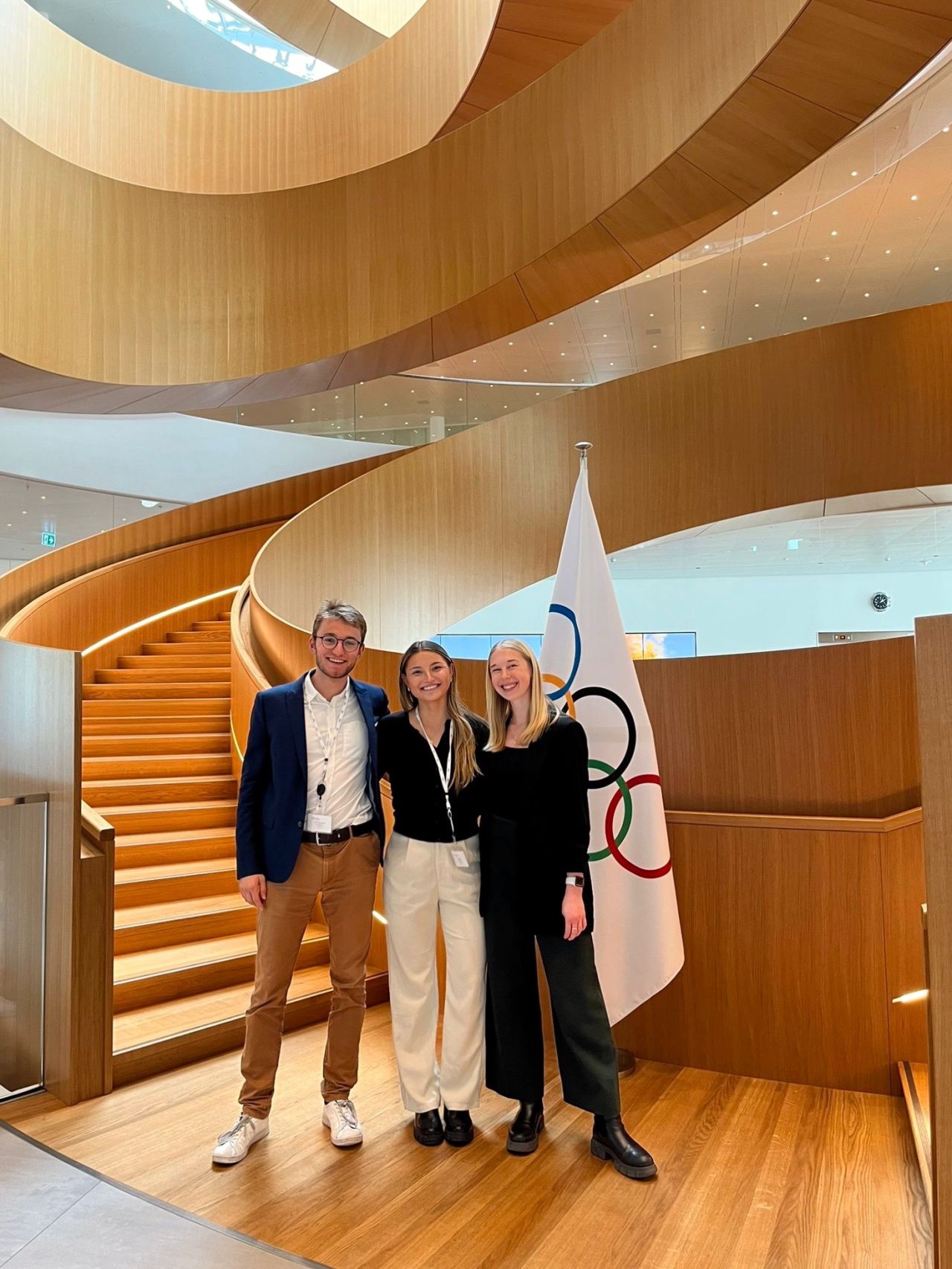 Post-graduation, Carly was ready for the pivot she’d anticipated. She chose Deloitte Consulting, drawn to the advice that consulting was like "an undeclared major for your first job." It offered exposure to countless industries, from healthcare to media, promising accelerated growth and constant learning.
Her Chemical Engineering degree wasn't abandoned; it was the foundation. Now, as she supports Deloitte’s partnership with the International Olympic Committee for events like the Milano Cortina 2026 Winter Games, overseeing logistics, hospitality, and business development, her work is decidedly non-traditional. Yet, when faced with a complex, global challenge, she unconsciously reverts to her ChBE training: breaking the interconnected problem into manageable parts, finding structure amid ambiguity, and balancing competing priorities.
Carly Roche's journey offers a message of motivation and perspective for every Lehigh chemical engineering student.
Your degree is a master key, not a lock. Embrace the rigor, knowing that the analytical and problem-solving muscles you build can be applied to any complex system, be it a chemical process or global sports logistics. Don't limit your vision; your technical skills are your greatest leverage in non-traditional fields.
The Lehigh chemical engineering department is your first network. Seek out mentors like Professor Gilchrist. Your peers and professors aren't just here to teach chemistry—they are the bridge to your career. Engage with alumni, explore those unexpected paths, and remember that every successful career is built on connections.
Start with the curiosity that brought you here, work with the diligence that the degree demands, and remember that Lehigh ChBE is training you not just to solve problems, but to tackle the world's most intricate challenges, wherever they may arise. Your career is an experiment; don't be afraid to change the hypothesis.
Department/Program: