
Dr. Nathan Wei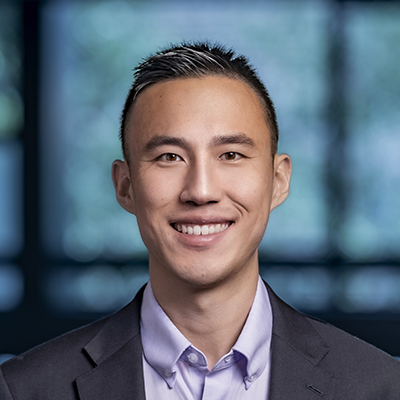
Assistant Professor
University of Pennsylvania
Abstract
Our everyday lives are shaped by the ever-shifting turbulent winds of the atmospheric surface layer (ASL), the lowest ~100 m of the atmosphere. Step outside on a windy day and you will immediately feel the variability of wind gusts, some of which may dissipate in a few seconds while others might persist for several minutes. These time-varying flows strongly influence engineering systems and infrastructure in the ASL, including wind farms, drones, and cities, in ways that many existing steady-state models cannot predict. In this talk, I will describe several approaches for capturing the effects of unsteady flows on systems and technologies operating in the atmospheric surface layer. First, I will
present theoretical models and experimental measurements that demonstrate how wind turbines and wind farms can leverage streamwise unsteady flows to generate more power than their counterparts in steady flow. Then, I will discuss my lab’s ongoing efforts to develop cost-effective, field-deployable methods for uncovering unsteady dynamics in real-world ASL turbulence, including large-scale 3D Lagrangian particle tracking and low-cost sensor networks for measuring wind variations at city-block to neighborhood scales. This collection of measurement and modeling methods highlights the central role that unsteady flows can play in addressing societal challenges at the intersection of energy, climate, and human flourishing.
About Dr. Nathan Wei
Nathan Wei is an assistant professor of Mechanical Engineering and Applied Mechanics at the University of Pennsylvania, where he leads the Aerodynamics, Wind, And Renewable Energy (AWARE) Lab. His group integrates lab-scale experiments, modeling, and novel field-measurement techniques to
characterize the effects of atmospheric turbulence on engineering systems and the environment. Nathan graduated summa cum laude in Mechanical & Aerospace Engineering from Princeton University, spent a year as a Fulbright research fellow at TU Darmstadt, and then completed an M.S. in Mechanical Engineering at Stanford University and a Ph.D. in Aeronautics at Caltech, working with Prof. John Dabiri. Before starting at Penn in 2024, he was a Distinguished Postdoctoral Fellow in the Andlinger Center for Energy and the Environment at Princeton. His work has been recognized with several awards, including an NSF Graduate Research Fellowship and three dissertation prizes from Caltech.