BioE Student Summer Check-in: Jacob ten Bosch
This article was written by Juliana M., a Bioengineering undergraduate student and student office worker in the Department of Bioengineering.
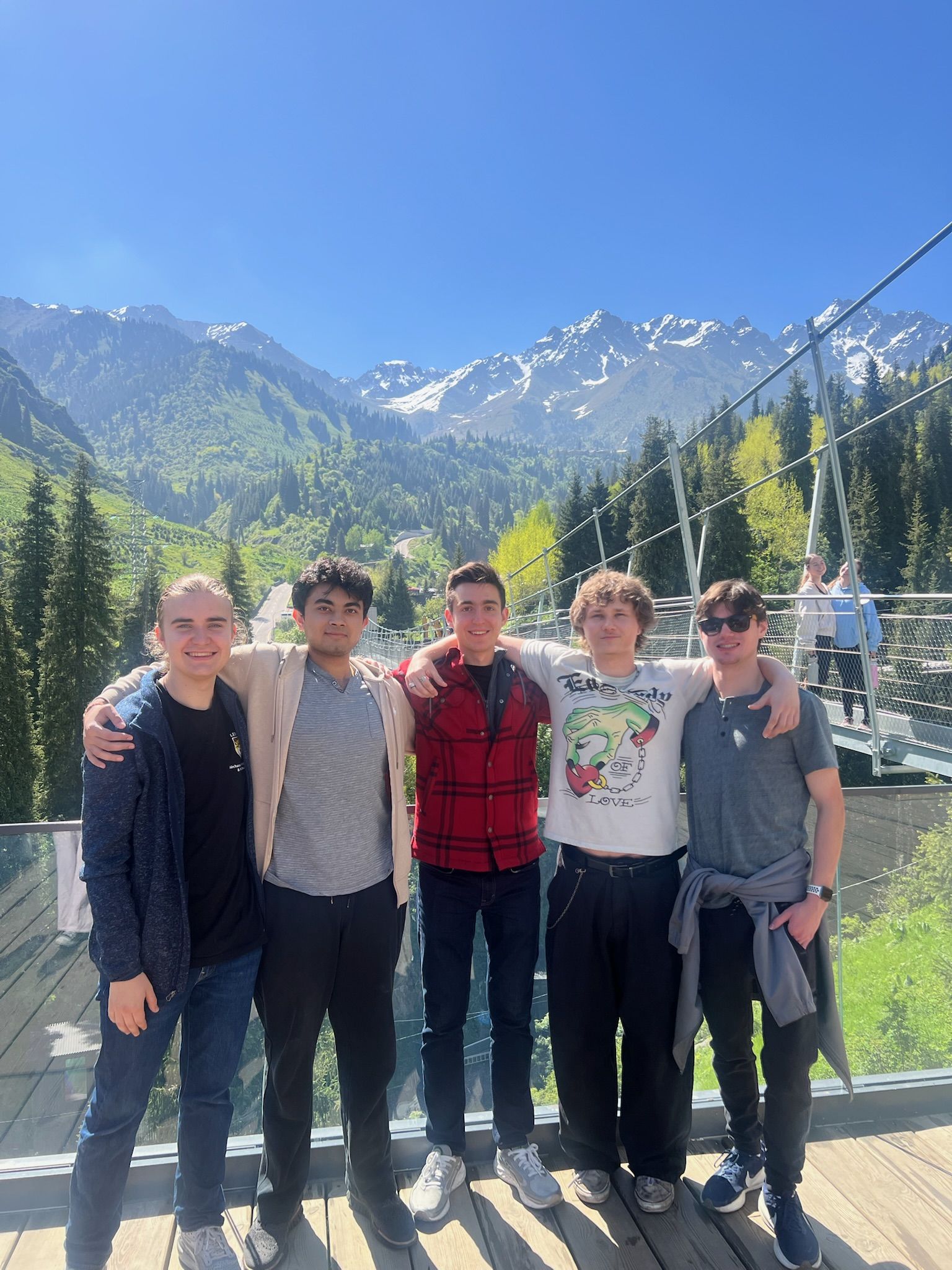
Jacob ten Bosch is a rising senior bioengineering major on the biomechanics track, and his busy summer has consisted of a research trip to Kazakhstan through Lehigh's Office of Creative Inquiry (CINQ), followed immediately by an internship at Bristol Myers Squibb.
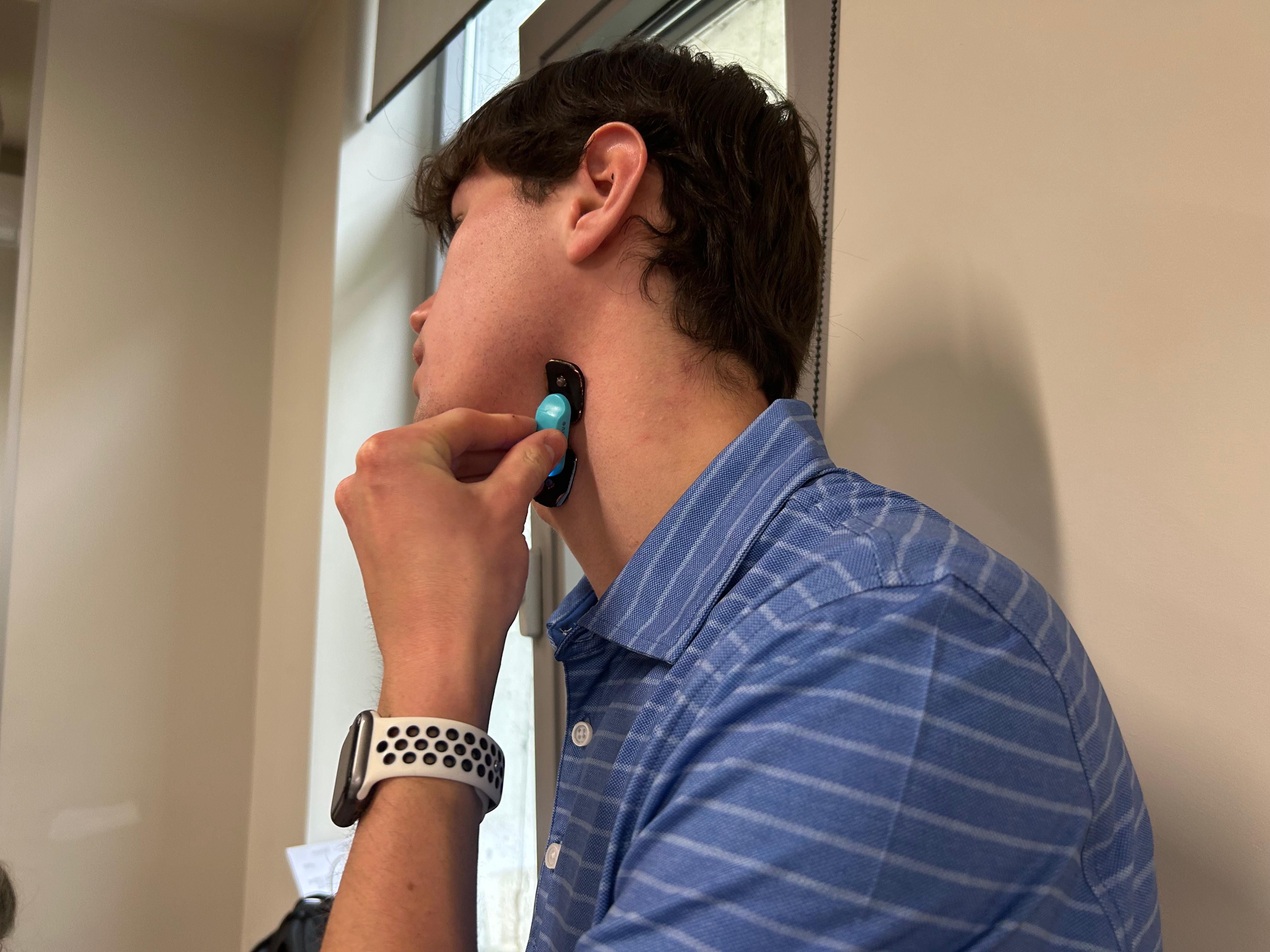
Jacob works with Professor Seshadri on the CINQ AgriMed team, developing low-cost electrodes designed to monitor dysphagia by tracking the neck muscles involved in swallowing, which are often affected by neuromuscular disorders. The project's core innovation is its conductive layer, made from a wheat starch-based hydrogel rather than the petroleum-based gel used in most commercial electrodes; Kazakhstan's large wheat surplus makes the material abundant and less environmentally impactful.
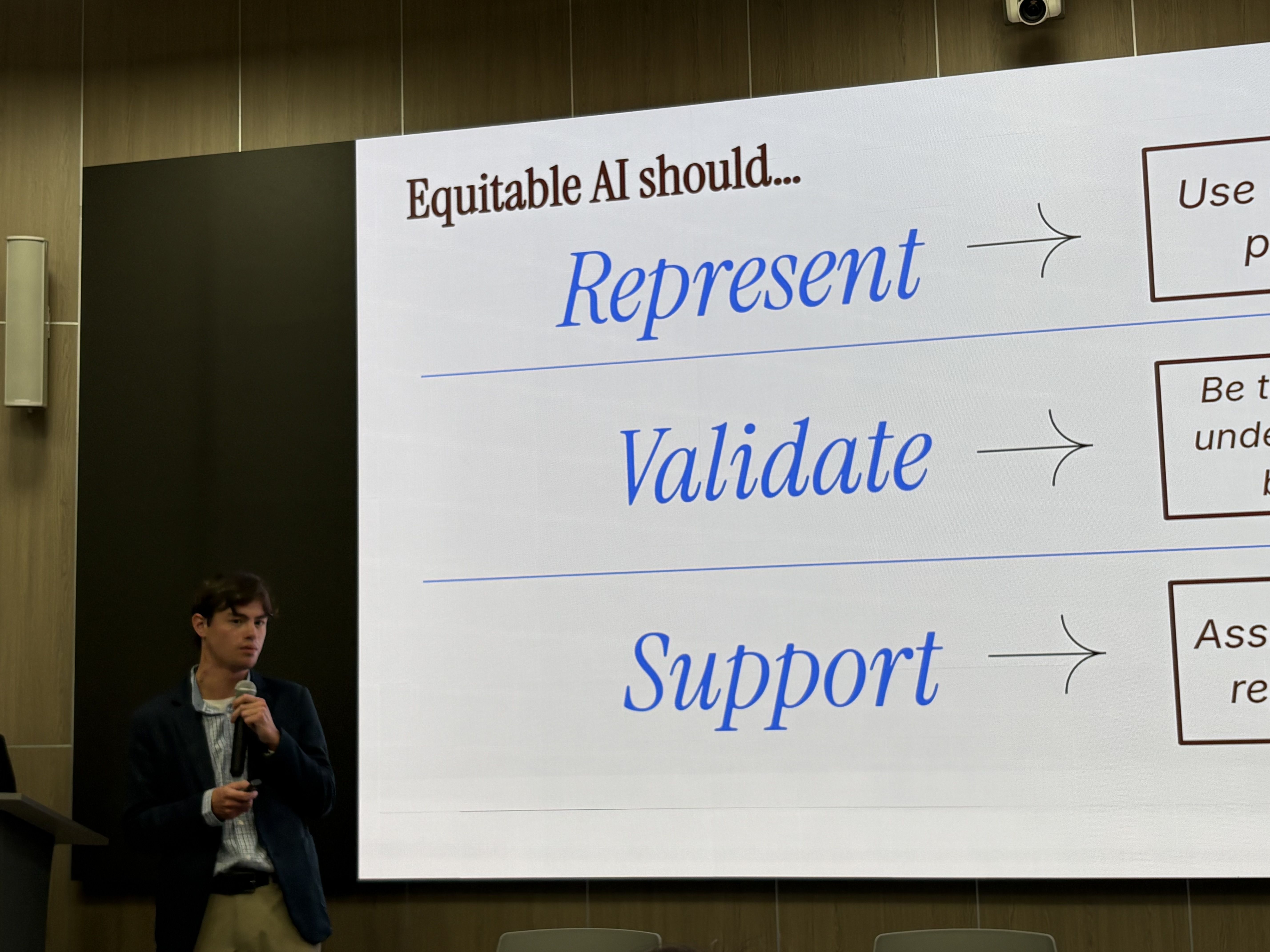
This spring, the team prepared an IRB-approved protocol to validate their electrodes in-country, working with healthy participants in Almaty to compare their electrodes against commercially available alternatives. In Kazakhstan, Jacob and his teammates visited clinics around Almaty and attended a medical conference, meeting medtech manufacturers from across Southeast Asia. Talking with companies already selling electrodes commercially gave the team a clearer sense of what it would take to scale their project beyond a school research effort.
The trip wasn't without obstacles. Language barriers made it difficult to communicate directly with clinics, patients, and manufacturers, so they leaned on personal connections and translators. On the technical side, the electrodes aren't yet adhesive enough for consistent skin contact, which introduces noise into the signal, an issue the team will work on optimizing next semester.
After returning from Kazakhstan, Jacob started his internship at Bristol Myers Squibb. He's on the nonclinical safety team in the toxicology department, working on a project that looks at how well symptoms observed in animal drug trials actually predict what will happen in human trials. The FDA has been pushing to reduce reliance on animal testing, and Jacob's project examines whether different organ systems respond consistently across species. His work involves combing through investigator’s brochures and pre-existing clinical, non-clinical, and toxicology reports to build a database mapping animal findings to human outcomes by organ system. The next phase is building a machine learning model that can take in this data and predict human outcomes.
The internship put Jacob well outside his usual coursework; the data-heavy nature of his project meant learning a lot independently on a tight ten-week timeline. Balancing the technical learning curve with getting to know his team added to the challenge. Along the way, he learned that clinical trial phases 1, 2, and 3 often run concurrently rather than sequentially, and that animal studies, despite being a cornerstone of pharmaceutical research, don't always translate reliably to human outcomes. He also picked up considerably more machine learning experience than he'd had before, and got his first real look at how industry work differs from an academic lab.
When the Fall semester begins, Jacob and his teammates will continue refining the electrode design, and they plan on submitting an abstract to attend the BMES conference in Orlando to present their progress and innovation. At Bristol Myers Squibb, he's preparing to present his findings to his coworkers. Between the two experiences, he's started thinking more concretely about what he wants to pursue after graduation, and said the internship in particular opened him up to a wider range of options than he'd previously considered.