
Duration: 16:41 | Published: December 6, 2021
Episode Summary
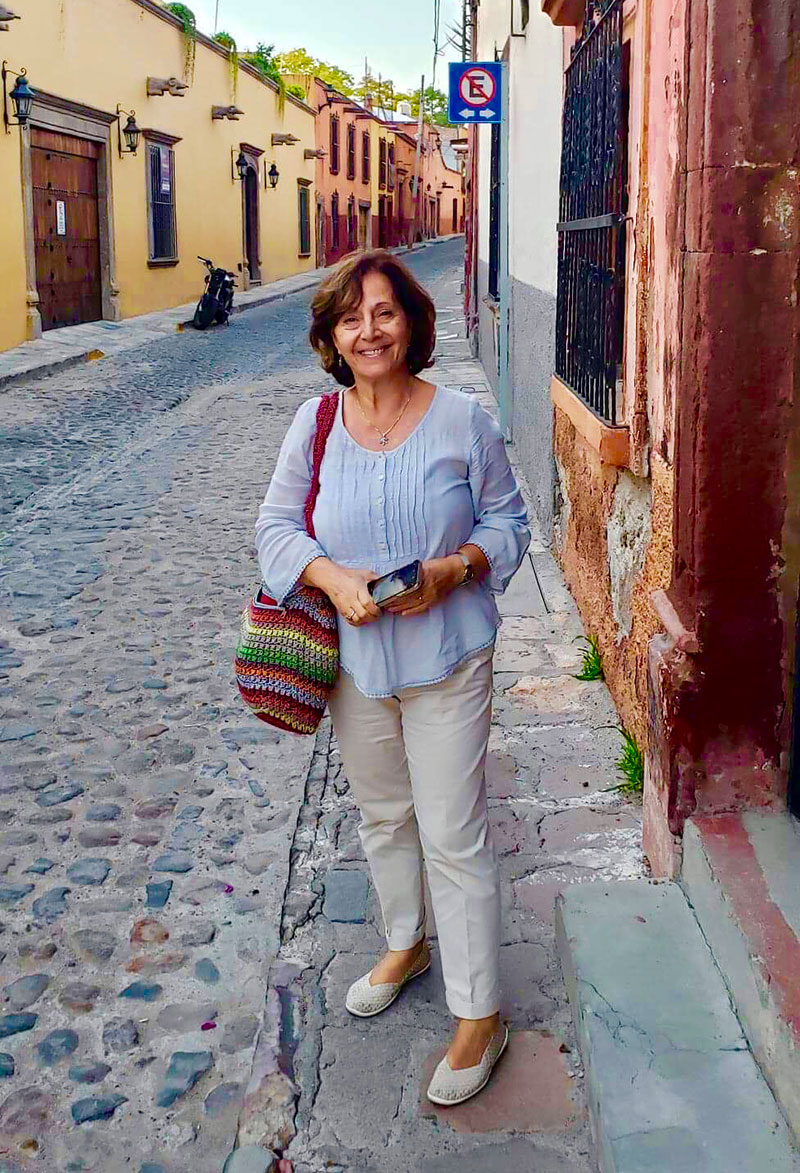
Professor Sibel Pamukcu has spent more than three decades solving one of environmental engineering’s most challenging problems: how to clean contaminated soil and groundwater without causing even more disruption to the environment.
An internationally recognized expert in electrokinetic remediation, she has helped pioneer techniques that use low electrical currents to remove pollutants from the subsurface, offering an innovative alternative to excavating and transporting contaminated soil. Her work has influenced environmental remediation research around the world and illustrates how civil and environmental engineers develop practical solutions to complex environmental problems.
But Sibel’s story is about more than engineering innovation. When she joined Lehigh University in 1989, she became the first woman faculty member in the Department of Civil Engineering, entering a profession where women were still significantly underrepresented. In this conversation, she reflects on her journey from Turkey to the United States, the professors who inspired her to pursue an academic career, and the challenges of establishing herself as a young faculty member while building an internationally recognized research program. She also shares candid memories of the subtle obstacles she encountered early in her career and the lessons she wishes she had learned sooner.
Sibel explains how geotechnical and environmental engineering intersect in her research, describing how contaminants move through soil, why traditional cleanup methods often require removing and disposing of massive amounts of earth, and how electrokinetic technologies can recover pollutants while leaving the subsurface largely undisturbed. She also discusses the global impact of the technology, the excitement of creating new knowledge through research, and why scientific discovery continues to motivate her after more than 30 years as an engineer and educator.
Sibel also reflects on the evolution of women in engineering and STEM. She discusses the confidence she now sees in today’s engineering students and junior faculty, the importance of speaking up, and the progress she has witnessed since becoming a pioneering woman faculty member at Lehigh.
Key Moments
- 2:37 — Discovering engineering through her father
- 3:52 — A life-changing year as an exchange student in Iowa
- 6:25 — Why she chose academia over industry
- 7:54 — Becoming the first woman faculty member in Civil Engineering at Lehigh
- 9:55 — What is electrokinetic remediation?
- 10:58 — Cleaning contaminated soil without excavation
- 12:39 — Why creating new knowledge never gets old
- 12:54 — How women engineering students have changed
- 13:43 — What she wishes she’d known as a junior faculty member
Featured Quotes
"I loved the independence…to be able to call oneself an expert in a particular area." — Sibel Pamukcu
"Whatever ideas I can add, I’m happy." — Sibel Pamukcu
Full Transcript
Transcript is auto-generated and lightly edited for clarity.
Welcome to Rossin Connection, a podcast about all things Lehigh engineering. Coming to you from the P.C. Rossin College of Engineering and Applied Science at Lehigh University. It's a show for students, alumni, faculty and staff, current, former and future, and for anyone interested in the many creative ways that engineers are solving the world's problems. I'm your host and producer, Christine Fennessy and I'm going to repeat myself real quick here in case you missed our last episode. This year, 2021 marks the 50th anniversary of co-education here at Lehigh. And to mark the occasion, the university is holding events, they're publishing stories and airing podcasts. The goal is to celebrate the impact of all women on campus, past, present, and future. It's a year long celebration called Soaring Together here at Rossin Connection, we are marking this milestone too with a series of episodes featuring our women faculty who are all making an impact in their departments, on their students, in their fields, and on the world.
This is the second episode in that series, and it features Sibel Pamukcu. Sibel is a professor in the Department of Civil and Environmental Engineering, and a recognized expert in the field of electro remediation of soils and groundwater. Her pioneering work spends more than three decades of research. She holds several U.S .and international patents. Been the principal or co-principal investigator on more than 60 grants and co-authored more than 150 journal articles and technical contributions. Sibel is a pioneer of another sort as well. She was the first ever woman faculty member in Lehigh's Department of Civil Engineering. In today's show, she talks about becoming an engineer, her groundbreaking research, the challenges she faced in her early years as a faculty member, and what she's learned from her colleagues today that could have helped her back then. Thanks for joining us.
I'm Sibel Pamukcu. I'm a professor at the Civil and Environmental Engineering Department at Lehigh. I've been here 32 years now.
Sibel was born in Artvin, a city in the northeast of Turkey, near the border with Georgia.
It's a mountainous area and it gets a lot of snow.
Her family moved around a bit, first to Ankara and then finally to Istanbul. As a young kid, Sibel wanted to be a pharmacist, not because she loved the idea of dispensing meds. No, the pharmacies near her home also sold perfume,
So every time I walked into a pharmacy, I smelled the perfumes and I thought, oh, that's so nice, you know, I'd love to be in a pharmacy all day long.
Eventually though, she started paying attention to what her dad did. He was a civil engineer who worked for the highway department. He'd come home at night and tell her about his day and make sketches of things like bridges at the kitchen table.
I love looking at the drawings he made in the little notebooks he had.
Sometimes she got a chance to see the end result of those drawings.
When we rode on a road, he said, well, I was involved in part of the construction of this roadway.
As she got older, she got interested in other things. She loved to draw, and she was good at math. She started considering architecture and engineering her senior year in high school. She went to Council Bluffs, Iowa as part of a foreign exchange program,
And in Iowa, I went to a public high school, which was very good high school, but I ended up in all the advanced classes with only 5, 6, 7 students in class.
So she got called on a lot and she loved it, and that was it. She told her American friends and host family, she wanted to be an engineer.
That was such an odd thing for them to hear
Odd, she says, because it was 1973, not many of her peers were interested in science or engineering, or really even knew what engineers did. She says that most kids at the time equated engineers with train conductors.
Civil engineering was actually something that I had to explain quite a bit.
All that explaining definitely set her apart in a good way.
So that kind of gave me, uh, some sort of notoriety, I guess. Oh, that exchange student who wants to become an engineer, you know, so that, I like that feeling.. So that kind of solidified my decision to go into engineering.
She returned to Turkey and went to one of its top universities. Her civil engineering class was tiny.
We were nine students as freshmen, and three of them were women.
After graduating, she started a master's program at the same school and she decided to get a part-time job too. She wanted to see what the real world was like,
But then I ended up working at the highway department just like my dad did,
And it just didn't feel right,
So I felt like I was brought in as a favor to my father, and it just wasn't satisfying at all. It really didn't feel like a job. I was pampered. I was given a nice office and all that, but it just didn't feel like I was contributing.
She just couldn't see herself doing a job like that for the rest of her life. So she started looking into graduate programs abroad. During the first semester of her master's program, an alum of her college in Turkey came to give a talk. At the time, he was a professor at Louisiana State University and he mentioned that the school was looking for graduate researchers, and that's how Sibel together with her husband ended up at LSU. For Sibel. choosing academia over industry was easy.
I loved the independence and being sort of your own entity.
She also loved how her advisors worked with their research groups.
They seem to be managing a small, a tiny company.
It was all just so intriguing. The independence, the ability to create knowledge and disseminate it and
To be able to call oneself an expert in a particular area, particular, those were very, very appealing to me.
It was during her last year at Louisiana State that Sibel saw an ad for a faculty position at Lehigh University. There were lots of reasons to apply. Lehigh civil engineering department was one of the top in the country, and side note, it still is, although today it's called the Department of Civil and Environmental Engineering. Her LSU colleagues kept telling her what a great career move it would be, and there was another compelling factor. One, she and her husband both shared.
Both of us. We really wanted to go up north because we wanted to see the four seasons again, that was a lame reason, but, but that was one of the reasons
She landed an interview and met the civil engineering faculty and staff.
Everybody was so friendly. They seemed to be walking on eggshells with me. The age difference was quite big.
She got the job and when she did, she became the first woman faculty member of the civil engineering department. She knew she was the first, and it was a little intimidating, but more than that,
It was a big honor and I didn't really think too much about being the only woman or the first woman. It was immaterial for me at the time.
Sibel makes it clear that she remembers all the faculty very dearly, and she believes they all meant well. But there were moments in those early years where it seemed like she was diminished as a professional. Like the time she was asked to choose the color for a new lab
And well, I picked the color and then I was complimented on my taste for the color, which I wasn't expecting. You know, why, but things like that sort of made me feel a little less than who I should be, or I should be seen as
In some ways, she says those early years felt like being back in grad school. She was pulled in a lot of different directions by more senior faculty and away from her own research. Sibel knows that not all of the issues she faced were unique to her and that her male colleagues struggled too.
But what was unique about me being a woman in the department, again, that feeling of an extension of grad school and feeling like somebody else's postdoc, that feeling did not go away until I had my tenure.
She attributes her resilience during that time, in part to having a very supportive department chair, Erwin Coogleman, who helped clear a lot of the obstacles on her path, and it was a research path that in the early eighties was a lucrative one. Sibel is an expert in geotechnical engineering, a discipline that's focused on the behavior of soil and rock.
That's the civil engineering side. But then my research got heavily involved in environmental engineering, environmental applications in the subsurface,
For example, when contaminants are spilled on land, they permeate the soil and eventually they can enter the groundwater. In the late seventies and early eighties, cleaning up those contaminants before they pollute the aquifer usually involve digging up the earth, but that method was problematic because
When you do that, you release a a lot of contamination in the surroundings and you have to deal with very large masses of soil and rock,
Potentially tons of contaminated earth that now has to be disposed of and safely contained.
One way of getting rid of it is to bury it back into a landfill, which is really not a very good option these days
For lower levels of contamination. There was another approach.
Just leave it there and put a big barrier around it so that it doesn't leak and leave it until a good permanent solution becomes available.
In that better solution, that's what Sibel was working on. It involved the use of electrokinetics, basically using electrical fields to drive contaminants out of the soil to a collection point. This
Particular procedure is what we call a in situ or in place method where the subsurface is not bothered, but the contaminant, whatever you don't want there is extracted out.
Since the technology doesn't require digging up tons and tons of soil and rock, it's much easier to manage the recovered contaminant and safely contain it. Sibel says the process works well with heavy metals like lead and mercury, and she says it's inexpensive.
There was a lot of talk about the power requirement because you have to electrify the electrodes, right, but the power is really very, very low because we don't really want to rush this transport across.
Unfortunately, she says, patent issues have limited the use of the technique in the U.S. But it's regularly used in countries like Portugal, France, and Germany.
There is a large consortium in Europe and and research groups in Europe who has picked up this technology and ran with it.
Sibel is still doing research. The opportunity to create new knowledge, to push the envelope still excites her.
That feeling is, is priceless.
For Sibel, the experience of teaching at Lehigh for 32 years has also been precious. She's seen a lot of change over that time, particularly among women students.
They seem to have a lot more freedom in their attitudes, which is a very good thing because I used to see female students sitting in the back a lot, not raising hands.
She says that today they have more initiative.
They are more decisive in what they really want in their careers, and once they make up their mind, they really pursue it with rigor.
She says the women faculty members have changed too. They're quicker to speak up.
They come out and say things that bother them. I mean, I wouldn't think of articulating some of the things among my peers when I was a junior faculty. I would just, you know, shut up and just put my head down and think about it.
It's a quality she admires. One that may have helped her all those years ago when she was being pulled in too many directions and off her own path,
And I sometimes look at what I was at that level. I think to myself, I wish I was a lot more outspoken and you know, raise my voice a lot more, talk with more rigor, and don't talk under my breath and things like that.
She may not have been the loudest voice in the room, but there's no question that Professor Sibel Pamukcu has made an impact on the field of civil and environmental engineering. She holds several patents, been awarded more than 60 grants and co-authored more than 150 articles and technical contributions, but she does not want to be presumptuous. She knows her work is incremental, but she says it is a seed, one of many that together can help make the world a better place.
I'm not in the league of Nobel Prize winners, but whatever little things I can do, whatever little ideas I can add, I'm I'm happy.
That's almost it for today's show. Among Sibel Pamukcu's, many achievements in 2010, she also helped secure a National Science Foundation Advance Institutional Transformational grant for Lehigh University. The goal of the grant was to increase the number of women faculty in STEM. Sibel co-directed the program until 2013. Today it's called the Advance Center for Women's STEM Faculty. Since the center started in 2010, the percentage of women at Lehigh who are tenure track faculty in STEM went from 16% to about 26%. Okay, that really is it. I'd like to thank Sibel for being so generous with her time and for her commitment and dedication to all of us here at Lehigh University. For more information about all the academic programs at the P.C. Rossin College of Engineering and Applied Science, and to find our show, head to engineering.lehigh.edu. Music in this episode is by Blue Dot Sessions. You can send us story suggestions or feedback on X at Rossin podcast. Thanks for listening.
About the Guest
Sibel Pamukcu is a professor in the Department of Civil and Environmental Engineering at Lehigh University and an internationally recognized expert in electrokinetic remediation of soils and groundwater. Her research spans geotechnical and environmental engineering and has resulted in numerous patents, more than 60 research grants and more than 150 journal articles and technical publications. She was also the first woman faculty member in Lehigh’s Civil Engineering Department and has played an important role in advancing opportunities for women in STEM.
Episode Details
Related Episodes
- Episode 22: The "Magic" Behind the Materials That Power Modern Technology
- Episode 24: How Angela Brown Is Engineering New Ways to Fight Antibiotic Resistance