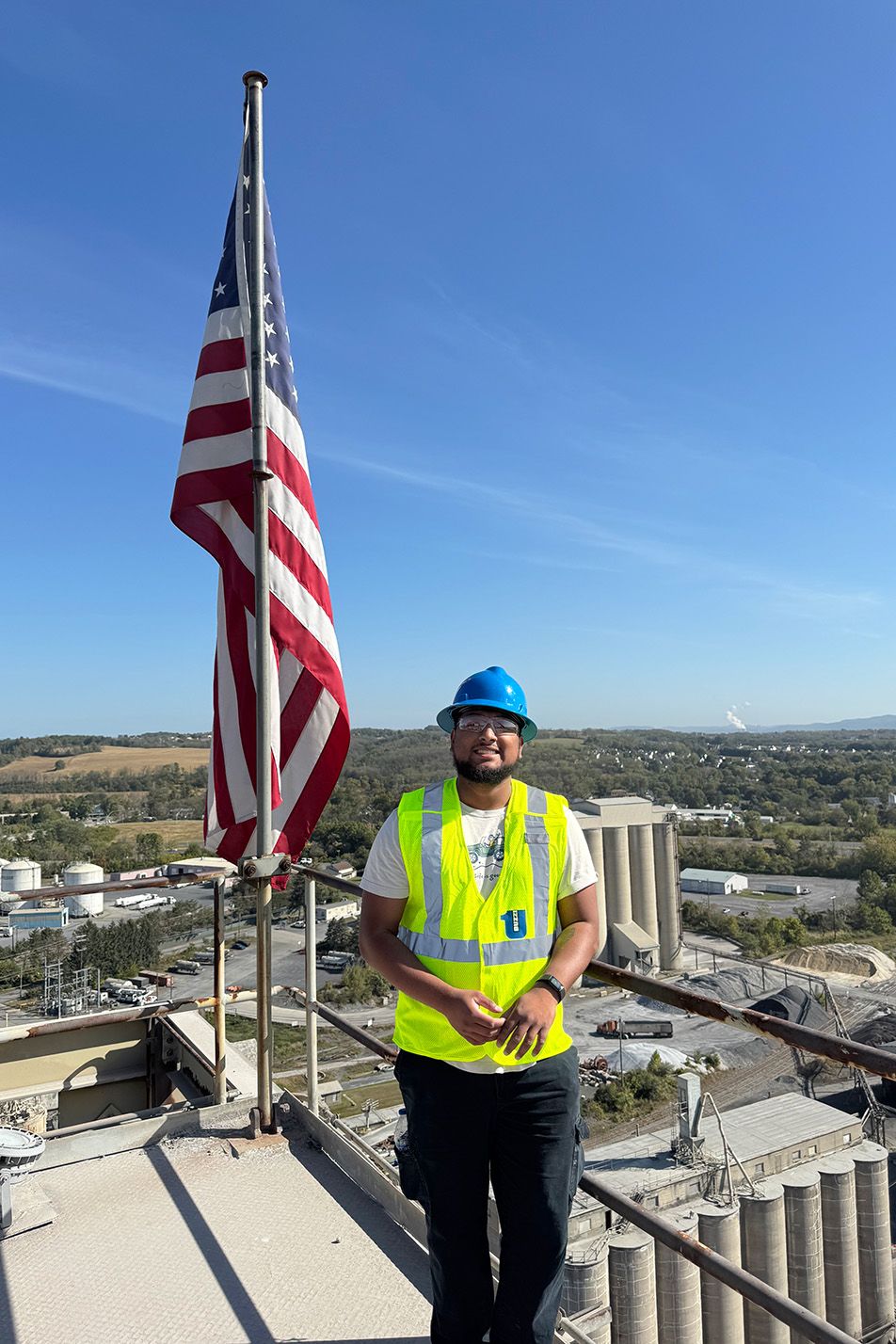
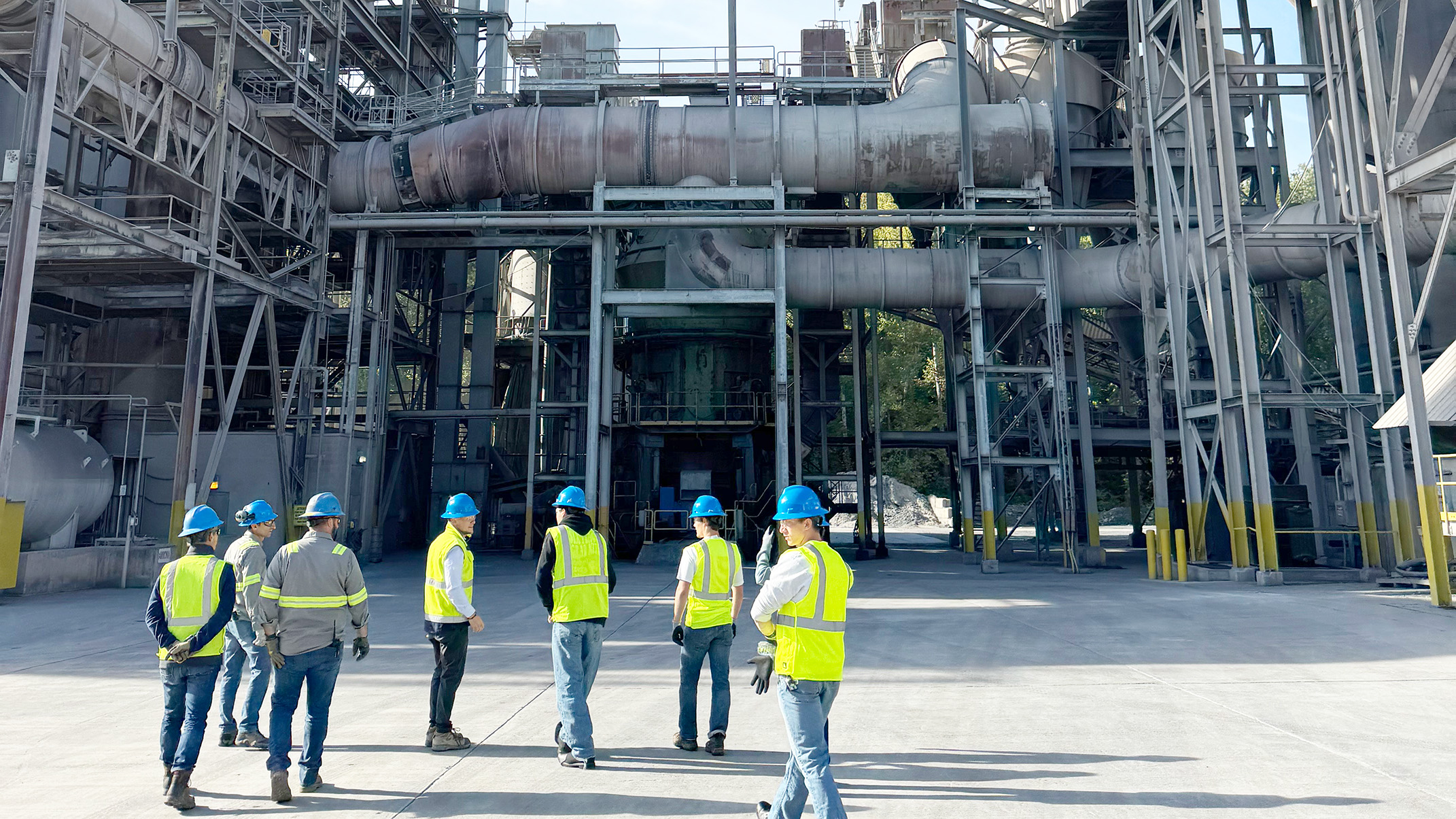
For civil engineering major Alex Reji ’26, a class trip to Buzzi Unicem USA’s Stockertown Cement Plant offered a behind-the-scenes look at one of the region’s most important industrial operations.
Reji is one of 17 students who recently completed a new Lehigh course on cement manufacturing taught this fall by the company’s chairman and industry veteran Massimo Toso.
“Being able to learn about these processes from someone who has such deep experience in the field was special,” said Reji, whose interest in the topic was sparked after learning that cement is the world’s second-most-used substance, after water.
Buzzi Unicem USA is one of the nation’s leading producers of cement, operating seven plants and 34 distribution terminals and employing more than 1,400 people. The company also supports Lehigh research focused on improving the carbon footprint of cement manufacturing.
“The Lehigh Valley has a deep and proud history with cement and concrete—it’s a region where industry, engineering, and innovation have grown together for more than a century,” Toso said. “Collaborating with Lehigh’s civil and environmental engineering department was a natural fit, because it allows us to connect academic fundamentals with real industrial practice. We wanted to teach this course to help students see how the concepts they learn in the classroom translate into complex, real-world operations. The plant visit is especially valuable because it turns theory into experience—students can see, hear, and feel how cement is actually made, and understand both the engineering challenges and the opportunities for innovation, safety and sustainability. Just as important, they get to meet the skilled, dedicated people who make these operations run every day.”
Before beginning their tour of the facility, the students attended a safety presentation and donned high-visibility vests, gloves, and hard hats before beginning their walkthrough of the operation.
“The coolest thing we did was witnessing a quarry blast on site,” Reji said. The quarry supplies limestone, the raw material used to make various types of cement. From a safe distance of a few hundred feet, the group observed the explosion. One of the students was invited to press the detonator.
The class learned how the quarry team drills precise holes, packs explosives into designated sections, and detonates only the portion they want to break down. After the blast, the broken rock is broken into smaller pieces and ground further before entering the cement manufacturing process.
With quarry blasts happening only a few times a week, Reji said he and his classmates felt lucky to have the chance to observe one. After the explosion, students followed the limestone’s path from start to finish.
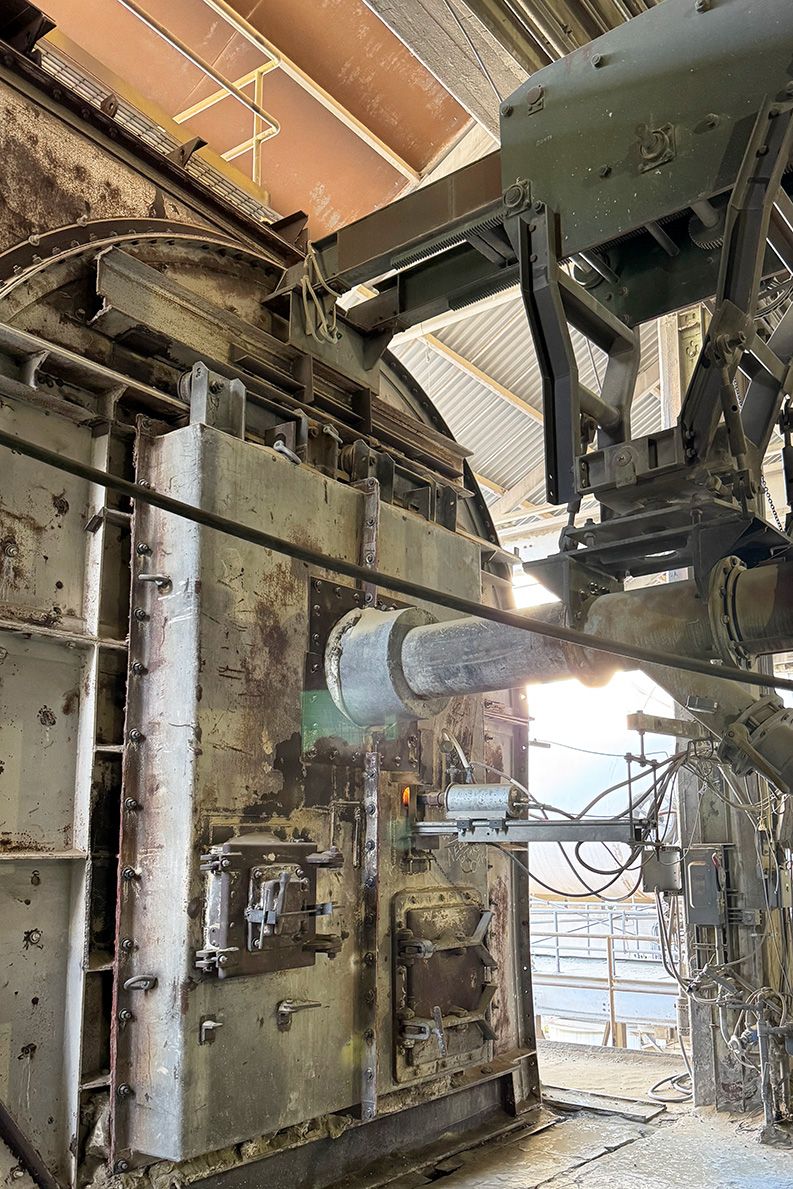
They visited the mills that crush the quarried rock down to a pebble-sized material. From there, they moved on to the plant’s towering rotary kiln, which he described as a massive, spinning oven that’s more than 100 feet long.
A stop in the control room—where dozens of monitors display data from the plant’s multiple thermal systems—gave the students insight into the level of precision required to run the facility. Reji said the group interacted with workers and learned about the sophisticated measurement systems and the metrics they track.
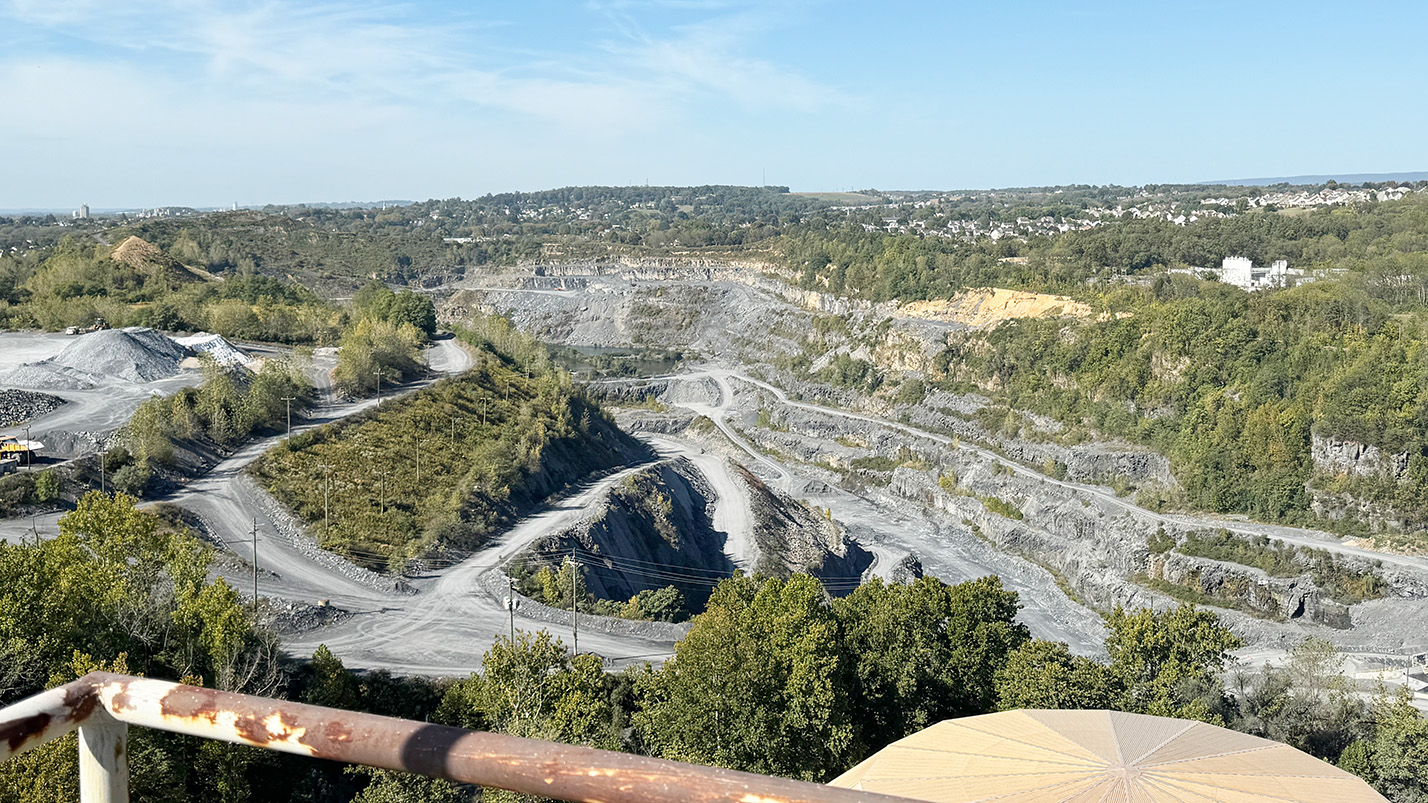 Another highlight for Reji was the aerial view of the entire manufacturing operation from the central preheater tower, reached via an elevator ride a couple hundred feet up.
“I wasn’t expecting to be able to do that,” Reji said.
The tower—where material is heated and processed through a series of cyclones—is one of the most critical components of the plant’s production line.
Throughout the tour, students spoke with plant employees across a range of specialties, such as finance, logistics, and engineering roles focused on materials analysis and kiln operations.
A geotech analyst demonstrated lab testing methods similar to those used in Lehigh’s soil mechanics lab.
Another staff member explained how the plant analyzes concrete samples hourly to check chemical composition, including limestone and calcium levels. Reji said he learned that these concentrations guide adjustments to heat, gypsum content, or raw material quality.
After touring the plant, the class explored historic cement kilns in the area—remnants of the industry’s early days in the Lehigh Valley. They also visited the Atlas Cement Company Museum dedicated to the industry’s regional history.
Reji said he valued his interactions with Toso, their instructor and a member of the civil and environmental engineering department’s advisory board.
“To be taught by someone who has been in the industry for nearly three decades is invaluable,” Reji said, adding that the course was one of favorites—especially the final project in which students designed their own cement plants.
—Andrea Palladino ’26 is a student writer for the P.C. Rossin College of Engineering and Applied Science