Lehigh University researchers have built the first “AI for Science” software tool designed to support the entire project workflow for research scientists.
Dr. Claw is an open-source, full-stack AI research assistant that helps users refine ideas, conduct literature reviews, run experiments, draft and review papers, write grant proposals, and build presentations. It eliminates the need to toggle between specialized AI tools—such as deep research agents for source evaluation or code generators for data analysis—by unifying these capabilities within a single interface.
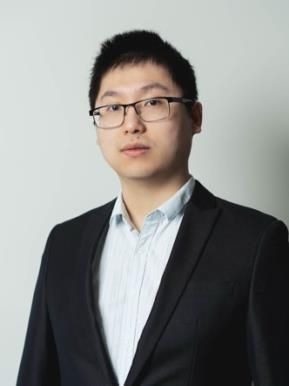
“Everything an investigator, professor, or student needs to complete a project is within this ecosystem,” says Lichao Sun, an assistant professor of computer science and engineering in the P.C. Rossin College of Engineering and Applied Science, and head of the team that developed Dr. Claw. “It’s meant to accelerate the ability to conduct scientific research.”
Building a unified IDE for scientific computing
Sun and his team built Dr. Claw as an Integrated Development Environment (IDE), providing a single, unified workspace where a researcher can code, write, and analyze without switching tools. It’s supported by three of the most powerful large language models (LLMs): Anthropic’s Claude Code, Google’s Gemini CLI, and OpenAI’s Codex.
The advent of OpenAI’s ChatGPT in late 2022 sparked Sun’s vision for Dr. Claw.
“Our group was the first to publish a paper discussing ChatGPT’s potential to change the world,” says Sun. “And it has.”
The shift toward autonomous auto-research loops
This evolution led to “auto-research,” where AI acts as an active researcher rather than a passive content generator. These systems operate in autonomous loops of generating, testing, measuring, and learning to improve their results.
“There are elements of the research process that are extremely time-consuming and could be more efficiently conducted by AI, under the direction and guidance of a human,” he says. “Replacing these processes with algorithms would not only accelerate the process, but it could reduce the cost of doing research as well.”
Researchers can trust Dr. Claw because it prioritizes data privacy by allowing sensitive information to be processed locally or on secure academic servers, ensuring proprietary data never leaves the user's control, says Sun, whose own background is deeply rooted in AI safety.
"To prevent hallucinations and guarantee accuracy, the system doesn't just guess,” he says, “it actively grounds its outputs by cross-referencing verified, peer-reviewed databases and relies on human-in-the-loop checkpoints to validate critical steps."
At the time, Sun had noticed that his students were constantly cycling through disparate AI tools in their own research.
“I said to them, ‘Why are we switching back and forth? Why don’t we consolidate these tools into one system?’” he says.
Accelerating the academic publication lifecycle
Dr. Claw’s rapid development is a testament to this technological revolution: Sun and five of his PhD students built the software in just three months.
“In the past, this would have required 20 to 30 people working for a year or two,” he says. “One of my students used the tool to finish a paper for a top-tier conference in just two weeks, a task that previously would have taken two to three months.”
Since its public release in mid-March, Dr. Claw has gained significant traction on GitHub (approaching 1,000 stars on the developer platform). Sun’s work also earned him an invitation to the advisory board of the 2026 AI Scientists Conference (AISC) at the University of Toronto.
“The market space for tools and bots to support research is crowded,” says Mayuresh Kothare, Lehigh’s R.L. McCann Professor of Chemical and Biomolecular Engineering and the Rossin College’s associate dean for research. “Every major corporate entity, such as Microsoft, Google, and Apple, is developing a competitive product. It is truly remarkable that within such a short time, Dr. Sun’s lab has been able to develop Dr. Claw as an open-source tool with the potential to play a major role in supporting the next generation of scientific discoveries.”
Sun’s immediate goal is to scale the adoption of Dr. Claw (named as such in a nod to the AI assistant, OpenClaw) and transform research timelines globally. Ultimately, he envisions it as a staple tool supported by Lehigh’s Information Technology Services for the campus-wide research community.
“Lehigh students could use this tool to pursue impactful research that previously felt out of reach,” he says. “They could take risks on projects with long time horizons and see those ideas become reality in months, not years. With Dr. Claw, we’re changing the game.”
—Story by Christine Fennessy