
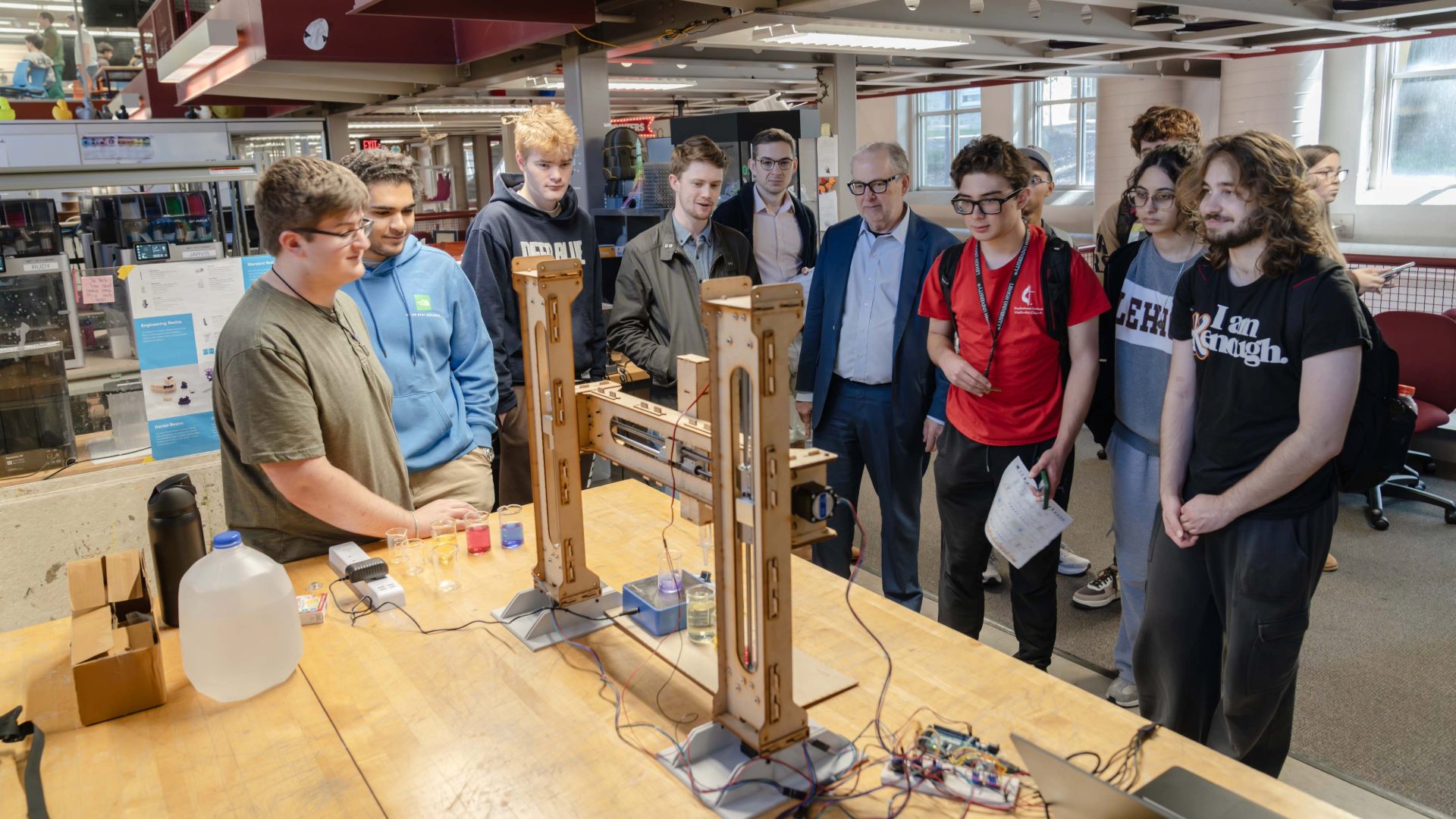
A group of first-year students who took part in Maker Foundations—the debut module of Lehigh Engineering’s new First Year Rossin Engineering (FYRE) program—recently shared their final projects during a showcase in Wilbur Powerhouse.
Over their first seven weeks on campus, the 34 participants in ENGR 095 designed and built functional machines of their own creation, which they demonstrated to faculty and peers.
The Rossin College is undertaking a multi-year effort to reimagine how first-year students are introduced to engineering. FYRE aims to connect the math and science fundamentals of the curriculum with hands-on, problem-solving experiences that help students develop as engineers early in their academic journey.
Led by Lehigh Design Labs Director Brian Slocum and Manager Kelly Zona, students in the pilot tackled open-ended design challenges related to a wide range of applications, including environmental and health-science themes. Working in small teams, they brainstormed ideas, learned fabrication tools like 3D printers and laser cutters, and applied new skills in circuitry, coding, and computer-aided design and troubleshooting.
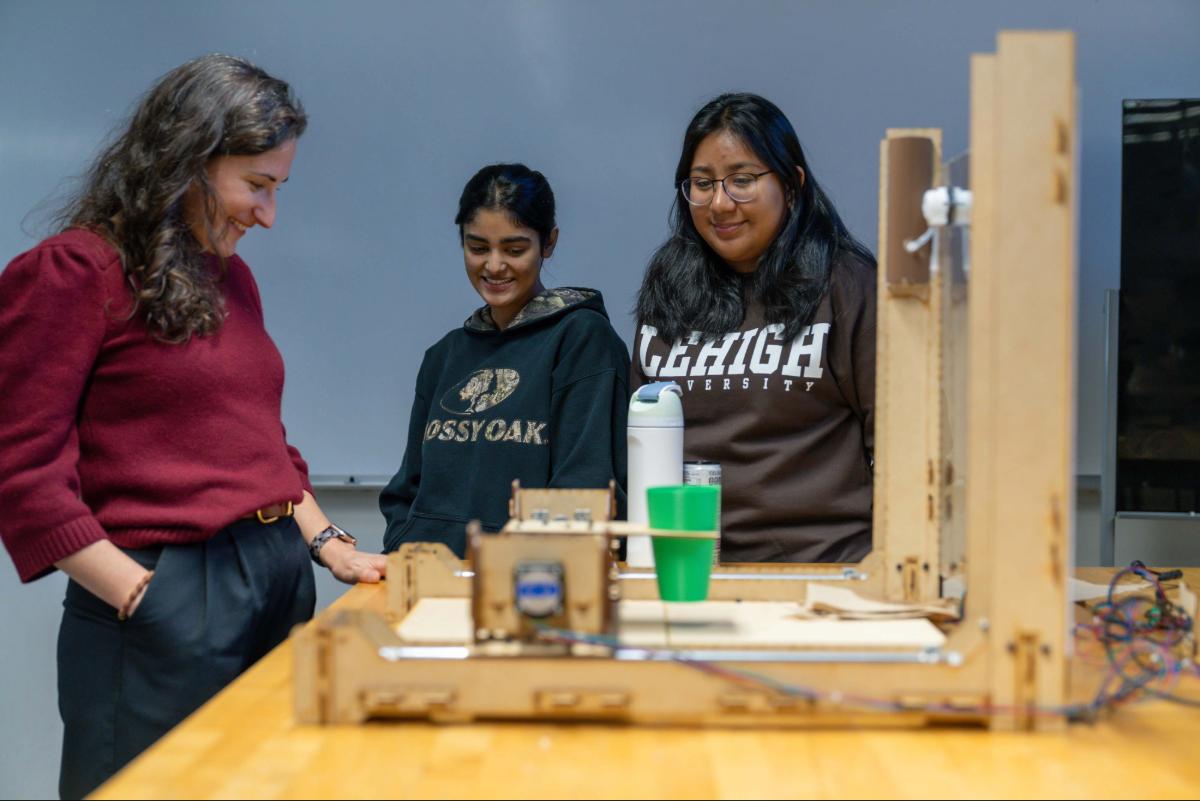 What an amazing time to be a student in engineering at Lehigh,” said FYRE Director Christina Viau Haden, a teaching associate professor of mechanical Engineering and mechanics (pictured with first-year students Zonia Fatima and Sheila Hernandez). “In just seven weeks, these students modeled, laser cut, 3D printed, and electrified moving gantry systems to produce their very first prototypes as engineers. We saw how the process helped them build confidence and a passion for engineering. FYRE is the program I wish I had as a first year student—and this is only the beginning!”
Students described the module as both fast-paced and deeply rewarding—an early chance to think and act like engineers. Several noted that the steep learning curve was part of the appeal, as they quickly developed confidence with unfamiliar tools and concepts.
“A lot of us started off not knowing how to do any of this,” said Amber Seniuk '29, whose team created a vending machine designed for a healthcare setting, “and by the end, we had built something that actually works.”
Others emphasized the teamwork and creativity required to bring their designs—which included a smartphone cleaner that resembled a miniature car wash and a “pantry picker” to assist with mobility challenges in a kitchen—to life.
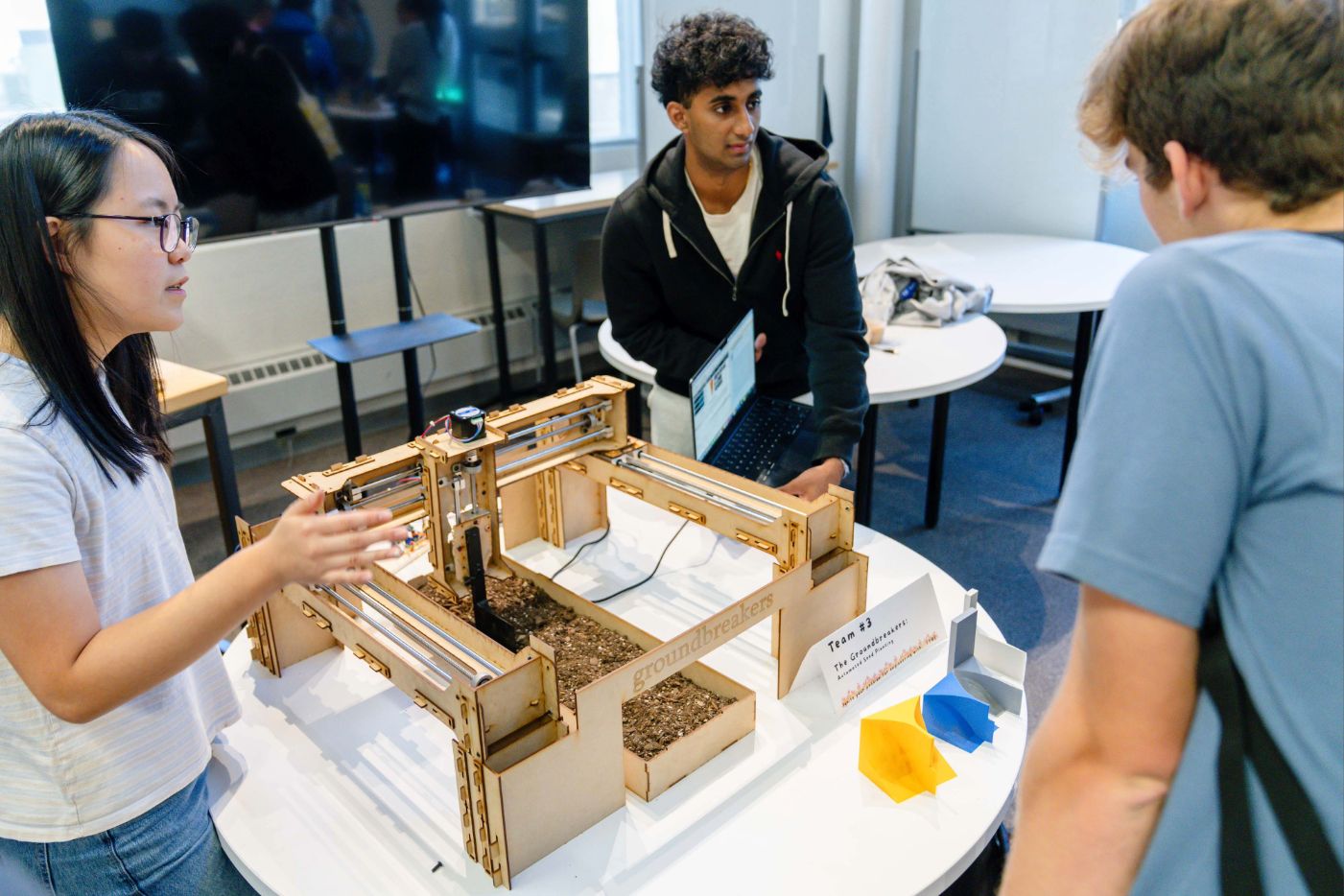
For their project, the Groundbreakers team (including Amilia Oh (left) and Nanda Pailla, pictured) prototyped a basic version of an automated, tractor-less plow—an experiment in how machinery might be adapted for autonomous operation. The group described the experience as “like putting together a puzzle—frustrating at times, but really satisfying when it finally came together.”
As the FYRE pilot progresses, feedback from students and instructors will guide future modules and help shape how the program scales to include all first-year engineering students. The fall semester includes a second module, Energy Foundations, which will continue the program’s goal of linking technical fundamentals with hands-on, interdisciplinary exploration.
By blending design, discovery, and reflection from the start, FYRE seeks to help students see themselves as engineers. The program aims to cultivate creative problem-solvers prepared to tackle the complex challenges of their time.