
First Year Rossin Engineering · Rossin College
Find what ignites you
Eight hands-on modules. Real teams. Real machines. FYRE is where Lehigh engineers discover what draws them in — and start building on it in their first semester.
- ProgramFirst-year engineering experience
- Core courseENGR 095
- Credits3
- Who it’s forIncoming Lehigh engineering students
- HomeThe Jackson Laboratory, Packard Lab
- DirectorsChristina Viau Haden, Eric Obeysekare
- Contactinfyre@lehigh.edu
Watch
See FYRE in action
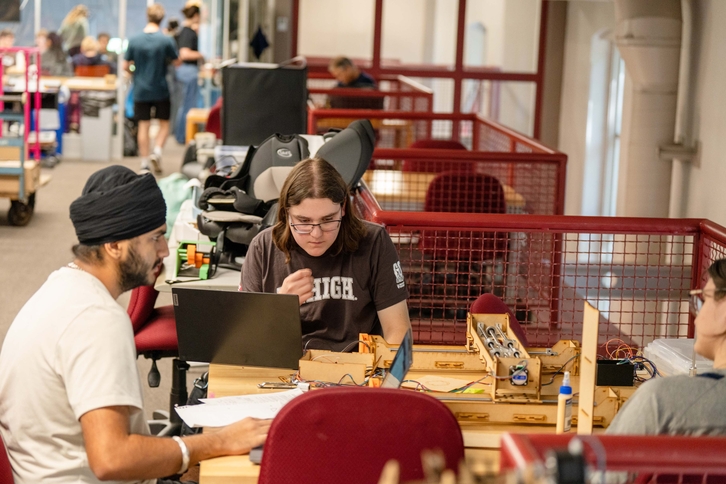
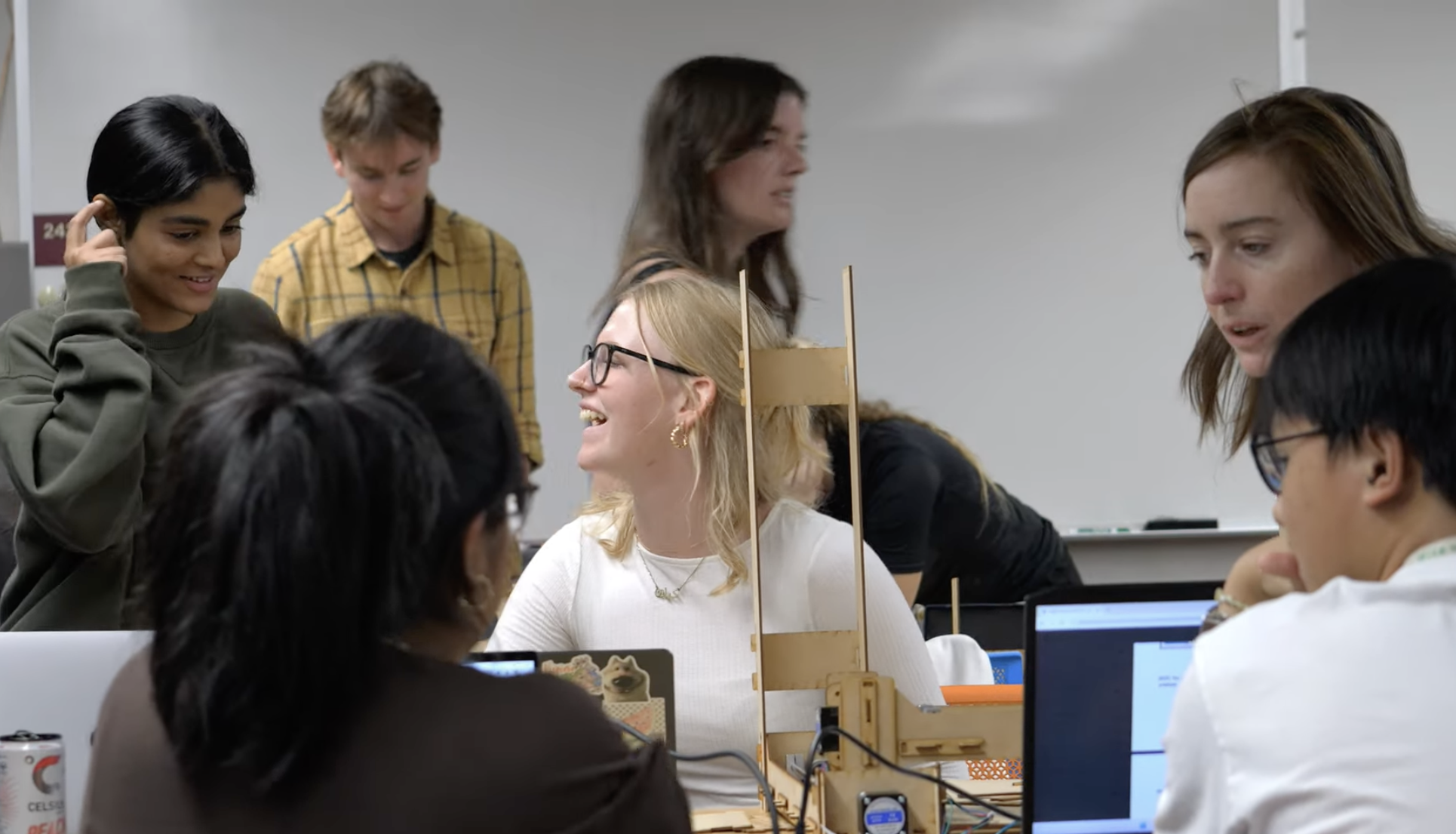
In this video, first-year student teams unveil the machines they designed and built together in FYRE’s Maker module.
Overview
Growing into engineers, from day one
Engineering starts on day one — tools in your hands, a team at your side, and a real problem to solve.
FYRE students apply the fundamentals the same semester they learn them. They move through seven-week modules that cross disciplines: building machines in the makerspace, designing AI agents, testing batteries, engineering against natural disasters. Coursework and hands-on practice grow together, so theory never sits on a shelf waiting to become useful.
Some arrive certain of their major and change their minds. Others arrive undecided and find their field. All of them leave the first year thinking, working, and solving problems like engineers—with the problem-solving, future-making mindset employers look for, and a head start on everything that follows.
That early connection shapes what follows: growing confidence, a habit of collaborative problem-solving, and momentum that carries through the rest of their Lehigh experience. It’s the kind of start that reassures families their student found the right fit fast, and gives students real momentum right out of the gate.
FYRE bridges the gap between high school and college by jump-starting hands-on, collaborative engineering experience from day one: building the "engineering mindset" that families want for their students, and that employers seek in their hiring pools.
The curriculum
The future starts now: ENGR 095 and eight hands-on modules
ENGR 095 is the 3-credit course at the core of FYRE. Its academic modules each run seven weeks — a half semester — so students experience more than one engineering area in their first year, and explore several disciplines before declaring a major.
The FYRE curriculum is built around a series of immersive, project-based modules that give first-year students real engineering experience, beginning in their very first days on campus. Each module blends technical fundamentals with hands-on design, experimentation, and teamwork.
These seven-week, half-semester modules are designed to make the first year of engineering both engaging and meaningful — helping students understand how engineering impacts the world and where they fit within it. Through project-based teamwork, exposure to multiple disciplines, and early engagement with professional tools, FYRE students begin to develop engineering skills and mindsets from day one.
The modules also help student teams understand the connections among various engineering disciplines as they learn to solve problems and design solutions in a collaborative setting.
Design and Make Foundations
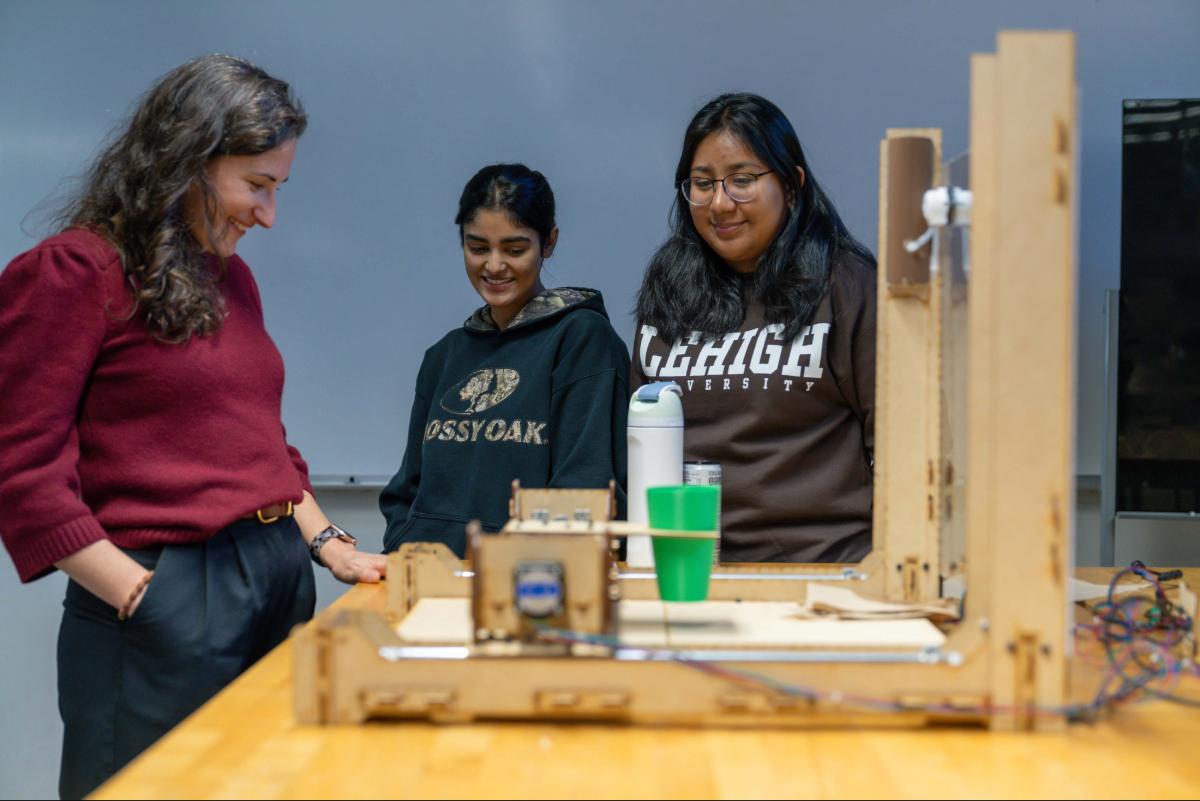
Build the core making skills that every engineer relies on. Students learn to turn ideas into prototypes using modern makerspace tools, practicing iterative design, automation, and teamwork. Working in Lehigh’s Wilbur Powerhouse Design Labs, FYRE students gain the hands-on confidence to take on open-ended engineering challenges across disciplines.
InstructorsChristina Viau Haden, Brian Slocum, Kelly Zona
Engineering Against Natural Disasters
Learn how engineers protect communities from earthquakes, floods, hurricanes, and other hazards. This module introduces the principles of disaster resilience, showing students how infrastructure is designed, modeled, and strengthened to withstand extreme events. Working in teams, FYRE students analyze real-world risks and propose engineering solutions that make the built environment safer.
InstructorsPaolo Bocchini, Sushreyo Misra, Parv Venkitasubramaniam
Engineering Solutions for Plastic Remediation
Tackle one of the world’s most pressing environmental challenges: plastic waste. This module brings together chemical, biomolecular, and environmental engineering as students investigate sustainable materials, biopolymers, and the science of how plastics break down. Through experiments in degradation kinetics and remediation, FYRE students explore practical, science-based approaches to reducing plastic pollution.
InstructorsAngela Brown, Thomas Gartner, Diego Gonzalez, Inês Seabra
Foundations of Energy Storage
Step into the science of batteries and sustainable energy. Students design and test electrochemical energy storage cells, characterize the materials that store and release energy, and examine the environmental impacts of storage technologies. Through wet-lab experimentation, FYRE students connect classroom concepts to global challenges like renewable energy and electrification.
InstructorsFei Lu, Joseph Menicucci, Jennifer Schuler
Harnessing Agentic AI
Learn about artificial intelligence by building with it. Starting with no prior coding experience, students pick up Python fundamentals and explore how large language models work, then design their own chatbots and AI agents. By the end of the module, FYRE students have built a working AI agent that solves an engineering problem they choose, gaining practical skills and a grounded understanding of what AI can and cannot do.
InstructorsCharalambos Marangos, Eric Obeysekare
Human-Machine Interface
Explore how the human body can control machines. Students work at the intersection of bioengineering and robotics, learning how biological signals are captured, processed, and turned into commands that drive robotic systems. Through hands-on work in signal processing and controls, FYRE students build and test bio-controlled devices and see how engineers design technology that responds to people.
InstructorsJuan Aceros, Dhruv Seshadri
Sensing the World
Discover how engineers build the sensors and chips that let technology perceive the world. Students gain hands-on experience with sensor fabrication and device integration, learning how raw materials become working electronic components. By the end of the module, FYRE students understand how sensing devices are made and how they connect the physical and digital worlds across every engineering field.
InstructorsJennifer Schuler, Nicholas Strandwitz, Jennifer Winikus
Sustainable Energy Systems for AI and Microgrid Applications
Examine how we will power an AI-driven world sustainably. Students explore renewable energy sources, microgrid design, and the fast-growing energy demands of artificial intelligence and data centers. Through hands-on projects, FYRE students learn how electrical and energy engineers balance clean power generation with the needs of modern computing.
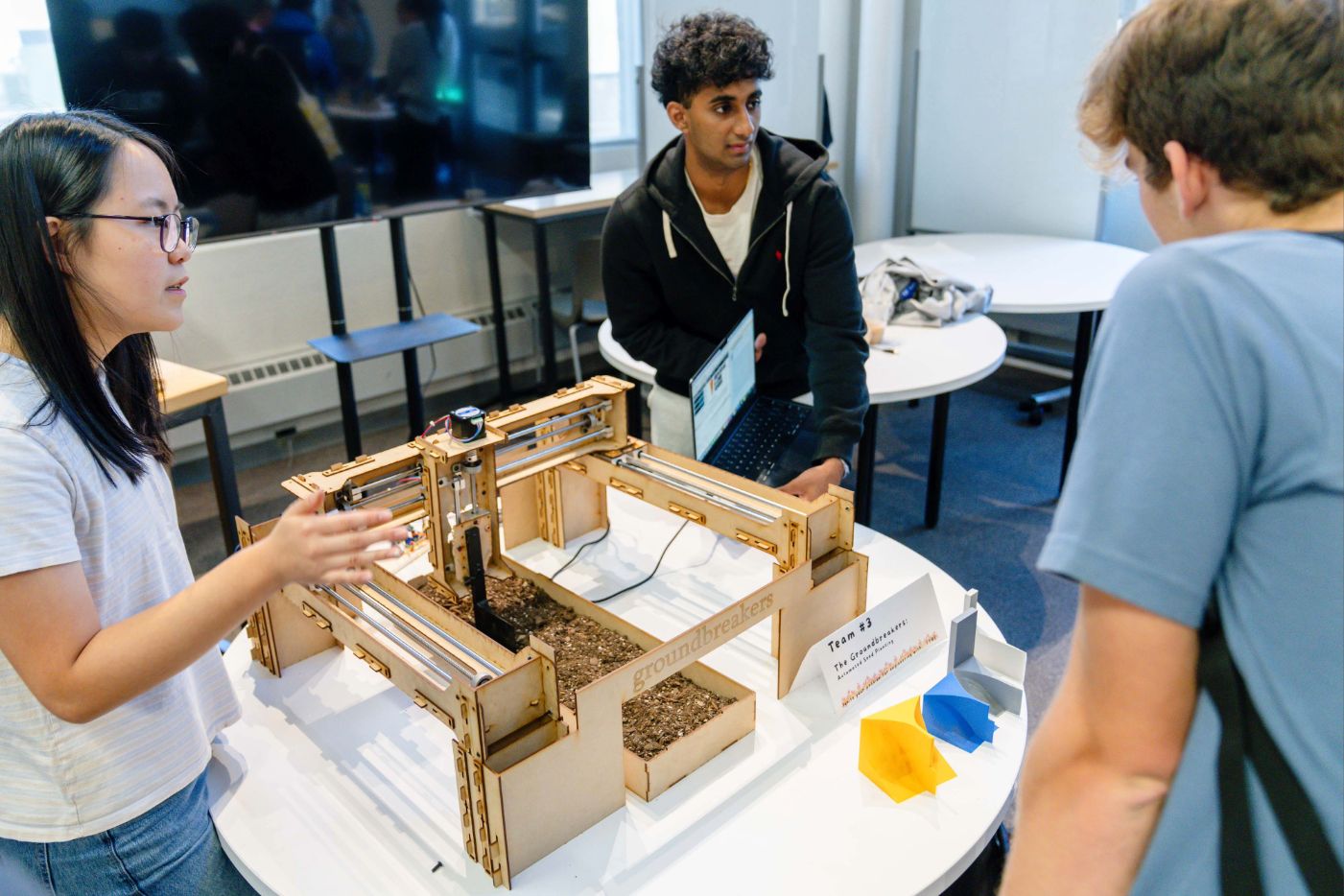
In their first seven weeks as Lehigh engineers, the inaugural cohort designed and built functional machines as part of the Maker Foundations module. And the proof is in the projects — check out the student teams’ impressive creations on display at the recent ENGR 095 expo.
And be sure to follow FYRE on Instagram or LinkedIn to see these projects and skills coming together, from the perspective of the students living it.
Coverage
FYRE in the news
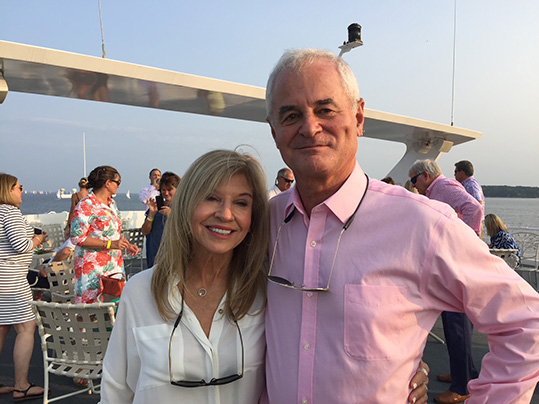
$10M gift creates a new home for FYRE
The Jackson Laboratory in Packard Lab will serve as the hub for FYRE, an innovative curriculum that empowers students to begin building and engineering on day one.
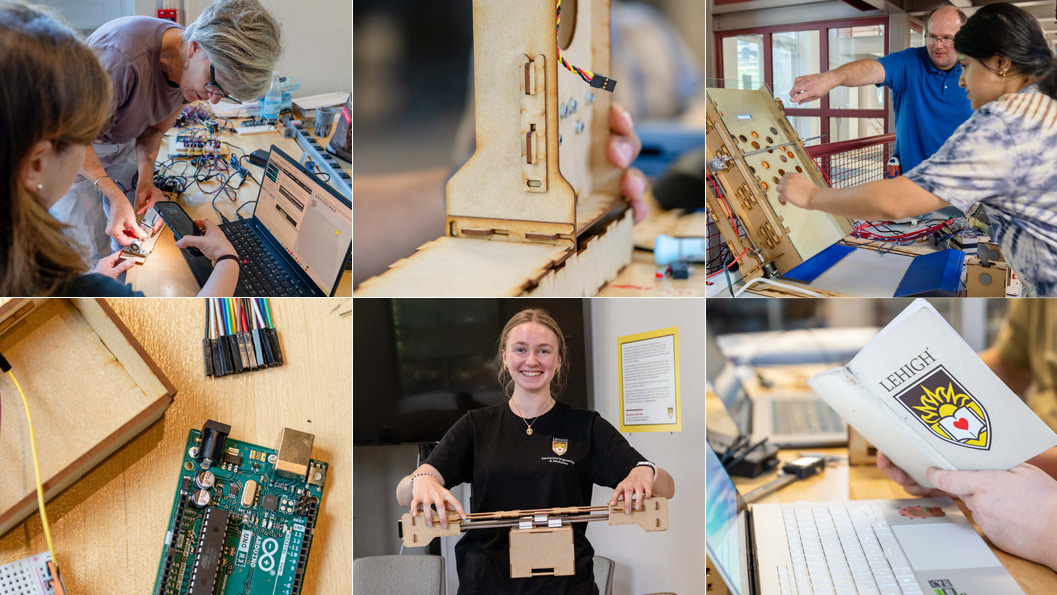
Trial by FYRE
After a faculty test run this summer, students are now in the hot seat, providing insights that will shape the future of first-year engineering at Lehigh University.
Project showcase
Maker Foundations module offers a glimpse into Lehigh’s reimagined first-year engineering experience.
Haden, Obeysekare to lead FYRE
Faculty members to guide FYRE, Lehigh Engineering’s new initiative reimagining the first-year student journey.
Faculty
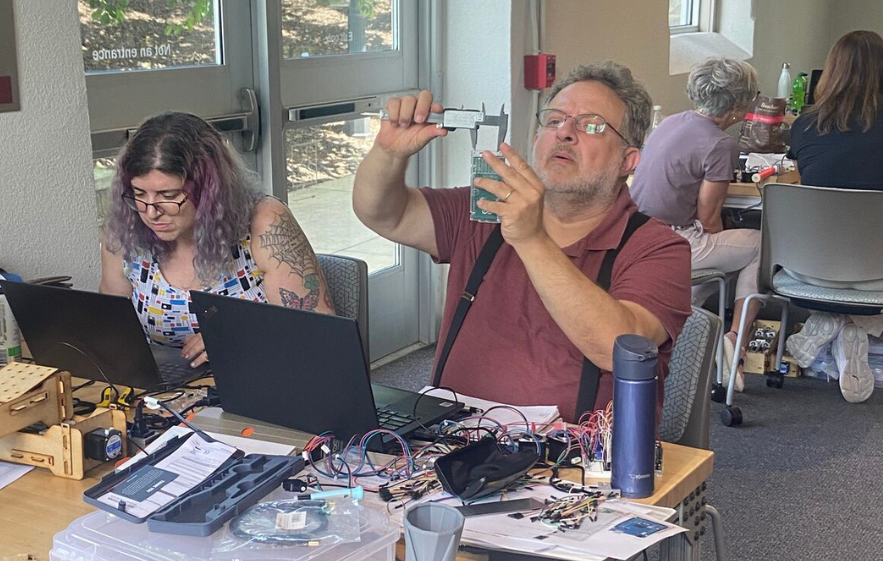
Leading the way: FYRE Faculty Boot Camp 2025
Senior Rossin faculty recently engaged in a FYRE Boot Camp to gain a real up-close-and-personal appreciation for the experience awaiting future Lehigh Engineers.
Questions
Frequently asked questions
What is FYRE at Lehigh University?
First Year Rossin Engineering (FYRE) is the P.C. Rossin College of Engineering and Applied Science’s reimagined first-year engineering experience at Lehigh University. It gives incoming students an early, hands-on connection to the engineering fundamentals they are learning, so foundational coursework and hands-on practice grow together from the start.
What is ENGR 095?
ENGR 095 is a 3-credit pilot course that serves as the core of FYRE’s model of educating first-year engineering students. Its academic modules help student teams understand the connections among engineering disciplines as they learn to solve problems and design solutions collaboratively.
How many credits is the FYRE course?
ENGR 095 carries 3 credits.
What are FYRE academic modules?
FYRE academic modules are short, hands-on engineering courses for first-year students in Lehigh’s Rossin College. Each module combines technical fundamentals with project-based design and teamwork, letting students learn engineering by building, testing, and solving real problems.
What FYRE modules can I take?
Eight modules are offered: Design and Make Foundations; Engineering Against Natural Disasters; Engineering Solutions for Plastic Remediation; Foundations of Energy Storage; Harnessing Agentic AI; Human-Machine Interface; Sensing the World; Sustainable Energy Systems for AI and Microgrid Applications.
How long is each FYRE module?
Each module runs seven weeks — a half semester — so students can experience more than one engineering area per semester.
Do I need prior experience to take a FYRE module?
No. The modules are designed for first-year students and start from the fundamentals. The Harnessing Agentic AI module, for example, begins with no prior coding experience required.
How do FYRE modules help students choose a major?
By rotating through multiple modules, students explore several engineering disciplines before declaring a major, helping them find the field that fits their interests and strengths.
What do FYRE students build in their first semester?
In their first seven weeks as Lehigh engineers, the inaugural cohort designed and built functional machines as part of the Maker Foundations module. The projects were shown at the ENGR 095 expo.
Who leads FYRE?
Christina Viau Haden is FYRE Director and Eric Obeysekare is FYRE Associate Director. Both were appointed to guide the initiative.
Where is FYRE based?
The Jackson Laboratory in Packard Lab serves as the hub for FYRE, created through a $10 million gift from the Jackson Family.
How can I follow or support FYRE?
FYRE is on Instagram and LinkedIn. Support for the program goes through the Rossin College Experiential Learning Fund, which helps provide hands-on projects, mentorship, and early exposure to real-world engineering challenges.
Support FYRE
Let’s get FYRE’d up
Support the next generation of engineers by donating to the First Year Rossin Engineering (FYRE) initiative at Lehigh University. Your gift helps provide hands-on projects, mentorship, and early exposure to real-world engineering challenges — empowering students to innovate from day one. Every contribution sparks curiosity, builds confidence, and fuels future breakthroughs.