
Student(s): Benjamin Childs
Project: PEGylation of a Cell Penetrating Peptide for Increased Serum Stability and CRISPR Efficiency
Advisor(s): Tomas Gonzalez-Fernandez
Abstract
The use of Clustered Regularly Interspaced Short Palindromic Repeats (CRISPR) allows for the precise regulation of gene expression. However, clinical translation of this technology is constrained by delivery challenges. Compared to traditional viral vectors such as adenovirus or lentivirus, non-viral packaging is emerging as a low toxicity and nonintegrative alternative. Cell penetrating peptides (CPPs), like the arginine-alanine-leucine-alanine (RALA) peptide, have shown improved CRISPR delivery efficiency and low cytotoxicity among other non-viral lipid or polymer-based vectors. However, non-viral vectors are frequently evaluated in serum-free conditions, which do not reflect the in vivo environment where serum components impact vector stability, nanoparticle aggregation, and cell uptake. Delivering CRISPR cargo using CPPs in the presence of serum presents additional challenges due to proteolytic enzymes that compromise vector stability and circulation time.
Methoxy Polyethylene glycol (mPEG) is an easily modified polymer with the ability to bind to serum albumins. PEGylation has shown promising results in improving stability, lowering immunogenicity, and preventing aggregation of various biomolecules. We found that PEGylation of RALA achieved enhanced CRISPR delivery in serum conditions by improving stability and decreasing nanoparticle aggregation, while maintaining low cytotoxicity. Optimization of PEGylation was performed, with mPEG-RALA at a 30% molar ratio and mPEG molecular weight of 5 kDa affording the highest transfection efficiency in serum (>10%). PEGylation did not hinder RALA’s ability to form stable nanoparticles and supported efficient delivery to primary cells. These findings support the viability of PEGylation as a strategy for enhancing non-viral CRISPR delivery in serum conditions.
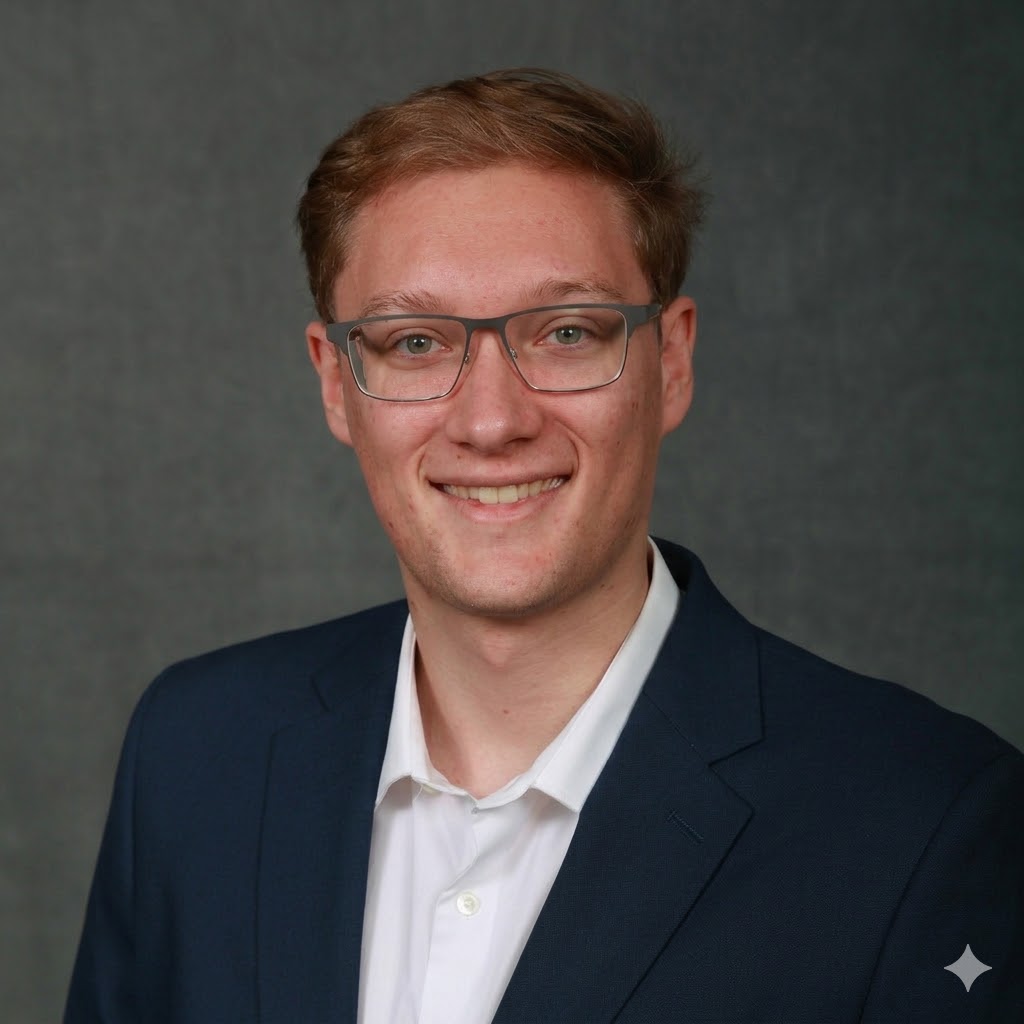 About Benjamin Childs
Major: Bioengineering
Benjamin is a senior undergraduate in Bioengineering at Lehigh University. He has been involved in research since his junior year and works in the Tomas Gonzalez-Fernandez lab under the mentorship of PhD candidate Joshua Graham. Through the Rossin Research Scholars program, Ben has dedicated his research to studying polymer modifications to non-viral CRISPR delivery vectors for increased serum stability. He has a passion for CRISPR gene therapy and hopes to work in the biopharmaceutical industry and develop innovative CRISPR solutions to help make the medication more accessible, effective, and safe. Though his undergraduate career is coming to an end, he is excited to pursue a Master’s degree in bioengineering at Lehigh through the 4+1 program. Overall, Ben is honored to have the opportunity to communicate the work he has done at the David and Lorraine Freed Symposium and excited to continue his research.