
Christa Neu
 Features · Fall 2026
Rossin Research Innovation Grants give faculty the time, resources, and interdisciplinary partnerships needed to transform bold ideas into competitive research proposals
It’s never been easy to secure funding for research.
Grant proposals often run to double-digit page counts and require extensive literature reviews and a meticulously detailed research design that can take months to write. Reviewers tend to favor investigators and teams with proven track records, meaningful preliminary data, and compelling evidence that a proposed project is likely to succeed.
For faculty pursuing entirely new research directions or interdisciplinary collaborations, those expectations can create a difficult catch-22: The preliminary results and evidence of successful collaboration needed to win external funding often require funding to generate in the first place. Add to that recent reductions in federal research spending and greater competition for available dollars—and the bar for securing major grants only continues to rise.
This reality helped spawn the Rossin Research Innovation Grant (RRIG) program. The initiative is funded by alumni donors and encourages engineering faculty to submit brief proposals to a multidisciplinary review panel. Selected projects receive $50,000 and a graduate student tuition waiver to support one year of research into a potentially high-risk, high-reward idea.
Christa Neu
“There are various internal mechanisms at the university level, but there has never been seed funding provided at the college level,” says Mayuresh Kothare, R.L. McCann professor of chemical and biomolecular engineering and the college’s associate dean for research. “As an R1 research university, we’re constantly looking for ways to help faculty compete successfully for external funding. We wanted to create an avenue that would inspire faculty to brainstorm futuristic ideas without requiring the workload of a typical grant. And after a year, if they’ve made some interesting findings, they could use those results to develop a proper research proposal targeted at one of the big funding agencies, such as the National Science Foundation, National Institutes of Health, or Department of Energy.”
An easier first step
RRIG kicked off in late 2024 with a call for two-page proposals summarizing a research problem and outlining the proposers’ relevant expertise. Teams spelled out the potential impact of their work and the competitive advantage it could yield for Lehigh. They also identified the external funding agencies they eventually planned to target.
“These were essentially elevator-pitch white papers,” says Kothare. “We didn’t want faculty to spend a lot of time writing them. So we made it very clear up front: Capture the idea and describe how it will grow. That’s it.”
In early 2025, a multidisciplinary panel of Rossin College faculty members reviewed nine proposals. Projects were evaluated on the strength of the research idea, the potential for new interdisciplinary collaborations, the strategic value to Lehigh, and the likelihood that the work would lead to a competitive proposal for external funding.
“The review process is very rigorous,” says Kothare. “We are systematically assessing the potential of each project. Our key criterion, however, was: Can this idea lead to a funded proposal after one year?”
The answer, it turns out, is yes. Of the three projects selected for the 2025–26 funding cycle, two have produced results that led to proposals, with the third team targeting a submission by year’s end. Two groups have produced either a journal article or conference paper.
“They’re doing exactly what we wanted them to do,” he says. “As a pilot program, it worked well. We’re now in year two and have additional funding to support even more projects.”
Fueling bold ideas
The RRIG grant funds one PhD student for a year, plus lab expenses, and is accompanied by a tuition waiver.
“It’s effectively equal to one year of NSF funding,” says Kothare, “so from a faculty perspective, it’s enough to do a deep dive into an area of research.”
Building the program required more than faculty enthusiasm. It also depended on institutional support and philanthropy from Lehigh alumni. Kothare believes RRIG appeals to them because the program embraces an entrepreneurial model—early-stage ideas that need angel investors willing to accept uncertainty for the potential payoff of a future proposal.
“It’s not a startup in the sense of launching a company, but rather in the sense of starting an idea and growing it into a full-fledged research project,” he says. “Many of our alums are savvy businesspeople, and they appreciate the similarities between the two endeavors.”
According to Stephen P. DeWeerth, professor and the Lew and Sherry Hay Dean of Engineering, how a college supports research can be just as important as the research itself. “With RRIG,” he says, “we’re taking a more entrepreneurial approach to managing our research enterprise, investing early in bold ideas and clearing the barriers that too often keep promising work from ever reaching the funding stage. We are tremendously fortunate to have donors who immediately saw the value in a program like this and wanted to be a part of it. They’re enabling the kind of ambitious, creative thinking that has helped make Lehigh an R1 research institution.”
As with all startups, the potential for failure among RRIG’s selected teams is real. But pursuing ideas that don’t pan out can still be valuable, says Kothare. Academic research builds on both success and failure, and unsuccessful attempts can more clearly mark the path forward.
“We’re creating an ecosystem and a culture of thinking outside the box, and giving faculty the means to develop those ideas,” he says.
Gaining momentum
The 2026–27 Rossin Research Innovation Grant funding cycle sparked 14 proposals and five were funded (see “Five New Research Teams”). The long-term goal, Kothare says, is to expand to supporting 10 projects annually. Top-tier research institutions are judged both by the quality of their scholarship and their ability to attract competitive external funding. By helping faculty launch new collaborations and yield the preliminary data needed for major grant proposals, RRIG strengthens the pipeline that ultimately fuels Lehigh’s research enterprise.
Every major research grant begins with an idea, but ideas alone rarely attract external funding. Those ideas must first be tested, refined, and backed by preliminary evidence and strong collaborative teams. RRIG was created to accelerate that earliest stage of discovery, helping faculty transform promising concepts into competitive research programs.
“Ideas are the root of all research,” says Kothare. “RRIG allows those ideas to germinate.”
With two review cycles under his belt, Kothare is most impressed by the creativity showcased in each proposal as faculty extend beyond their comfort zones.
“We’re seeing faculty come together from across departments in ways they hadn’t previously considered,” he says. “That’s what we were trying to cultivate, that spirit of boldness when it comes to trying something new.”
The alumni investment pipeline
Like angel investors backing an early-stage venture, Lehigh alumni fund seed grants that give faculty the freedom to pursue high-risk, high-reward research before its potential is fully known.
- Philanthropic one-year seed grants
- Preliminary research
- Proposals for external funding
Smarter wound monitoring
Mixed conduction polymers are uniquely suited for biological applications because they conduct both electronic charges and ions—the chemical signals the body uses to communicate.
Elsa Reichmanis, professor and Carl Robert Anderson Chair in Chemical Engineering, has spent decades designing and studying these materials. Together with Thomas E. Gartner, assistant professor of chemical and biomolecular engineering, she has explored how their structure changes as ions move through them, combining laboratory experiments with Gartner’s molecular dynamics simulations.
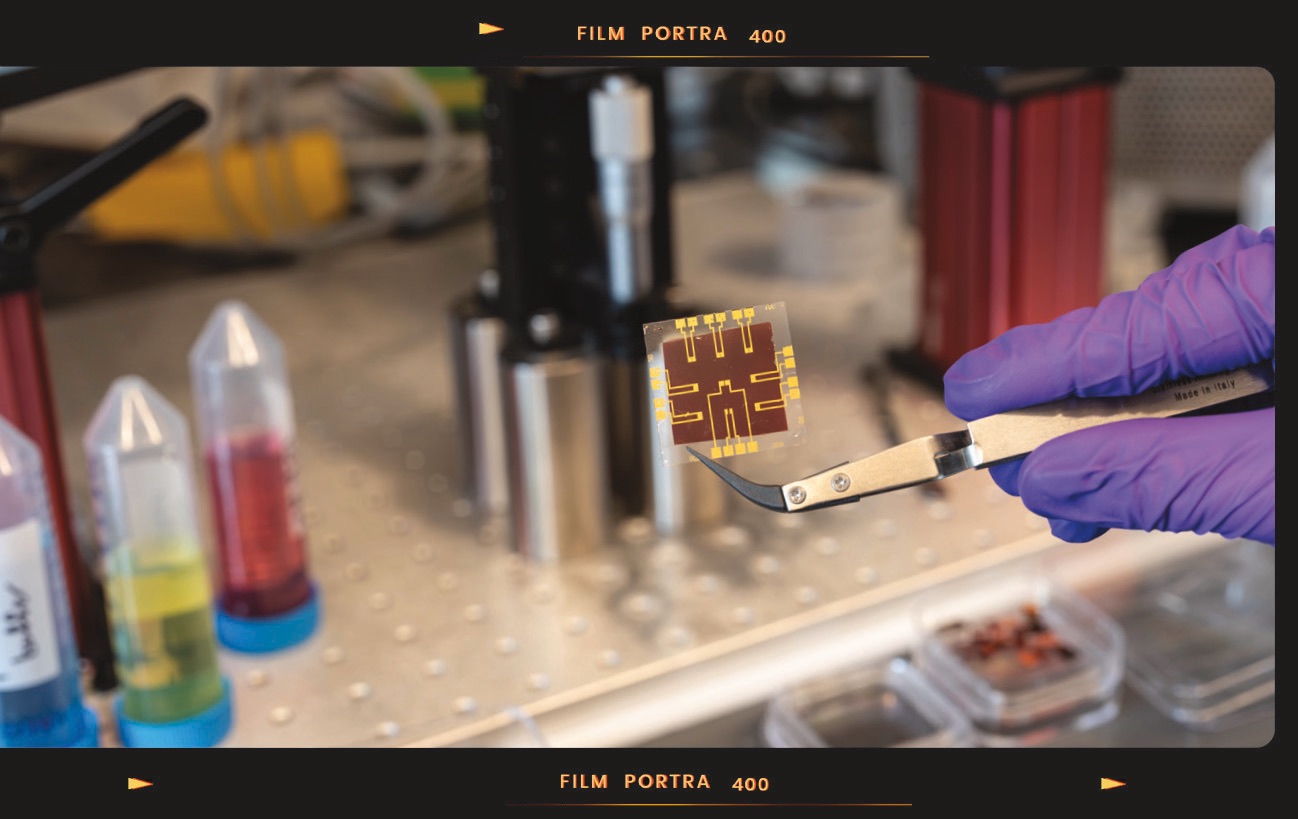
An organic electrochemical transistor measures how the polymer responds to changes in pH.Christa Neu
In 2024, conversations with Xuanhong Cheng, professor of bioengineering and materials science and engineering, opened the door to a new possibility.
“Xuanhong has a bioengineering background and a track record of research related to biosensors,” says Reichmanis. “We talked about creating a credible biosensing application that could validate that these polymers are, in fact, useful in that capacity. We landed on the question: Can we monitor stem cell differentiation and tissue growth? And that led to the RRIG proposal.”
The Rossin Research Innovation Grant allowed the team to gather the preliminary data needed to determine whether the concept was viable. Their early results showed the material was biocompatible; cells cultured on the polymer grew normally and maintained typical behavior. But they also uncovered an unexpected finding: the polymer was extremely sensitive to changes in pH.
Rather than viewing that result as a detour, the researchers recognized an opportunity.
“In wound healing, pH sensing is very important,” says Cheng, who now chairs the bioengineering department. “Successful healing is characterized by a gradual shift from alkaline to acidic pH. Persistent alkaline pH, however, can indicate a chronic wound or infection. Sudden drops or fluctuations in pH can signal tissue ischemia, changes in blood flow, or excessive wound drainage.”
The team is now investigating what ion movement through the polymer reveals about the health of surrounding tissue. One potential application is a sensor that could be embedded in wound dressings, which would provide an early warning of infection, particularly for burn patients who face a high risk of complications.
The preliminary findings have already positioned the researchers to compete for external funding. They submitted a proposal to NSF that is currently under review and published a review article in npj Biosensing.
RRIG support also helped establish a collaborative foundation that Reichmanis says will extend well beyond this initial project. The grant created the time and space for researchers with expertise in chemistry, molecular simulation, and bioengineering to learn one another’s approaches and build a common scientific language.
“Every discipline and subdiscipline has its own language and that can be a challenge,” she says. “We have learned to communicate and work seamlessly together. Our different backgrounds, experiences, and perspectives have helped us move in innovative new directions.”
AI for better bone healing
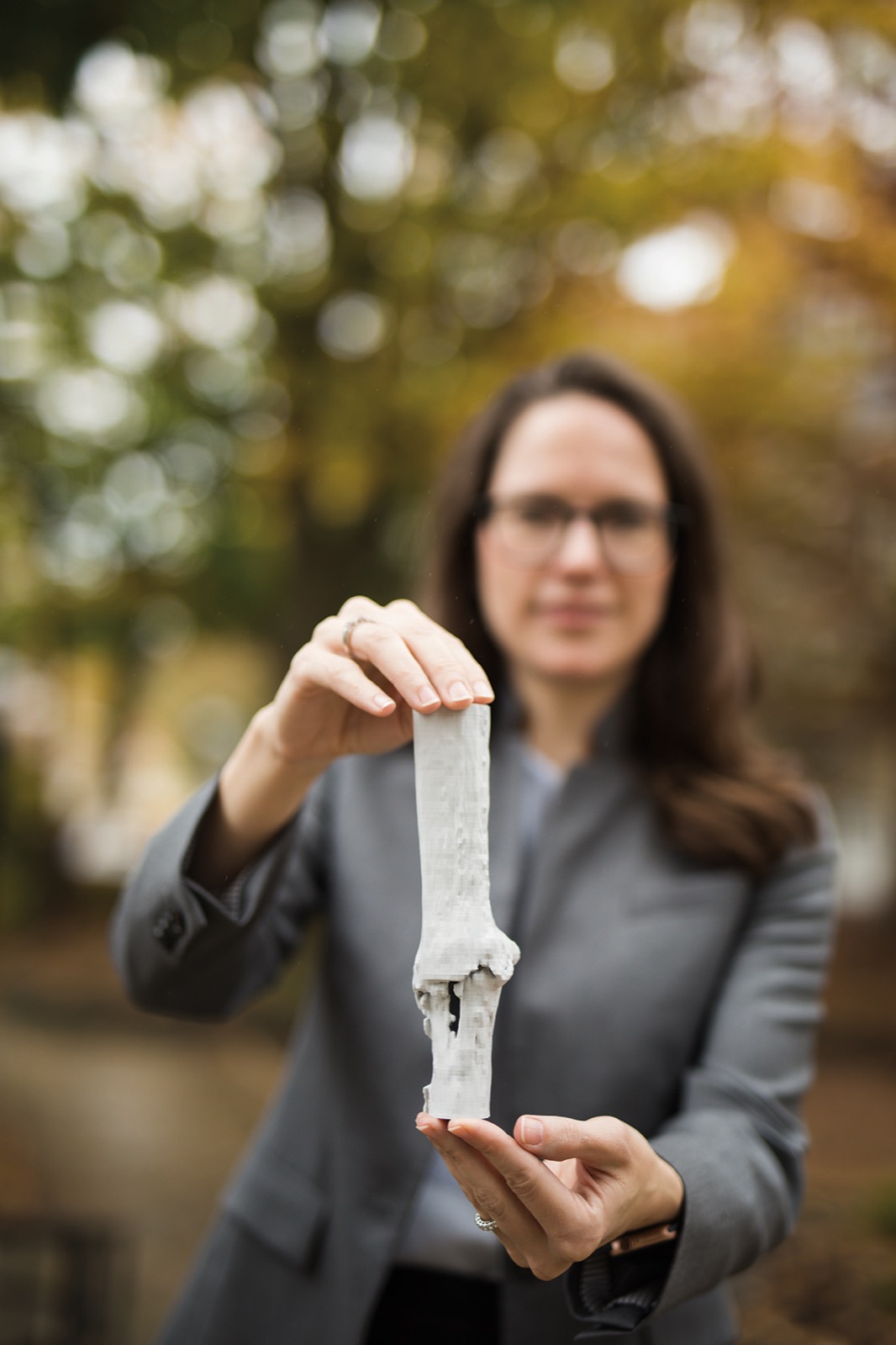
For more than a decade, Hannah Dailey has been working to improve care for patients recovering from broken bones. Her lab creates digital twins from CT scans that allow researchers to measure how well a fracture is healing—information that could help physicians decide whether a patient needs additional surgery or simply more time to recover.
Christa Neu
Dailey, associate professor of mechanical engineering and mechanics and associate department chair, envisioned making that technology far more practical by using standard X-rays instead of CT scans. The idea was to use artificial intelligence to reconstruct three-dimensional information from two-dimensional images, dramatically expanding the technology’s clinical potential.
There was just one problem. “I’m not an algorithm developer,” Dailey says.
So she found someone who is: Lifang He, associate professor of computer science and engineering. Together, they submitted a proposal to the National Institutes of Health.
“It wasn’t successful,” says Dailey. “It’s a really good idea, but we didn’t have enough preliminary data, and we had no record of collaboration. The idea was dead in the water until we received the Rossin Research Innovation Grant.”
The RRIG enabled them to generate the proof-of-concept data reviewers wanted while demonstrating their ability to work together as they prepared to compete for external funding. He’s role in the project is to work with their graduate student to develop and train the AI algorithm, while Dailey has assembled a network of orthopedic surgeons eager to contribute clinical data and help move the research forward.
Today, the team is preparing a new NIH proposal built on that foundation.
The long-term vision extends beyond a single grant. One day, physicians might upload routine X-rays and receive objective measurements showing how a fracture is healing, helping guide treatment without requiring costly CT scans. The same technology could also unlock decades of archived medical images, allowing researchers to study how factors such as smoking, occupation, and other patient characteristics influence bone healing over time.
“There are profound amounts of medical imaging data just sitting in servers right now,” says Dailey. “And because X-rays are done periodically, there’s a treasure trove of time-based data that reveals how bones heal.”
For Dailey, the project illustrates why seed funding matters.
“The funding environment is so competitive right now that you can’t have any weaknesses,” she says. “Lehigh is using these seed grants to invest in building the credibility of new teams like ours that are pursuing novel, risky ideas. I am very grateful for the support.”
Protecting AI models
Training today’s AI models requires enormous investments of time, computing power, and expertise. Protecting the intellectual property and preventing unauthorized copies from being distributed or misused has become an increasingly important challenge.
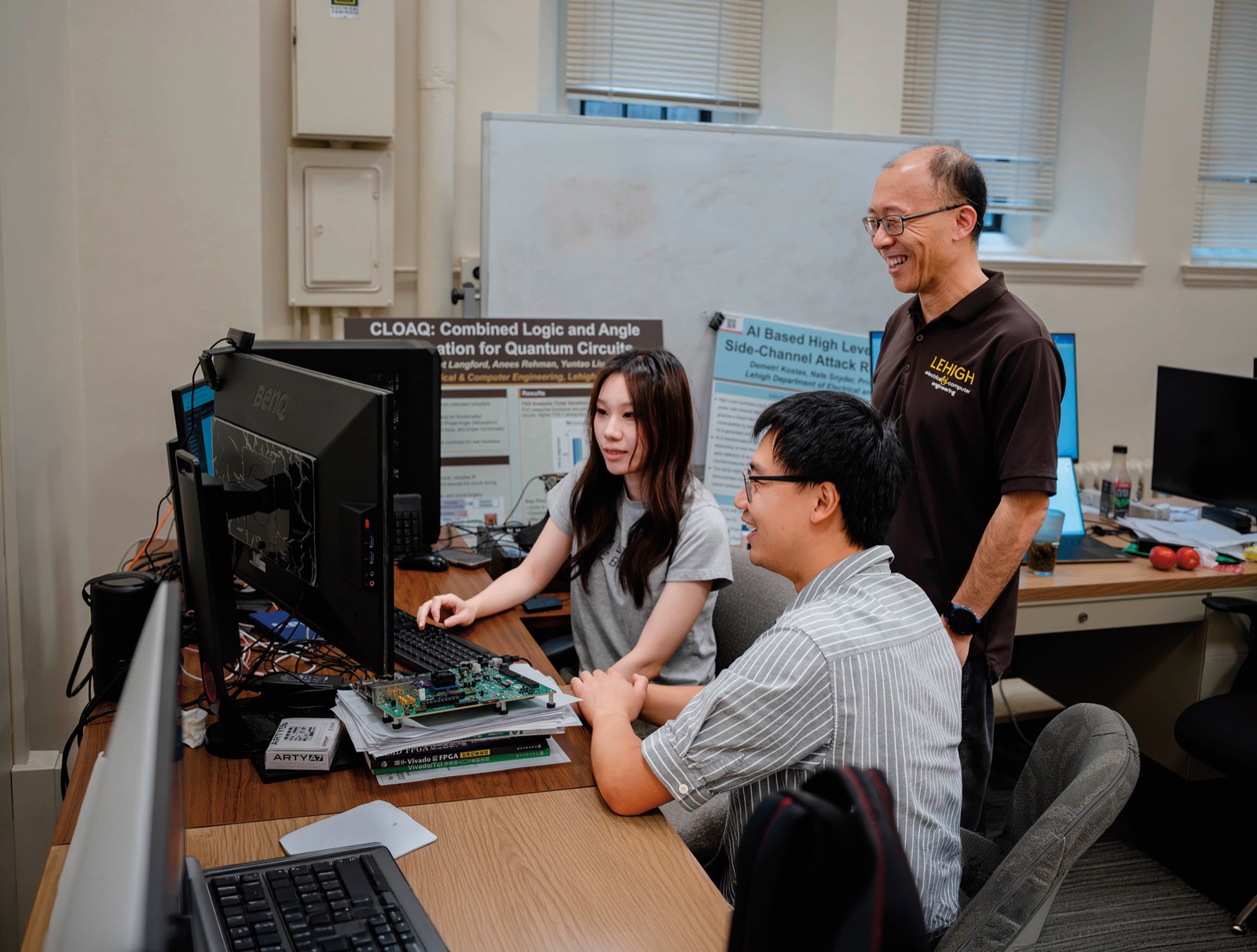
Zhiyuan Yan, professor of electrical and computer engineering and associate department chair, and Yuntao Liu, assistant professor of electrical and computer engineering, believed they could address that problem by giving AI models something akin to a digital fingerprint. Their approach builds on a microchip security technology known as a physical unclonable function, or PUF, which has long been used to verify the authenticity of electronic devices.
Christa Neu
The Rossin Research Innovation Grant gave the researchers the opportunity to combine their complementary expertise—Yan’s background in PUF technology and Liu’s work in hardware security—to test whether the same concept could be applied directly to AI models.
Rather than adding security after a model is created, the team developed a proof-of-concept method that embeds a unique fingerprint into the model as it is being trained. If one of the smaller versions distributed to users is copied or leaked, that fingerprint can identify exactly which version was compromised.
“We successfully proposed the scheme to embed these digital fingerprints in the model distillation process,” says Yan. If a student model (a streamlined version that can be run on smartphones and laptops) is leaked, “using the embedded fingerprints, we can accurately identify it and whoever violated the IP contract.”
The team is now preparing an NSF proposal while finalizing a journal manuscript describing the work. Their next step is to further refine the technology and explore how it could eventually be incorporated into AI systems.
“We couldn’t have reached this point without the RRIG,” says Yan. “This grant gave us the chance to combine our unique, complementary experiences to try a creative approach to solving a widespread problem.”
Five new research teams
The next round of Rossin Research Innovation Grants supports projects spanning AI, healthcare, robotics, energy, and advanced materials.
- Artificial intelligence for cyber-physical systemsParv Venkitasubramaniam and Rick Blum (Electrical and Computer Engineering); Yue Yu (Mathematics/College of Arts and Sciences)
- AI-driven cartilage regenerationTomas Gonzalez-Fernandez (Bioengineering), Lifang He (Computer Science and Engineering), and Dr. Gregory Carolan (Saint Luke’s University Health Network)
- Robotic rehabilitation blimpsJuan Aceros (Bioengineering) and David Saldaña (CSE) with Good Shepherd Rehabilitation
- Advancing geothermal energyCarlos Romero and Arindam Banerjee (Mechanical Engineering and Mechanics); Frank J. Pazzaglia (Earth and Environmental Sciences/CAS); Muhannad Suleiman (Civil and Environmental Engineering)
- Recovering critical mineralsThomas Gartner, Mark Snyder, Steve McIntosh, and Elsa Reichmanis (Chemical and Biomolecular Engineering); Christopher Kiely (Materials Science and Engineering)

Making AI Work
As AI continues to dominate the national conversation, Lehigh researchers are improving its reliability, efficiency, and trustworthiness while accelerating engineering innovation
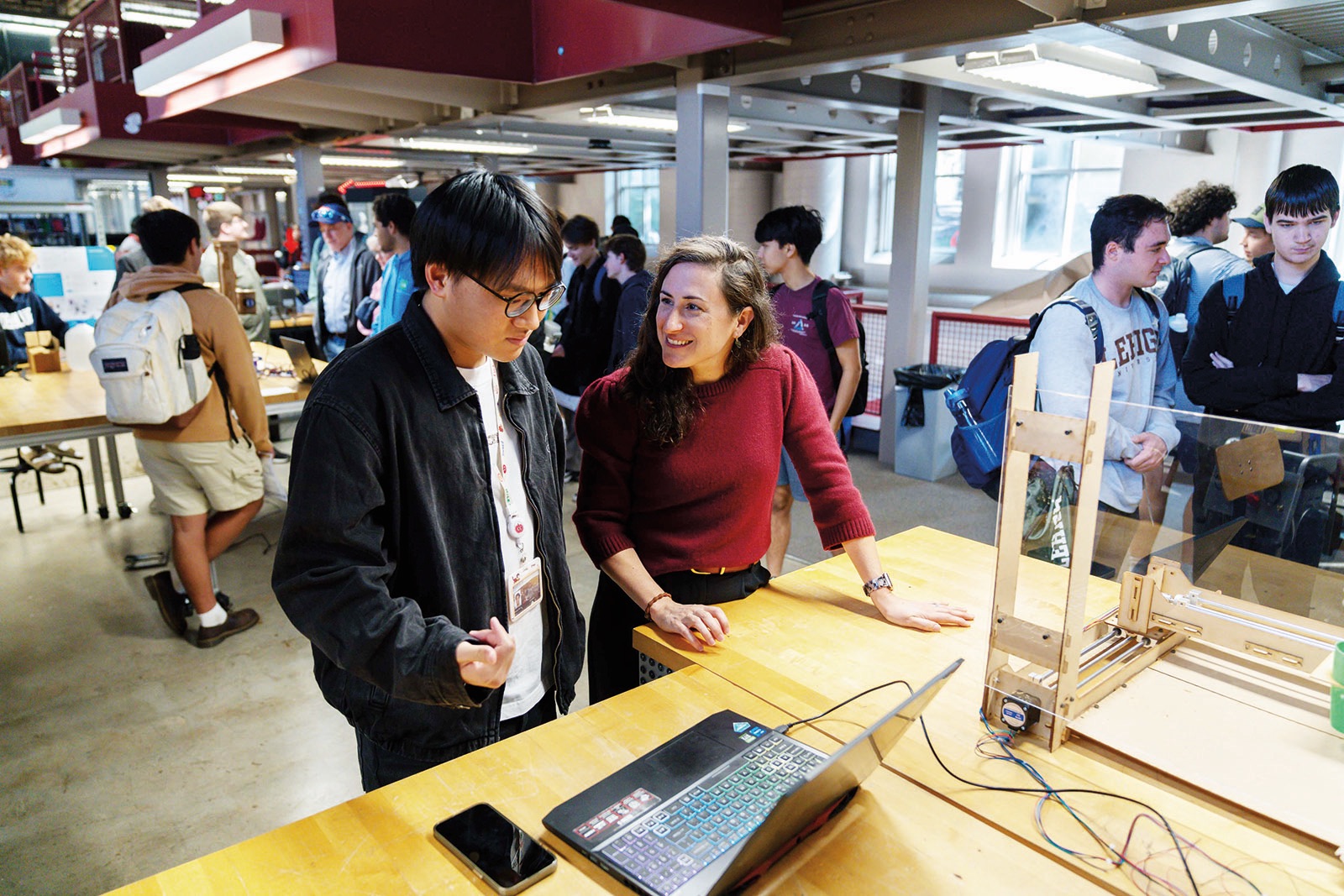
Hands-On from Day One
An expanded lineup of First Year Rossin Engineering (FYRE) modules immerses students in interdisciplinary challenges with real-world relevance
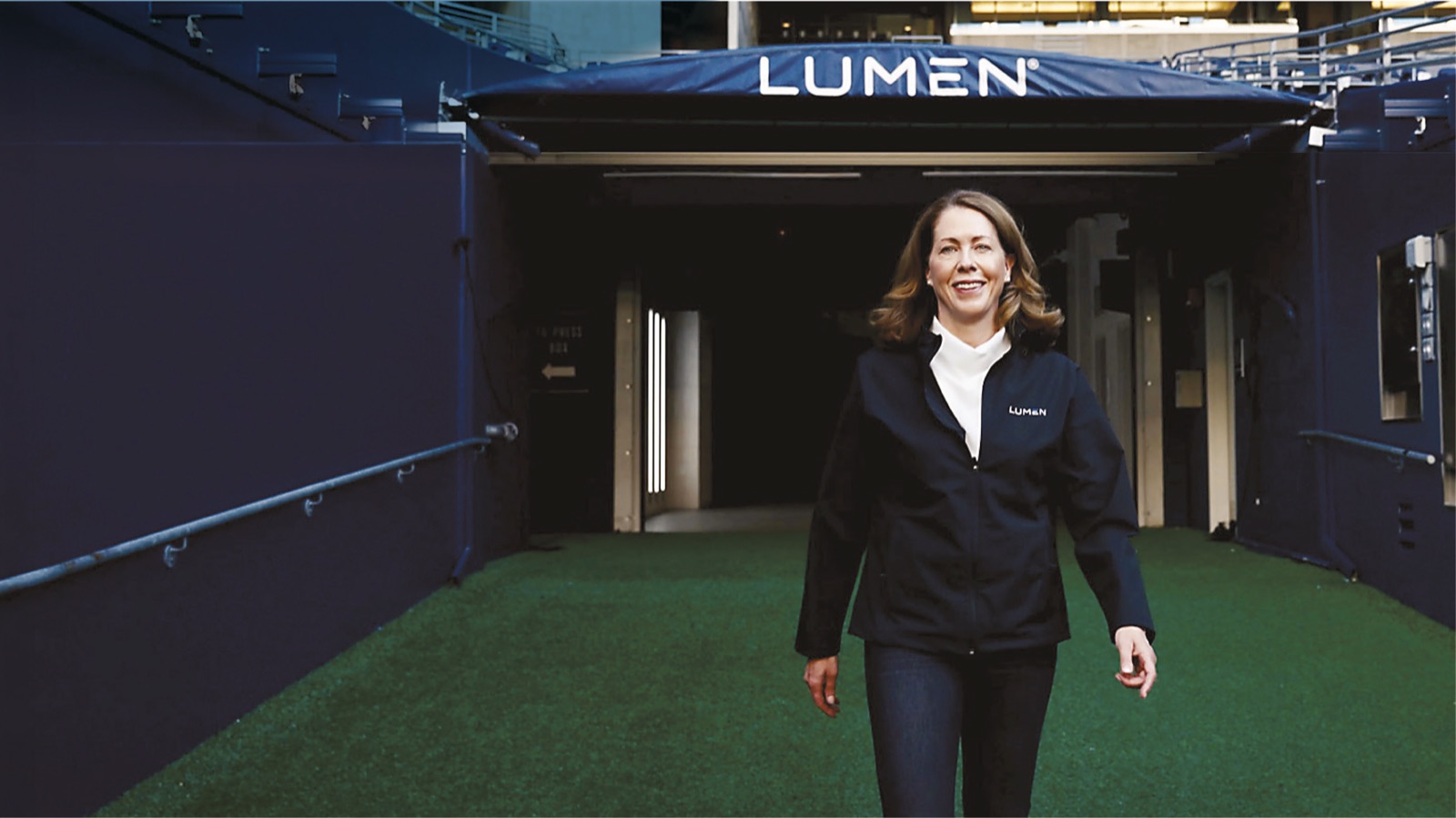
Wired for change
Electrical engineering alumna reflects on AI’s future, the networks behind it, and the mindset needed to lead through rapid change

Engineering on Tap
A new course built around brewing, winemaking, and distilling gives students a practical lesson in process design and plenty of room to experiment
A new way to read the heart
NSF CAREER Award recipient employs seismocardiography to explore using chest vibrations to reveal life-threatening heart defects in newborns