

Courtesy of Lumen
 Q&A · Fall 2026
Lumen CEO Kate McConnell Johnson ’89 on building the networks—and mindset—the AI era demands
Interview by Katie Kackenmeister
Kate McConnell Johnson ’89 has spent her career helping technology companies navigate change. Now, as CEO of Lumen Technologies, the electrical engineering alum is leading one of her most consequential transformations yet: reshaping a legacy telecommunications company around the digital networking demands of the AI era.
Johnson joined Lumen in 2022 after holding leadership roles at Microsoft, GE Digital, Oracle, and Red Hat, experiences that have given her a broad view of how technology reshapes industries and how organizations adapt along with it. In 2025, she returned to Lehigh as the university’s undergraduate Commencement speaker, urging graduates to embrace change with a “play to win” mindset.
For Johnson, the challenges posed by AI are not abstract. They are playing out in real time as she leads Lumen through its own transformation—and as the technology reshapes the work of engineers and the organizations they will lead.

Christa Neu
Why did you study engineering?
I was drawn to the concept of solving problems with technology. I did my senior research project on fiber optics, which is kind of funny, because I run a company where that’s kind of important! Lehigh gave me the basic toolkit and the confidence to adapt and persevere through complex problem-solving and uncertainty.
This issue is focused on the advancement of AI. What’s your outlook on the technology?
AI is an extraordinary accelerant of productivity. But just like with every major technology shift, it will require profound human adaptation. As we adjust, we have to think about how we collaborate with it. We must consider which cognitive tasks we will keep and which we should augment with AI. That’s very different than any other adaptation curve. Think about the personal computer revolution in the ’80s and ’90s. We used PCs to automate tasks, but there were still people printing out emails to read them. Then came the internet and instantaneous access to information. That adjustment went beyond individual work habits to how an entire company could benefit from connection—think supply chains, customer experiences, and so on. But we weren’t really sharing cognition in either one of those shifts. AI is much bigger. It’s more than adapting to a tool. It’s figuring out how we collaborate with it and share cognition to be more productive.

Courtesy of Lumen
The precise impact of AI is, frankly, unknowable. Yet I see a lot of CEOs making broad declarations that it’s going to take over the human role in the workplace—or that it’s not a cause for concern and we shouldn’t worry about a thing. I am somewhere in the middle. We’re going to adapt, but adaptation introduces friction. There is heat and pain and loss. Some of us will adapt quickly, and others won’t. I see maybe a decade or more of tectonic shifts in the workforce, so it does make me wonder about the support systems needed to help individuals adjust.
You often say that AI is a network story. Why is the physical backend so critical to the AI economy?
Across the AI industry, we talk a lot about models and constraints around computing power and energy. What gets less attention is the network that connects it all. That's where Lumen comes in.
In the late ’90s and early 2000s, Lumen built one of the largest fiber networks in North America, which today puts us in a strong position to connect the next generation of AI infrastructure. For decades, the network operated in the background. It was like plumbing. You didn’t think much about it because it was designed for relatively fixed and predictable traffic patterns.
AI changes that. It's not enough to simply connect data centers. You need to move massive amounts of data between data centers, clouds, applications, and users in real time. As AI workloads become more distributed and dynamic, the network becomes increasingly critical to the AI stack.
Think about data centers as the new corporate office buildings for AI. That’s where AI agents live. And there are millions of agents being built every day—that’s why there is a huge data center explosion. I may be working in Bellevue, Washington, while my AI agents are running in a cloud in Northern Virginia and in two dozen other data centers around the country. These agents need to communicate with each other, with applications, and with people. AI is constantly ingesting data, creating new data, and sending insights somewhere else. You can’t build a network in legacy fashion to accommodate that. It would be far too expensive.
That’s where the idea of a digital network comes in. We’re bringing the network into the same business model as compute and storage. In a consumption model, as with a cloud service, companies subscribe to network services so they can connect virtually from anywhere to anywhere and pay only for what they use. AI is a network story because intelligence is only useful if the data can move to the right place at the right time. And for that, you need a digital platform that enables the network to move and adapt as fast as AI does.
As technology changes so quickly, how does a “play to win” mindset shape the way you lead?
That mindset is essential for any company that’s trying to transform itself in a world with AI. Standing still is not an option. You can’t take a pass on this technology wave. You need to figure it out. That requires an open mind, a willingness to keep learning, and the courage to be vulnerable and ask for help.
As a leader, you need to be comfortable not knowing the answers and bringing together experts who can fill in the gaps. And you need to be comfortable with formulating hypotheses, testing, getting feedback quickly, and pivoting. And all of that happens in collaboration with a lot of people. That takes a certain amount of courage, too, because it’s not fun to be wrong and have everybody watching. It also requires the ability to forgive each other and ourselves when we make mistakes or fail. At Lumen, we’ve instilled this notion that we’re here to get it right, not to be right.
What skills and outlooks will the next generation of Lehigh engineers need to thrive in a world being reshaped by generative AI?
I don’t think it matters what discipline you’re in. It’s not even just engineering. It’s pretty much everybody. Get as close to the technology as possible and learn its capabilities. You have to get in the game. The winners in the AI era will be the people who know how to keep learning—unlearning and relearning. Students nearing the end of college will be entering a marketplace that’s changing profoundly week over week. They must demonstrate the courage to try things. They need to show a completely open mind, AI fluency, and an eagerness to reinvent the future.
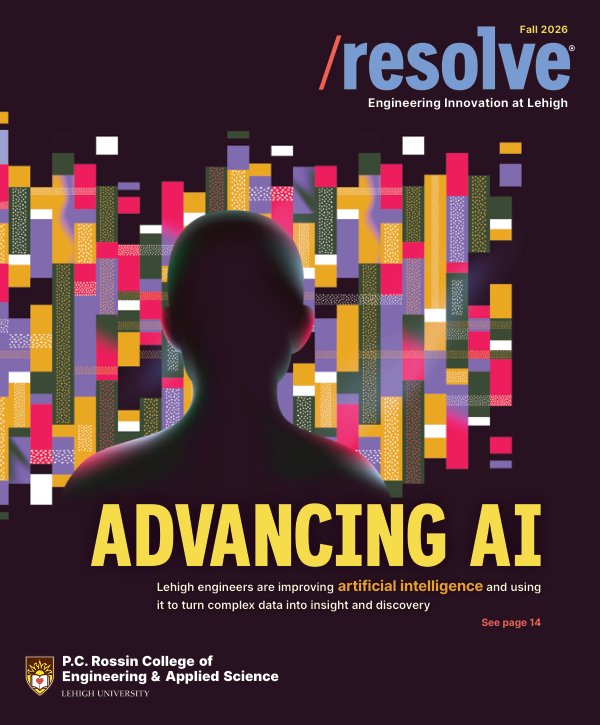

Making AI Work
As AI continues to dominate the national conversation, Lehigh researchers are improving its reliability, efficiency, and trustworthiness while accelerating engineering innovation

Investing in Discovery
Alumni-funded Rossin Research Innovation Grants give faculty the resources needed to transform bold ideas into competitive research proposals
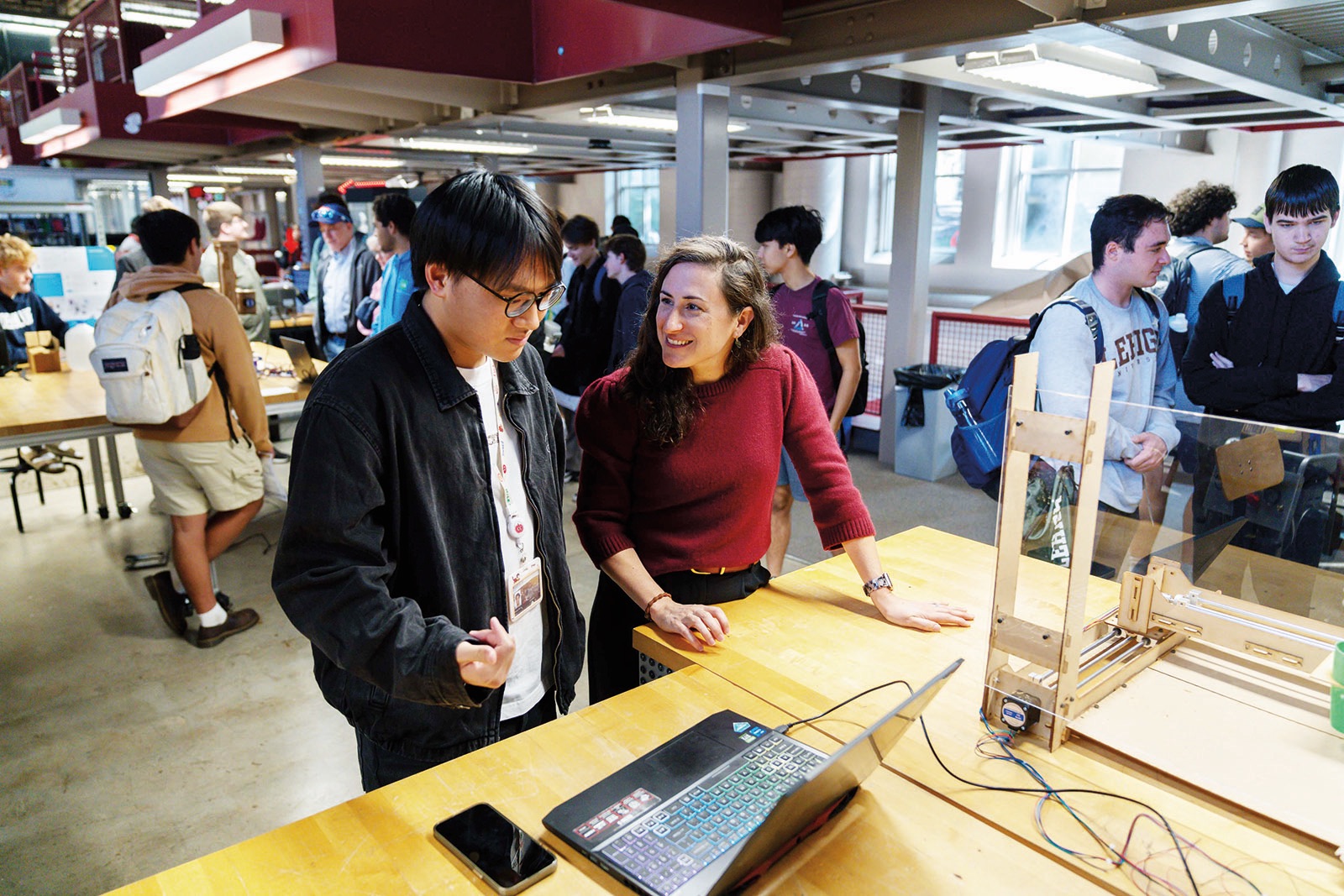
Hands-On from Day One
An expanded lineup of First Year Rossin Engineering (FYRE) modules immerses students in interdisciplinary challenges with real-world relevance

Engineering on Tap
A new course built around brewing, winemaking, and distilling gives students a practical lesson in process design and plenty of room to experiment
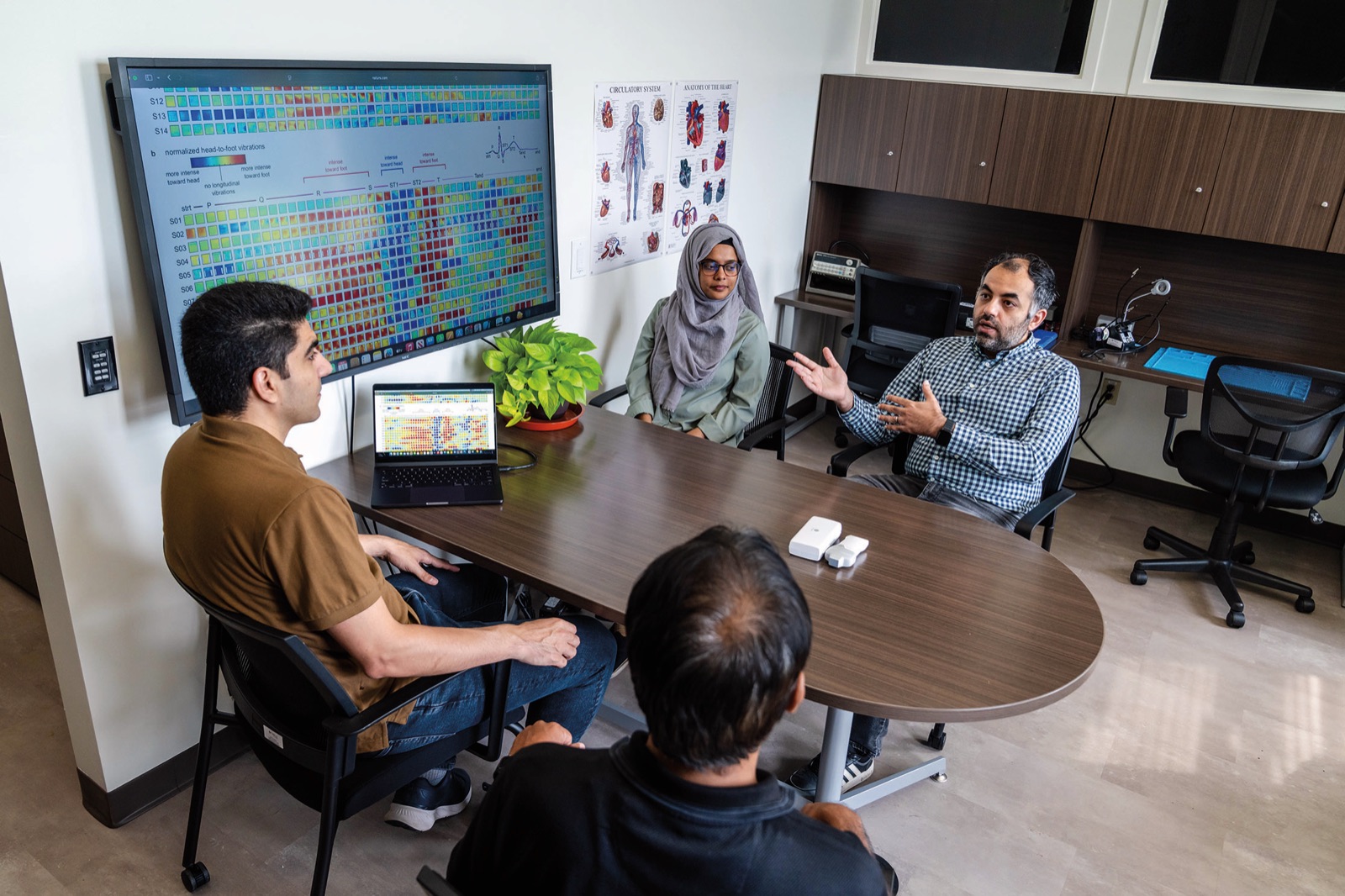
A new way to read the heart
NSF CAREER Award recipient employs seismocardiography to explore using chest vibrations to reveal life-threatening heart defects in newborns