
Angrysun/Adobe Stock
 Educational Innovation · Fall 2026
A new course built around brewing gives students a hands-on lesson in process design and plenty of room to experiment
It may seem strange to sign up for a class focused on brewing beer when you’ve never even had a sip. But when Elizabeth Sterner ’27 learned about the Engineering of Brewing, Winemaking, and Distilling, a course offered through the Department of Chemical and Biomolecular Engineering (ChBE), she couldn’t wait to get started.
“I’m hoping to go into a food science field, and this class aligned with that goal,” says Sterner, a chemical engineering major who took the course last spring. “I was excited to have this opportunity.”
The idea for the opportunity originated with Joseph Menicucci, associate chair of the ChBE department and a teaching associate professor, in collaboration with Department Chair Steven McIntosh, department technicians Paul Bader and Cody Turner, and Sam Masotto, owner and operator of Bonn Place Brewing in Bethlehem. Nicknamed “ChBEer,” the class ran in both the fall 2025 and spring 2026 semesters, and due to demand, will be offered in two sections this fall.
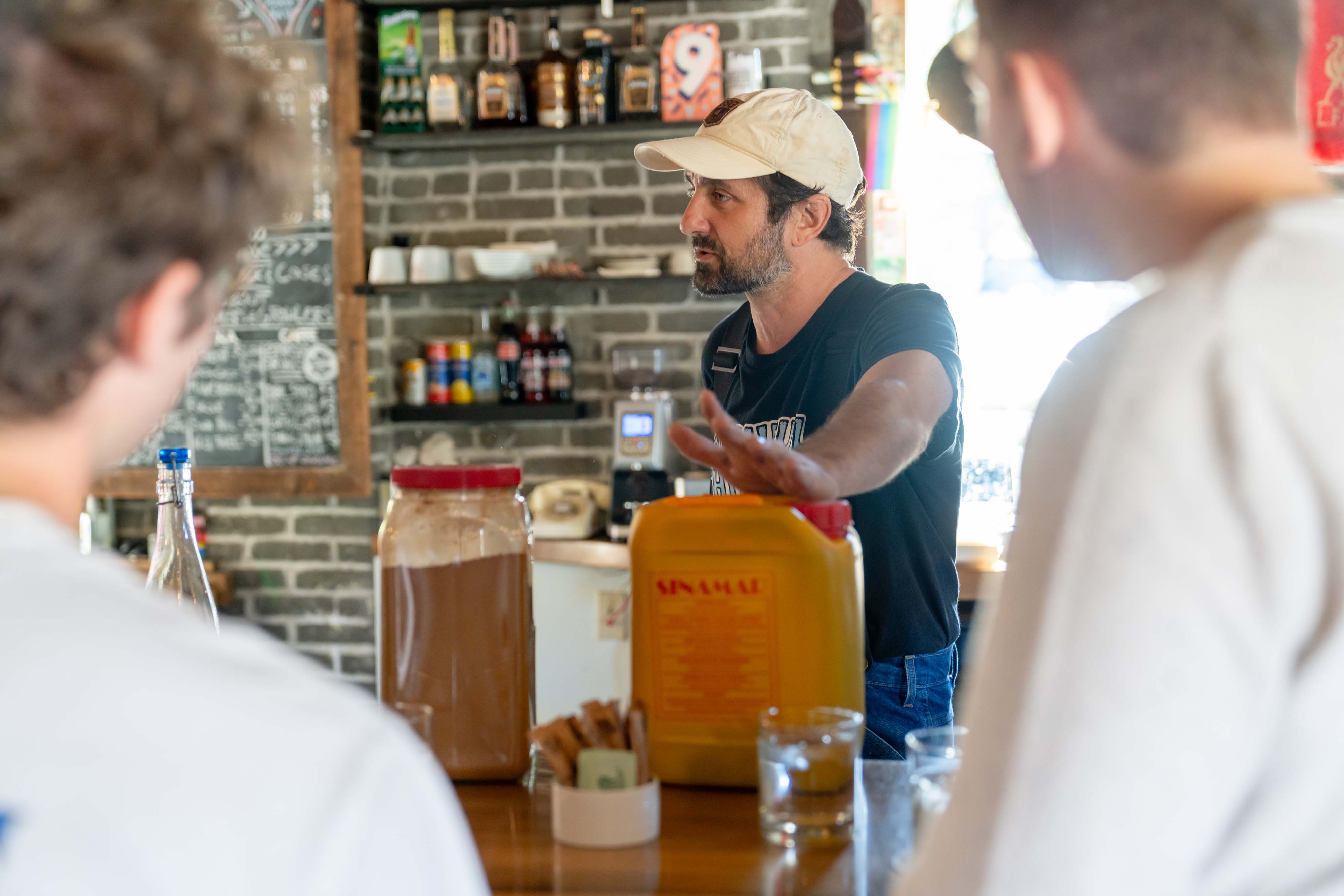
Sam Masotto, owner and operator of Bonn Place Brewing in BethlehemChrista Neu
Translating Technical Concepts to Consumer Products
“At Lehigh, we’re very focused on providing hands-on, experiential opportunities to students,” says Menicucci. “This class allows them to work directly with concepts like unit operations, enzymatic conversion, and heat exchange that they might be learning about in other classes. They develop the skills to replicate industrial processes involving living organisms under very exacting conditions to produce a desired product over time.”
That idea of precisely manipulating a range of variables appealed to Evelyn Wong ’26. The bioengineering major is an avid cook and baker who often applies her engineering mindset to those pursuits—such as reducing certain ingredients, like sugar, without compromising taste, texture, structure, or cooking time. She saw the class as a chance to translate her technical knowledge into a consumer product.
“I’ve never worked in a food lab before, and I wanted to learn something new,” says Wong, who also took the course last spring. “I’m used to working with bacteria and proteins, and in some ways, they’re almost theoretical because they’re so small. But the grains, oats, and hops are right there in front of you, which makes it feel like a more tangible experience.”
The Chemical Engineering of Brewing
Students are hands-on from day one. They learn how to design a recipe and source raw materials while digging into the unit operations of a brewery: milling and mashing grain to convert starches into sugars; boiling and quickly cooling the liquid (known as wort); fermenting to convert sugars into alcohol and carbon dioxide; separation and filtration to remove solids; and packaging and quality control to ensure consistency, carbonation, and sanitation.
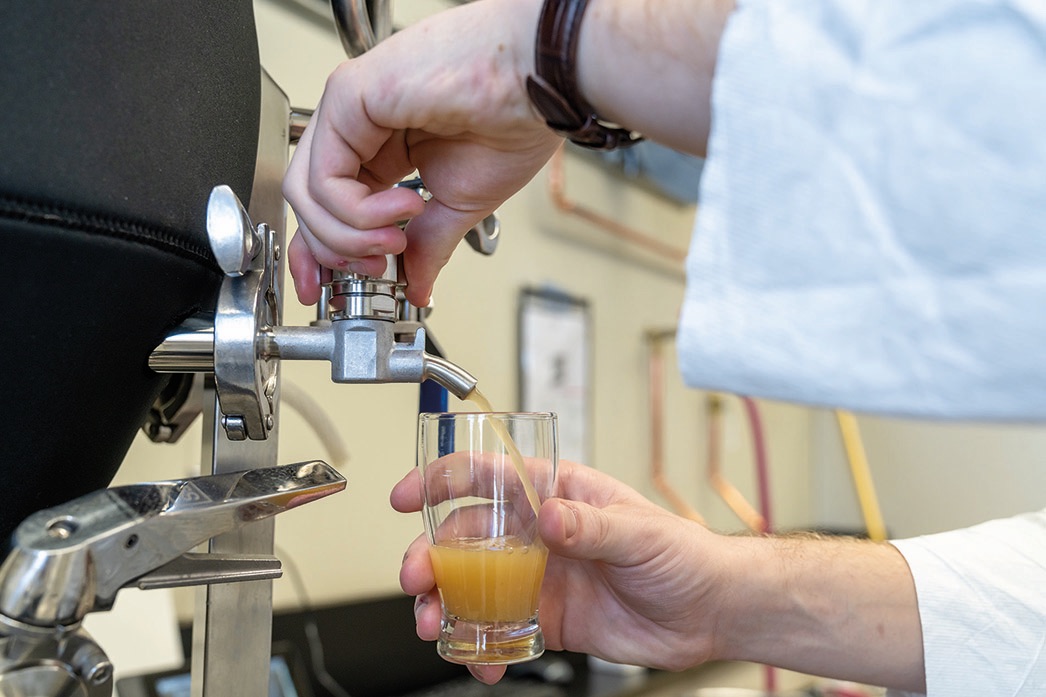
Students work through every stage of the brewing process.Christa Neu
Together, those brewing steps employ a range of chemical and biomolecular engineering concepts, from reaction conditions and temperature control to mass transfer and the behavior of microorganisms—concepts familiar to junior and senior chemical engineering students. But the beauty of the course, says Menicucci, is that students don’t actually need a chemical engineering background to succeed. The spring cohort included several bioengineers, and this fall, ChBEer is open to all students of any discipline.
“Students of any major across the university can get their hands on chemical and biomolecular engineering equipment, and even if they don’t have courses in kinetics or fluids, they’ll still be able to learn the process of designing and producing beer at scale using chemical engineering principles.”
Student Research and Creative Freedom
Working in teams, students design, brew, can, label, and present two beverages at an end-of-semester tasting event. Each team produces about five gallons—or 40 cans—of each finished product. Teams tend to form around mutual tastes, which in some cases meant a shared dislike for alcohol altogether.
“I don’t really drink,” says Cooper Delemus ’26, “and I’m still not the biggest fan of beer.”
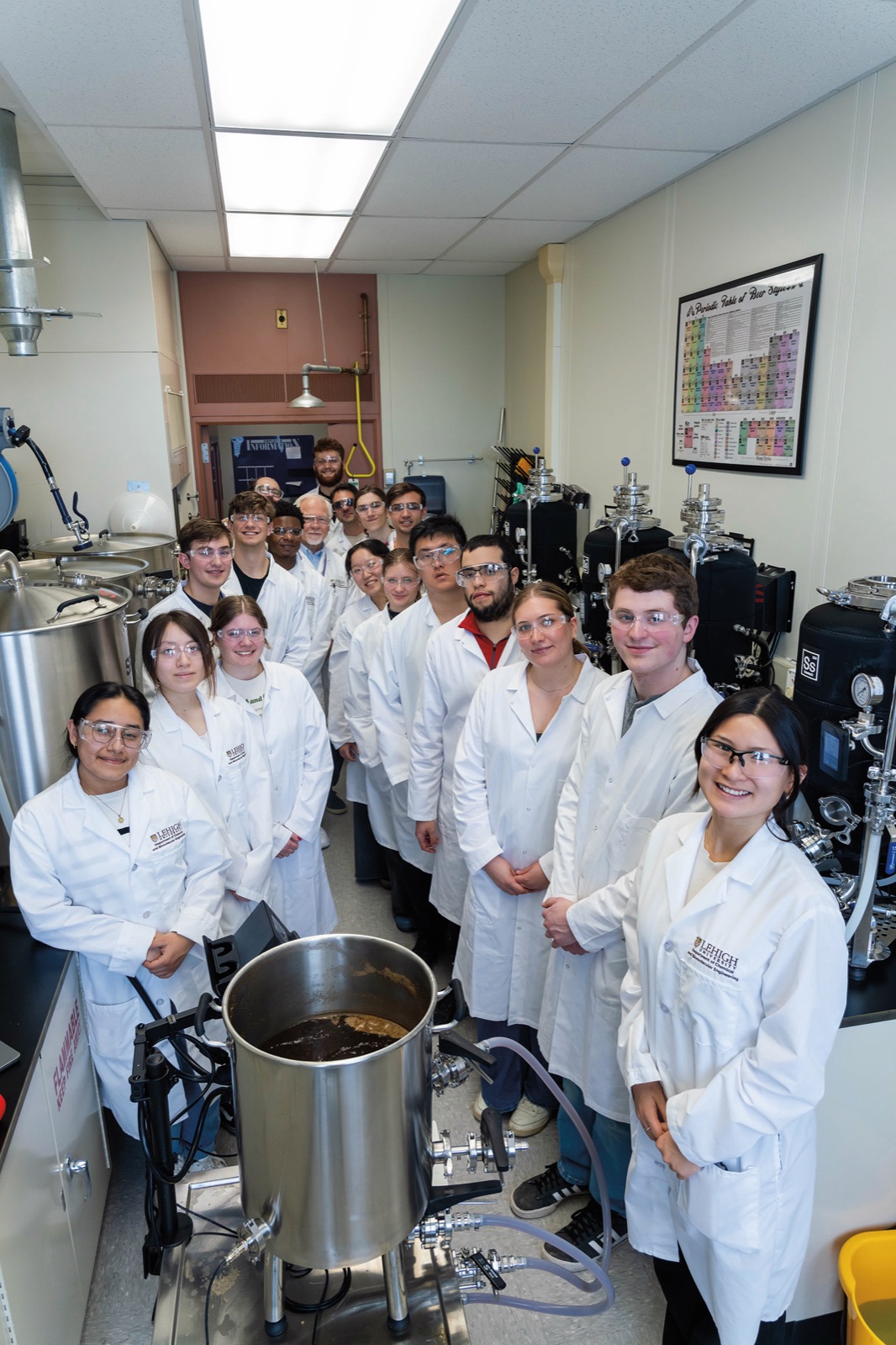
Students in the Spring 2026 Engineering of Brewing, Winemaking, and Distilling class.Christa Neu
What he does enjoy, however, is learning by doing, and he particularly appreciated the creative freedom the class allowed. While Menicucci and his team provided guidance and support, students were encouraged to follow their interests and solve problems collaboratively as they designed and brewed their beers. Delemus, a bioengineering major, initially went down a research rabbit hole trying to determine if his team could genetically modify yeast to brew a beer that glowed.
“We realized it wasn’t feasible,” he says. “But I learned so much about fluorescent proteins, bioluminescent organisms, yeast metabolism, and how yeast can be modified. I probably did more research for this class than any other because I really wanted to learn as much as I could about what was possible.”
His careful study eventually brought him to gruit, a traditional European herbal mixture used to flavor beer before hops became commonplace.
“I was researching hops and wondering what people used before they came along,” he says. It turns out villages had their own blends of herbs and spices that they tossed into beer to create that bittering effect.”
The team sourced yarrow and sweetgale (Myrica gale), two of the most popular herbs used in traditional gruit, and blended them with cinnamon, dried ginger, cardamom, and vanilla. It took some tweaking, but eventually the team produced a beer similar to a Christmas ale.
“Christmas ales are known for their spice flavor, and for being pretty strong,” Delemus says. “Ours was about 8.9 percent ABV, but it had a very smooth taste thanks to the vanilla.”
Collaborative Problem-Solving and Industry Preparation
Sterner’s team was similar in that they were bigger fans of tea than beer. So they came up with an American wheat beer infused with Earl Gray tea and orange blossom honey. And like Delemus, Sterner thrived in what she describes as the “choose your own adventure” ethos of the class.
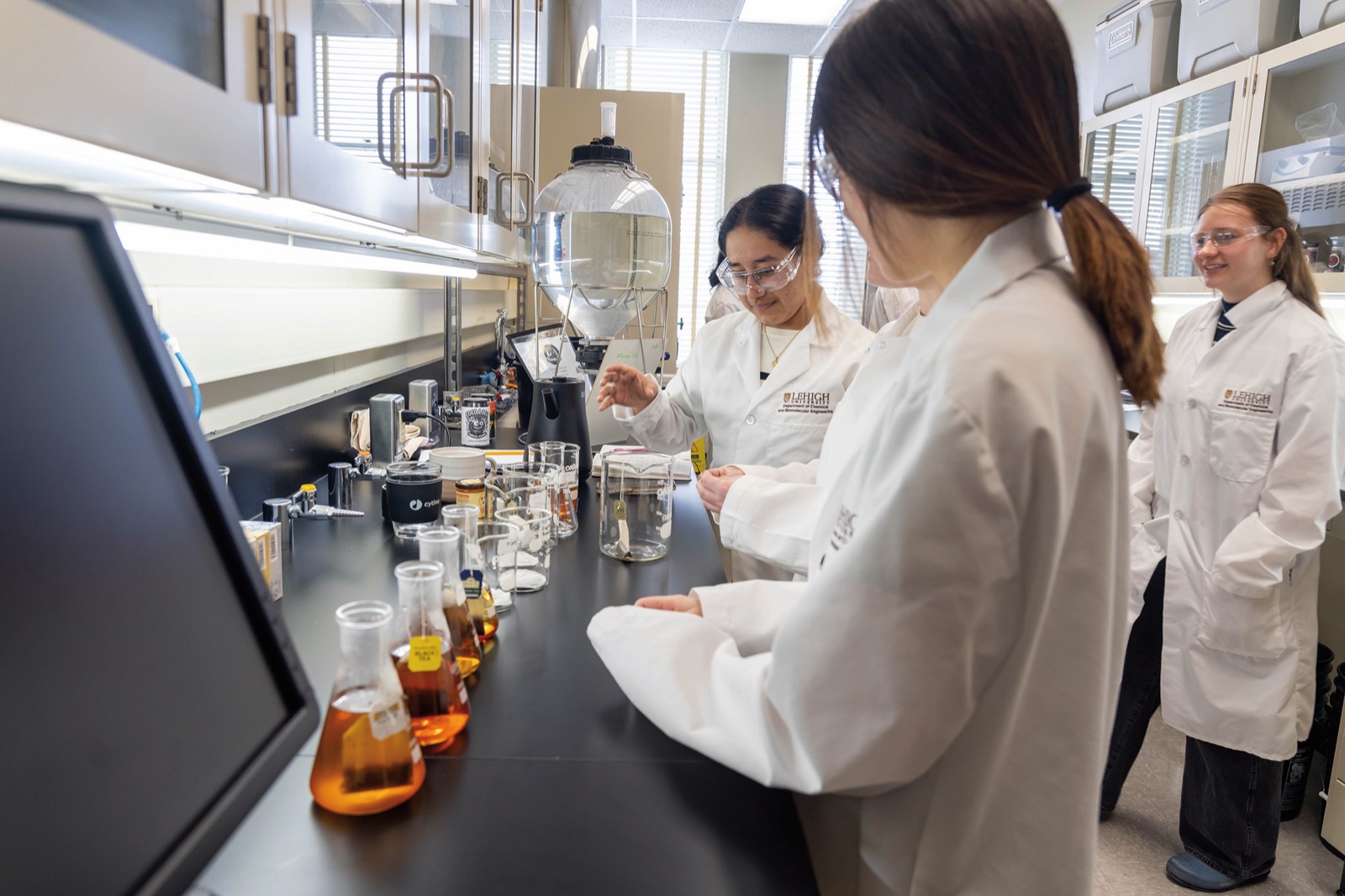
A team of tea lovers came up with an American wheat beer infused with Earl Gray and orange blossom honey.Christa Neu
“We were given all the equipment and tools and told to make a recipe,” she says. “My group liked iced tea, so we started thinking about how we could turn that into a beer. The instructors and TAs helped us refine the idea and make it happen.”
One of those TAs was William Clark ’26. A chemical and biomolecular engineering major and dedicated homebrewer, Clark helped Menicucci develop the class in its early stages. Assisting with the course in its first two semesters was not only an opportunity to deepen his knowledge of brewing, but also a chance to share his enthusiasm for the possibilities within chemical engineering.
“Brewing is chemical engineering,” says Clark, a fan of German beers who has brewed, among others, a Helles lager, a Dunkelweizen (a dark wheat beer), and a Kölsch over the two semesters. “You’re manipulating a reaction to get a desired result. To me, it’s a much more exciting process than being told to make a million tons of sulfuric acid.”
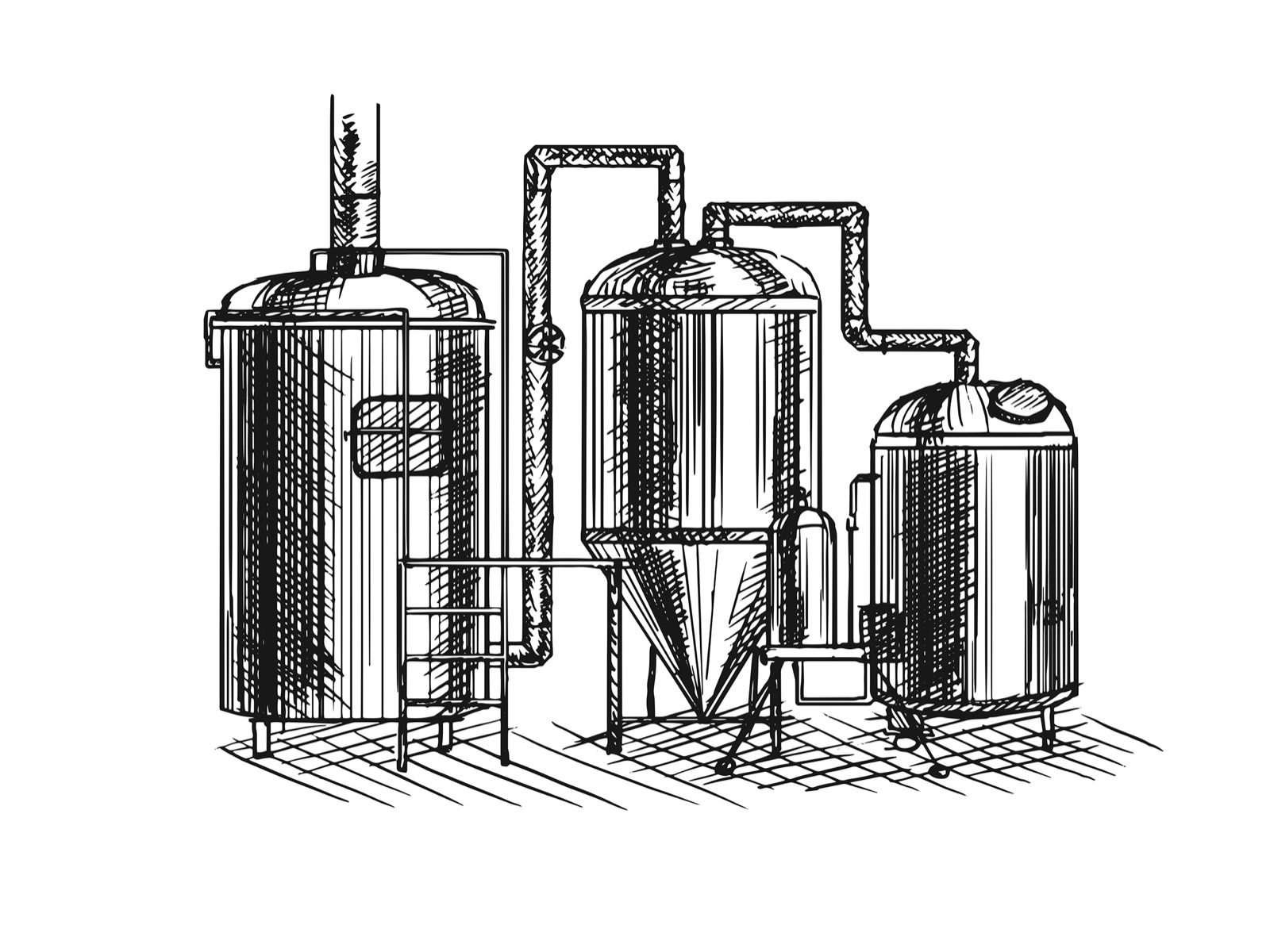
Illustration: Oleksandr Pokusa/Adobe Stock
It’s also a process that rewards participation and feedback. After taking the class last fall and going from knowing very little about beer to brewing a respectable Italian pilsner, Zach Ostrand ’26 returned in the spring as a TA largely because he enjoyed puzzling through recipes with other students.
“Some people taste one thing in a beer, while other people taste something totally different,” says Ostrand, who made what Menicucci calls “far and away the best barley wine I’ve ever had.” (Barley wine is a strong, malty, sweet beer.) “You’re sharing this experience and trying to connect it to what you want to brew, what’s possible to brew, and what we can do that’s new, and those conversations are really fun.”
Wong, the bioengineer looking to learn something new—and whose team created the lemon shandy that was the fan favorite at the end-of-semester tasting—plans to incorporate many of the skills she developed in the class in her first industry role. She will be a process engineer in medicine formulation for the biopharmaceutical company AstraZeneca. She saw clear overlap between brewing beer and making meds when it comes to process efficiency, improving yield, minimizing waste, and collaboration.
“It was so nice working with and learning from really smart people,” she says. “They were all passionate about engineering and wanted to apply that passion to making great beer.”


Making AI Work
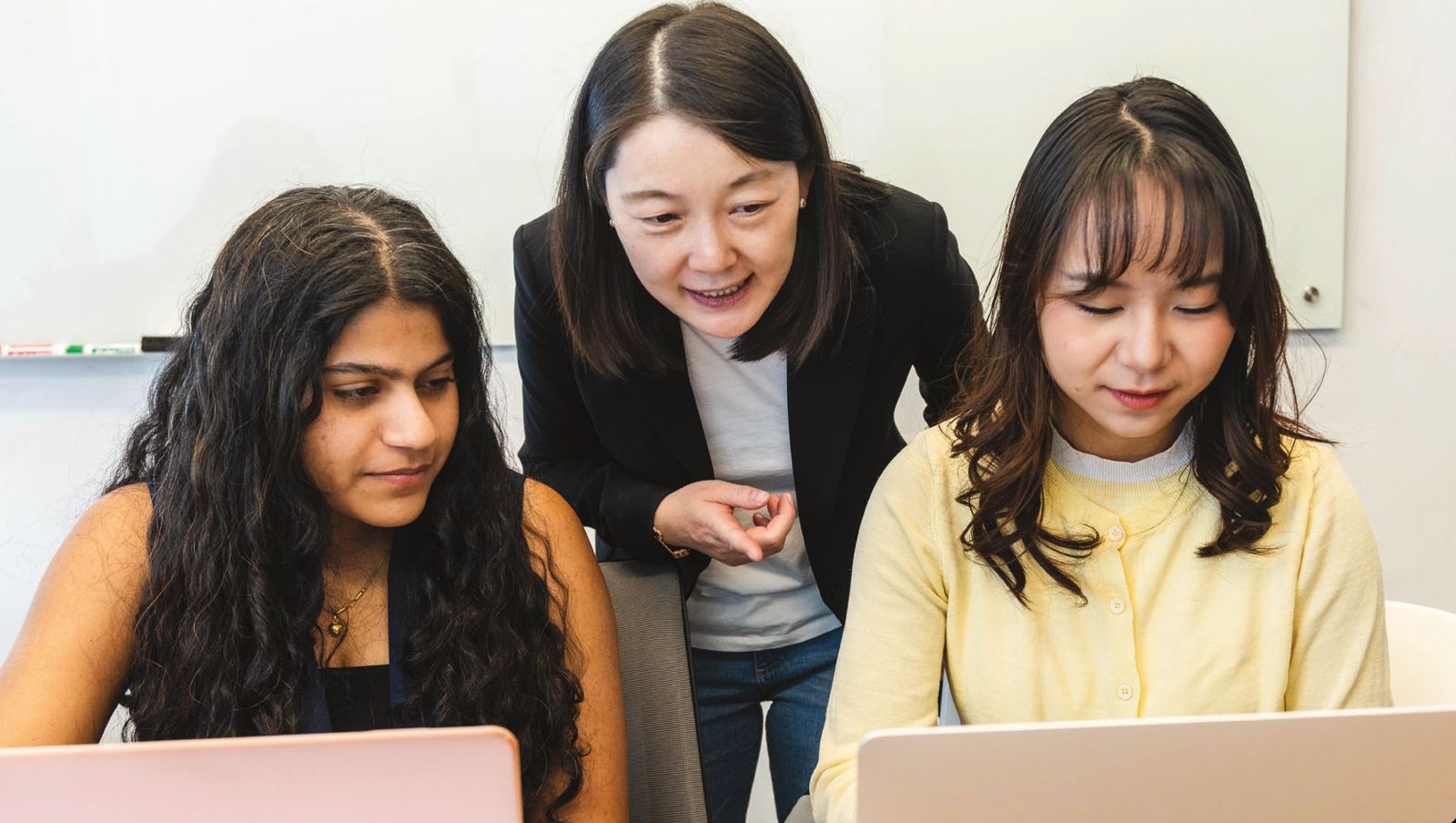
As AI continues to dominate the national conversation, Lehigh researchers are improving its reliability, efficiency, and trustworthiness while accelerating engineering innovation
Investing in Discovery
Alumni-funded Rossin Research Innovation Grants give faculty the resources needed to transform bold ideas into competitive research proposals
Hands-On from Day One
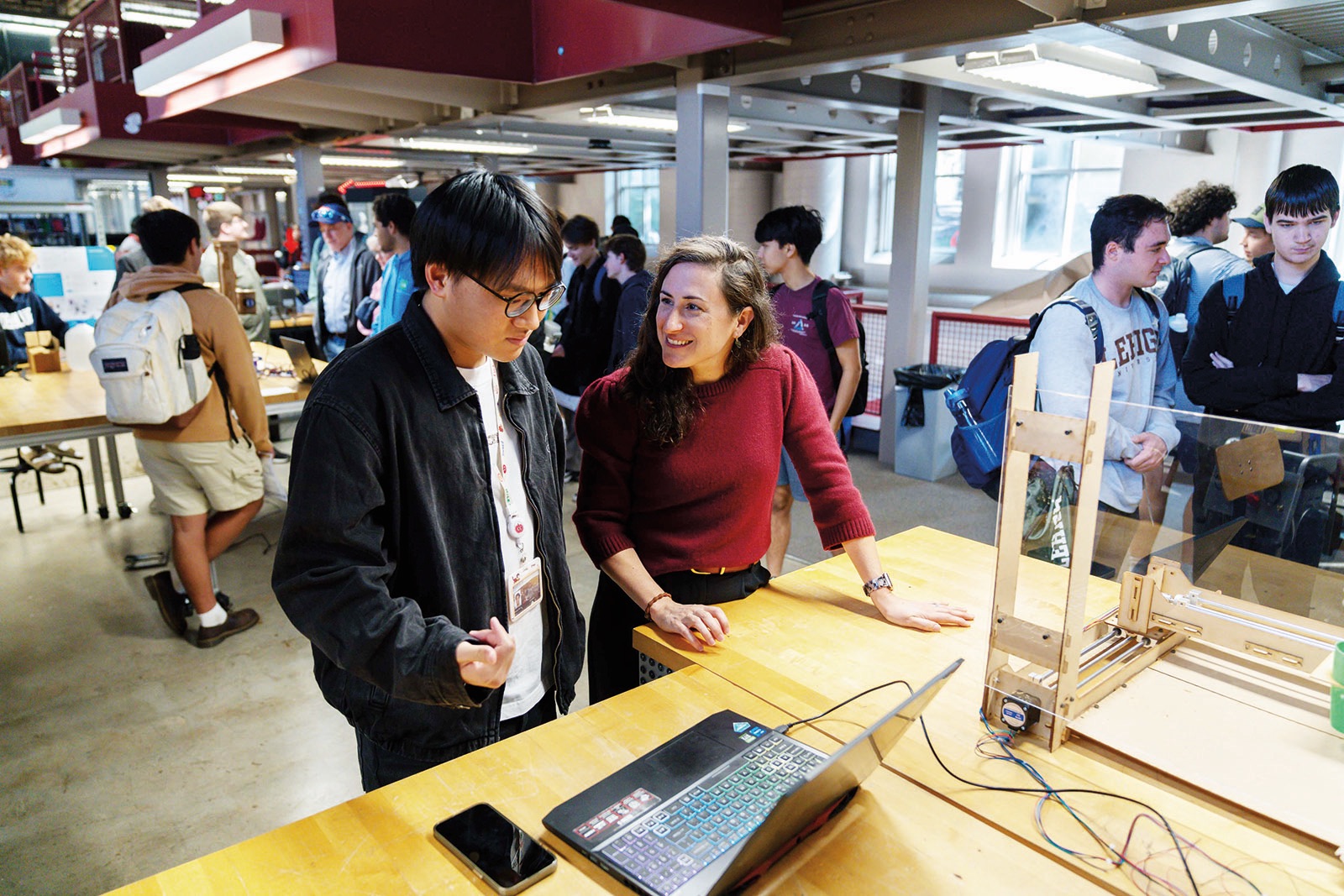
An expanded lineup of First Year Rossin Engineering (FYRE) modules immerses students in interdisciplinary challenges with real-world relevance

Wired for change
Electrical engineering alumna reflects on AI’s future, the networks behind it, and the mindset needed to lead through rapid change
A new way to read the heart
NSF CAREER Award recipient employs seismocardiography to explore using chest vibrations to reveal life-threatening heart defects in newborns