
Duration: 39:47 | Published: September 23, 2020
Episode Summary
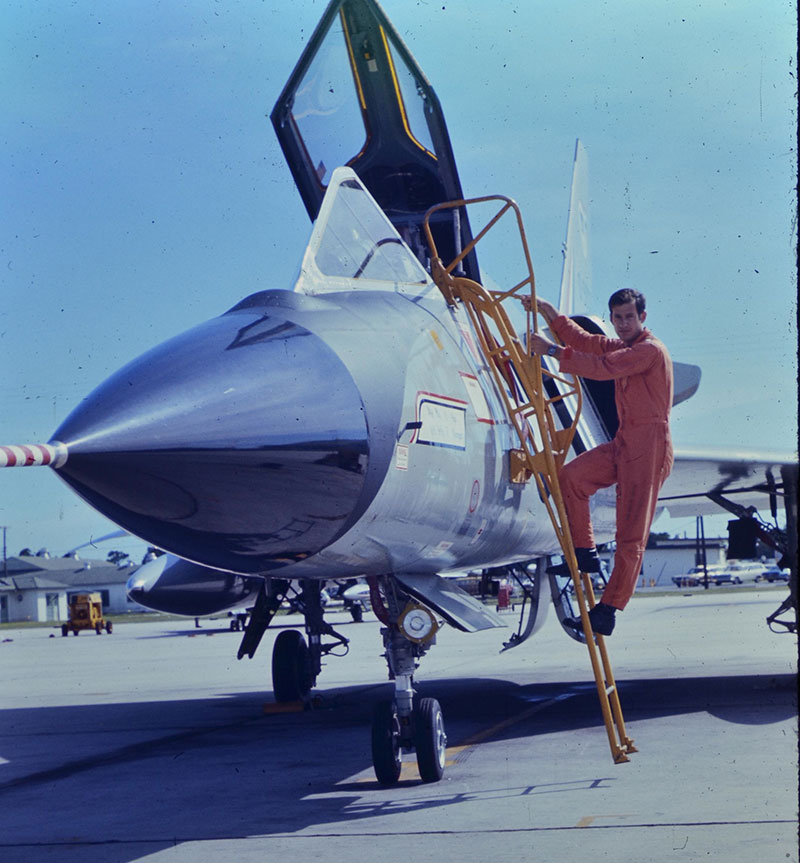
Before Terry Hart became a NASA astronaut, he was an endlessly curious kid who couldn’t resist taking things apart. That curiosity eventually led him to Lehigh University, where he studied mechanical engineering before beginning an extraordinary career that included Bell Laboratories, the U.S. Air Force and, ultimately, NASA.
In this, the first of a two-part conversation, Terry reflects on the experiences that shaped his path to space and the engineering mindset that guided him every step of the way.
He talks about growing up during the dawn of the Space Age, the lasting impact of watching Sputnik cross the night sky, and how engineering gave him an advantage as a fighter pilot by helping him understand the complex systems behind every aircraft. He shares what it was like to work at the legendary Bell Laboratories, where innovation, scientific research, and engineering excellence were part of everyday life, and how well people worked together was often the difference between success and failure.
Terry explains NASA’s highly competitive astronaut selection process. Chosen from nearly 8,000 applicants as a member of the historic Astronaut Group 8—the first class to include women, African Americans, and Asian Americans—he describes the psychological and technical evaluations, the importance NASA placed on teamwork and leadership, and the unexpected medical scare that nearly convinced him he wouldn’t be selected. He also shares memorable stories about training alongside his fellow astronaut and friend, Sally Ride.
Throughout the episode, Terry illustrates how the principles of engineering extend beyond technical knowledge. Whether discussing emergency situations in fighter aircraft, NASA interviews, or teaching engineering undergraduates, he returns to the themes of curiosity, preparation, teamwork, and a deep understanding of the systems around us.
>> The journey continues: Listen to part two of our conversation with Terry Hart
Key Moments
- 2:33 — A childhood spent taking things apart
- 3:17 — Seeing Sputnik and falling in love with space
- 5:22 — Engineering at Bell Laboratories
- 6:39 — Joining the U.S. Air Force during the Vietnam era
- 7:57 — How engineering made Terry a better fighter pilot
- 10:58 — An emergency in the cockpit and the value of first principles
- 14:48 — Applying to NASA and the astronaut selection process
- 20:45 — The medical test Terry thought ended his astronaut dreams
- 23:02 — Getting the phone call from NASA
- 24:36 — Training alongside Sally Ride
Featured Quotes
"I was always fascinated by why things work." — Terry Hart
"Understanding the equipment is key to becoming a good pilot." — Terry Hart
"They weren’t looking for strong individuals. They were looking for teamwork." — Terry Hart
Full Transcript
Transcript is auto-generated and lightly edited for clarity.
Welcome to Rossin Connection, a podcast about all things Lehigh engineering. Coming to you from the P.C. Rossin College of Engineering and Applied Science at Lehigh University. It's a show for students, alumni, faculty and staff, current, former, and future. And for anyone interested in the many creative ways, the engineers are solving the world's problems. I'm your host and producer, Christine Fennessy. Terry Hart was supposed to give the commencement address in May for the class of 2020, and it would've been a particularly interesting speech given who Terry is. He's an alum of the Mechanical Engineering and Mechanics Department, and currently a professor of practice in that department. But Terry is also a former telecommunications executive, a fighter pilot, and an astronaut. In April, 1984, Terry spent 168 hours in orbit. It was a historic mission and one that nearly didn't happen for reasons we'll get into later. Terry's past is full of remarkable stories, many of which he shares with his students to illustrate engineering concepts and some of which pulled double duty by offering life lessons of sorts.
Terry was going to share a few of these experiences in his commencement address, but like so many things, graduation was upended by the pandemic. We wanted to learn more about the path Terry took after his own graduation from Lehigh, and about the stories that shaped him as an engineer, pilot, astronaut professor, and as a person. And as you can imagine, it's a lot. So this is the first of two episodes in which we'll follow Terry's path from a kid inspired by Sputnik to a professor in awe of his students. In today's episode, we'll learn what initially captivated him about space, the edge engineering gave him as a pilot, the most important failure in his life, and why Sally Ride was his favorite co-pilot. Thank you so much for taking the time to do this. I am really excited about it. So, okay, I wanna start at the beginning. What kind of a kid were you growing up? Like, was there anything about what you liked to do as a kid that looking back on it maybe set you up for this very technical, very adventurous path that you eventually took?
My mother, uh, spotted it very early. It was probably, uh, not much more than a toddler. And, uh, unfortunately I like to take things apart. Like, uh, one time she walked in the kitchen and here I had taken the oven door apart and was pulling all the insulation out of the oven door, (laughs). But I, I was always, you know, fascinated by why things work and, um, and how they work and how to make them work better. All those kind of things that engineers like to do. Uh, started very early with me
And why the oven door?
Uh, I was in the kitchen and she wasn't watching me well enough. Fortunately, the oven was off (laughs), it wasn't a hazardous thing, but I had a screwdriver and I learned very early how to unscrew bolts. And every time I saw a bolt, I tried to unscrew it, you know, so it, it took her about a day or so to get the oven door back together.
Oh my gosh. Okay. That's so great. And, and alright, so fast forwarding a little bit. You know, you tell this story about being 10 years old and seeing Sputnik in the sky. And, you know, just to refresh, uh, listeners, the Soviet Union launched Sputnik in 1957, and it was the world's first artificial satellite. Was that the moment when you first thought about flying because astronaut really wasn't even in our lexicon until about a year later?
That's right. There was no career path to being an astronaut at that age. Uh, it was more, uh, an awe inspiring moment because the reaction of the country was so dramatic at that time. So, yeah, I was growing up in Pittsburgh and it was in October and the maybe a week or so after they launched Sputnik in the newspaper. There was an article that was gonna be coming over Pittsburgh right after Sunset. And, uh, you can see satellites quite well, uh, when the sun's still shining on 'em, and it's dark on the ground, and Sputnik was tumbling. So as it came over Pittsburgh, it sort of was like a blinking light. Uh, and all of our neighbors I recall, uh, were horrified. They thought here that the Russians had taken control of outer space and that we were all gonna be their minions. So it was a kind of a earth-shaking moment for the country, uh, in general. And, uh, and for me, I, I reacted very much to it, and I wanted, I was fascinated, of course, by the science and, and all that was behind it.
But what was it about seeing that moment of seeing Sputnik that captivated you so much? I mean, it was the size of a beach ball, this tiny thing in the sky. What made you think of science when you saw that?
Just the, the wonder of how it could go around the earth every 90 minutes, you know, to someone that that's 10 years old or even to an adult. That's pretty remarkable.
Okay. So, so you got your undergraduate degree at Lehigh in mechanical engineering, and after Lehigh you started working at Bell Telephone Laboratories and the company sent you to MIT for your master's in mechanical engineering. What, what did you do at Bell exactly, and what made them such an engineering powerhouse at the time? Because you've said that NASA had a very high opinion of Bell.
Yeah, Bell Laboratories was unique in that it was, uh, wholly owned by the Bell System, uh, AT&T and Western Electric, the manufacturing arm at the time. Uh, and that was a large monopoly. So they really could, could fund the research at a level that, uh, most private corporations could not afford to do. So about 80% of the research was directed toward designing and manufacturing equipment for the Bell system, the telephone system. But there was probably another 20% or so that was, uh, just basic pure science where we're trying to understand space physics. A lot of Nobel Prizes, you know, were given to the Bell Labs, uh, people in that part of the business. And they, uh, just did so much for the whole country, you know, to, uh, to further science and technology. So I was so fortunate to be part of that. And, and NASA, as you suggested there, NASA was very much involved with using, uh, Bell Labs for the Apollo program and other, the, uh, Department of Defense, uh, using Bell Labs for research and nuclear weapons systems and, and so forth. So, um, it, it was a wonderful place for a, a young engineer to start, uh, his career.
Wow. And but you weren't there very long at Bell before you took a leave of absence in 1969 to join the U.S. Air Force, and this was during the Vietnam War. Were you drafted?
Uh, no, I wasn't drafted. In fact, Bell laboratories could keep me deferred. 'cause we were working on, uh, the anti-ballistic missile system at the time, the Nike X as it was called at that time. So I could have been deferred, but I, I wasn't happy with that kind of result. I wasn't very much in favor of the war, but I also didn't wanna not do my part. So I enlisted in the Air Force, uh, and went to flight training. And frankly, I, uh, liked the idea of learning how to fly and, and, uh, mixing technology with operations. So I just finished my master's at MIT and was on my way back to Bell Labs then, and they said they could gimme a leave of absence for four years. So I figured I'd go in the Air Force for the four years and then return to Bell Labs, which is what I, I did then.
Okay. And so to this point, you hadn't flown yet, you hadn't learned how to fly?
That's right. I never really had any flight lessons or anything like that, but, uh, the Air Force takes care of that. In fact, they actually would prefer that you didn't have, uh, private lessons as a pilot. 'cause they have to undo that teaching (laughs) to teach you the military way of flying.
So. Ah, I see, I see. Well, and so I think it's probably safe to say that a lot of people who join the Air Force do so hoping to be a pilot, but they, they never make it. It's actually very difficult to become a pilot from my understanding. Um, what do you think gave you that edge that ultimately turned you into a fighter pilot?
Well, the, uh, experience of going through flight training for a year is wonderful, especially for an engineer like I was at the time. 'cause again, you're mixing all the things you learn about physics and mechanical engineering and propulsion and aerospace and all that. You're mixing that with the, the task of flying. Uh, not just flying the airplane, but also the mental tasks. Uh, planning a mission and, uh, being part of a formation, maybe leading a formation or you have to constantly be thinking ahead of what's happens next. It's that marriage of, uh, technology and operations that I always, uh, loved.
How do you think being an engineer helped prepare you for those other, um, operational tasks of leading a formation and that sort of thing?
It's, it's interesting when you go through pilot training, you know, maybe only 10% of the, the officers in training are, have engineering backgrounds and there's, you know, plenty of English majors and business majors. But if you do, uh, have an engineering background, it makes it that much easier to get a feel for what's going on. You know, why an airplane stalls the whole, um, understanding of the equipment is key to becoming a good pilot. Now, a lot of people do fine, you know, as English majors, they, they figure it out, you know, and, uh, but I had lots of conversations in pilot training with my colleagues because they would pick my brain about the engineering a little bit, and I would help them understand what's going on in the academic classes that we had.
Wow. And, and so did you deploy to Vietnam or did you serve stateside?
I served stateside for, uh, the, I I, uh, it was top of my class, so I got the first choice of the 50 airplanes that were coming down. So I picked a fighter, the F 106, that was an air defense fighter. After a year of training in that, then I was up in Maine doing the coast, uh, defense mission, uh, Russian bombers flying back and forth to Cuba. We escort them up and down the coast for a year or two. And then I got my orders for Vietnam, uh, in an F4. And I was on my way to training. It was actually gonna be an F4 to Thailand. That was right, that was late 72, and the war was winding down. So before I ever got there, they canceled my orders and I was fine with that. They gave me a chance then to leave active duty and join the reserves.
Okay. And what about y you know, any instances from your time as a fighter pilot that later on would prove to be an asset to you and your work as an astronaut?
Uh, that was critical actually. The, the fact that I had that flying background with the National Guard. So the, the whole, uh, you know, concept of military flying is built on, uh, teamwork, but also, again, understanding how to manage machines, complex machines and complicated environments where things are changing all the time. That that whole field of operations is what NASA's all about. So the people that come from military backgrounds usually have a pretty good grounding in that.
Yeah. Yeah. And are there any like, stories that sort of, from your time in, in the Air Force that really sort of exemplify that teamwork or, you know, being cool under pressure that might have really been something maybe you unconsciously tapped into later on in your career as an astronaut?
I, I tell some stories in my, uh, uh, ME 255 introduction to aerospace course. I could relate to a couple of those, I guess. Um, yeah, critical, um, uh, again, is the understanding how the machine works and everything. I was on the wing of a, a fellow pilot that climbed up through some icing conditions, and he had forgotten to turn on the heater that keeps the icing out of the airspeed indicator. So his airspeed indicator broke, and he, uh, was nighttime. We were in between thunderstorms and he took us into a stall (laughs), and all four of our engines quit. Uh, his two engines quit. My two engines quit. So we're, I'm 10 feet away from him on his wing and I can't see him. Uh, so, you know, I went back to first principles, the, the battery kicked in and turned emergency light on. I banked to get away from him.
Uh, and then all my instruments were gone. So I just used one little turn gyro, uh, in the corner, uh, to indicate that my wings might be level and, and let my air speed build up so I could, uh, get their, uh, engine started about 10 minutes later once I got lower. So that kind of understanding of the, how the hardware works, there, there, there's no emergency checklist that says when that happens, you do this, this, and this, so that even if there were, I couldn't read it 'cause we're, uh, uh, in a difficult situation. But, you know, you know, from your engineering training, how things work and what's, uh, backup and what's not backup. And I knew the backup gauge was down there and, and it was hard to read, but I could at least keep my wings level until we got down low enough. And that was one of about the six or seven, um, uh, stories I tell all the time by, by students because each story is kind of relates some aspect of the importance of learning about, uh, the equipment you're using and, and, um, and the mission. You're, you're flying, uh, so that you can respond in a, some unpredicted situation.
Y yeah, I was gonna say, what, what is sort of the underlying message that you try to pull out of that particular story for your students?
Well that, that particular story I tell when we talk about how we measure air speed on an airplane, it shows you what happens with the instrument. When ice gets jammed inside, it tells you you're going faster than you really are. So my leader ended up thinking he was going fast when he was really going slow (laughs), and we were going so slow that the engines quit, you know, that altitude air was too thin, you know, so that, that's a case where it shows exactly what happens. And that happens every year or so, it seems, with some airplane. One of the most tragic was an Air France flight over, uh, left from South America, maybe eight or 10 years ago now. And, uh, it was up at high altitude, and that happened, and, uh, the coot got confused and he stalled the airplane in a flat spin and, uh, took him two years to find the airplane. Uh, and they finally figured out what happened. It was a icing condition and, uh, airspeed probes.
Wow. Okay. So, you know, four years later after your active duty, you're back at Bell Labs, you join the New Jersey Air National Guard, and you get another master's degree in electrical engineering from Rutgers University, and then you receive a couple of patents for work that you did at Bell. What were those patents for?
Well, I was working in a electronic power design group. The entire telephone system, most people don't realize, but it actually floats off a very large battery. So if there's any kind of power interruption, the phones all still work. Uh, so it's all DC battery. So we would design the equipment that would keep those batteries charged from the grid. One was a safety device where you, when you plug the, a converter in, it would keep it from arcing so it wouldn't spark. And the other one was a noise suppression circuit that would keep the, uh, switching of the converters. The noise that that would produce electronic noise would keep that from getting into the audio links, you know, the, the voice channels on that digital conversion process. And, but, you know, Bell Labs was averaging four, four patents a day, uh, back then. Wow. (laughs), it was a remarkable place to work. And I wasn't the only one on those patents. You know, I had, uh, other engineers, uh, and technicians that were, uh, got their names on those patents too.
Um, okay, so, so now in, in 1978, you see an ad in a National Guard magazine that NASA is looking for astronauts, and at this point, the moon landings are over, and the focus for NASA is on building and flying the space shuttle. And so 8,000 people apply to be filling one of these 35 positions for astronauts, six of which are actually going to women. So for you, that means 29 positions. Right, right. And, and so, um, I had read that you figured you had at least a decent shot of making the initial cutoff. And so why, why was that? Like, what was, and and is NASA looking for in its astronauts in terms of like education experience, et cetera?
Yeah, actually at that time, uh, they were gonna select, uh, the first group, uh, for the space shuttle, as you said there. And they hadn't selected any astronauts for oh six or seven or eight years. And, and there were still 25 of the Apollo astronauts still at NASA, some of which had not flown in space yet, and some of which had walked on the moon. And so we had a kind of a mixed bag there. But they did change the paradigm a little bit in, uh, what they were looking for. Uh, and for the first time they were now hiring, uh, mission specialists. So there were two, two different roles. They were hiring the pilot astronaut and the mission specialist. So the, that was kind of akin to the Apollo science to a scientist astronaut at the time, but, uh, more, more general. And they were really stressing, you could tell, uh, in the interview process and so forth. They were really stressing what kind of teamwork you had done, your experience working with, uh, teams trying to do difficult complex tasks because they were, they were trying to prepare the astronaut corps not to be strong individuals. They had plenty of those kind of people during Apollo, but they saw the future as being much more collaborative between mission control and the crews and the scientists and so forth. And you could really see that, uh, come through and, and the, um, kinds of people they were interviewing.
Yeah, that makes sense. And so, while you're still in this selection period, was there any particularly memorable physical or mental training tests that you had to take during, during the selection period before you knew that you actually were an astronaut? Yeah,
They, they would take us, uh, they tested 200 of us, and I, I, I did think there was a good chance I'd make that cut to the 200. And then, uh, the final selection of 35 came from those 200. So they take 20 of us each week over the summer of 77, and you go through a whole week of testing, much of which was physical testing here. They had, uh, that the doctors there at NASA had all these very willing guinea pigs to perform all kinds of, uh, stress tests on and, and see how, uh, they would perform. So that, that was part of it. Then some psychological testing as well. So that was all, you know, very interesting. But the, the key event of the week was a one hour interview with the selection board, which was chaired by, uh, George Abbey, who ran the flight operations and, uh, co-chair by John Young, astronaut John Young, who was the head chief of the astronaut office. Of course, that, that interview would, would be key to who they would select out of that 20 a week leading up to the final 35 that they had chosen.
And can you elaborate at all on those, you know, those stressful tests that you had to do? Uh,
Yeah, they were, they were interesting. Um, some of the psychological tests were more like a, a psychiatrist would ask you, you know, how you felt about your mother and the way you were raised or that kind of thing. Other mental tests were, um, repeating numbers backwards and things of that nature. And oftentimes it occurred to me they were watching you and think more than how many numbers you could repeat backwards. They wanted to see how you reacted when you couldn't do it anymore, you know, when you failed, basically, they wanted to see, you know, whether you got angry or (laughs) or, or pounded your back. I think, you know, there was a lot of that kind of thing going on, uh, in the election process where they were observing you to see, you know, how well you would be able to perform, uh, with your, uh, with your teammates and your crew mates and so forth.
In any of those tests, were your skills as an engineer or a pilot an advantage in, in any of those physical or, or psychological tests?
Oh, I think so. Yeah. Just understanding what's going on, and I would ask them questions, well, you know, why are you doing this? Or, what's, tell me about your tests, what are you trying to learn? You know, so it was, uh, educational to, and they were glad to tell you what they were doing too. They all had their little research program going on, one aspect of human physiology or psychology or whatever. And, uh, uh, they were glad to tell you why they were doing that test. So, so I found it, I found it fascinating. One of the more memorable was, uh, they wanted you to climb inside of a, what looked like a large beach ball, a big white ball with a cord coming out of it that would provide air, and you would climb inside this, and they would zip it up. And the story that went with it is that we launch a shuttle in the space, and then the shuttle becomes stranded.
We wanna launch another shuttle up into space and transfer the people from one to the other. And we don't have enough space suits, so we wanna push you in this ball, uh, make sure you're comfortable in there. And then they'll, they'll move you from one space shuttle to the next. Well, that, that was just a cover story. They were really trying to see if you're claustrophobic. Oh. And what they would do is they would put an EKG on you first so they could watch your heart rate, and then they put you inside this ball and zip it up. It was totally black, you couldn't see anything, you know, and, uh, uh, you'd be in there for 10 or 15 minutes, they'd observe you to see if you were, um, getting a rapid heart rate or something because you felt nervous or claustrophobic or whatever. So, uh, so that was, uh, interesting. I, I climbed in and took a little nap. I think my pulse went down to 40 or something.
And so the physical tests that you had to take weren't so much about physical strength so much as your mental sort of endurance through that particular event?
Yes, I think the, the physical testing, uh, wasn't so much strength as it was, uh, mobility and, uh, dexterity. Okay.
And so you do have a story that you tell about, you took a bunch of tests and you actually failed one. And, um, then you did this one hour interview. So can you tell that story? Yeah,
Actually, it played to my advantage. I think the, um, uh, my interview was on Wednesday, as I recall. So after two days of testing, well, the first day they did a lot of blood work. Of course, the second day the results came back that I had a, a very high level of uric acid in my blood. So my first question was, what's uric acid? I said, well, it's caused by eating too many avocados, or something like that. And I said, well, I don't eat avocados. He said, well, you know, you, you've got higher your, so they took the blood test again, and it came back later that afternoon, still high. So the doctors are kind of telling me, I'm out the limits. So I'm figuring, oh, it was nice. This is fun. I got to meet 19 other people, several of whom will probably become astronauts. And, uh, it was a great experience. I'm glad I did this, but I didn't make it, you know, it was my, so when I went into the interview on Wednesday, I was actually kind of more laid back than I would've been otherwise, I think, which probably helped me a little bit, uh, get through that, uh, nail biting hour, you know, with, with all these people that walked on the moon and all (laughs).
Can you, can you remember, and, and can you share an example of a question that they asked you in the interview? Uh,
They would, um, ask you, uh, about your career? You know, and again, there, I think they were always probing, uh, how does this person get along with other people in technical work and ask you to explain, you know, something technical to see if you could articulate what it is you, you were doing. Uh, and then they asked a lot of questions about Bell Laboratories, and I was so fortunate, uh, to be in this position because, uh, I barely knew that several of my bosses at Bell Laboratories had worked, you know, for NASA during the Apollo program. Uh, NASA had taken, uh, uh, 200 engineers from Bell Laboratories, mostly in New Jersey, and moved them down to Washington and created an organization called Belcom, which was there to serve Apollo. So these astronauts and the managers at NASA that had interfaced and worked with them, they picked the lunar landing sites and did the trajectory analysis back and forth to the moon, all those kind of technical things. They loved the Bell Laboratories (laughs). That was the best thing the government did, was to bring those couple hundred people into the, uh, organization there. Uh, so I, uh, I got a free ride at that, plus the National Guard fact that I was flying fighters on the weekends, and working with these amazing people at Bell Laboratories, um, put me in a good position that, yeah, I was totally, uh, unaware that that was gonna happen. (laughs).
Well, so where were you when you got the call that you had made the cut to be an astronaut? Well,
They were supposed to make the, the decision at the end of 77 in December. But, uh, the holidays came and went, and they still hadn't made a decision, and they, um, were saying there would be 40, but now all of a sudden it was gonna be 35. So they reduced the number down to 35 on my way into work that morning, and comes on the radio that, uh, today's the day they're gonna make the announcements. So all my, my colleagues were in the carpool there, were saying, okay, we're got our fingers crossed. I said, nah, it's not gonna happen. I got this blood problem, they're not gonna pick me. And, and then NASA said, release to the 35, there'd be six women, the first six women astronauts. And I said, well, now I got no chance at all now. All right, we're down to 29 right now, (laughs). And, uh, so I got to work, and about an hour later, uh, George Abbey, the head of flight operation, calls me, and he's kind of a low key guy, talks very softly at all. And he said, well, Terry, he said, um, if you'd like, we got a, we got a job here. And I heard him say that. I said, well, was he offering me a, a job as an engineer or an astronaut or whatever? He said, no, no. He said, well, we want you to be an astronaut. I said, okay, I'll take it.
Now, you were part of Astronaut Group eight, and that was the first new group of astronauts I I read in nine years. So if that's wrong, correct me. Sounds about right. Okay. And, and the first to include African and Asian Americans as well as women. And one of those women was Sally Ride, and she was the first American woman in space. And, you know, you've said that you were best friends, she, you and she, and that you shared an office and you flew T 30 eights together, and that she was one of your favorite co-pilots. And I was just wondering if you could share a story about her that you think really reveals her character. Yeah,
She, she was a wonderful person. The, uh, all, all six of those, those women had to do extra, uh, at NASA because of the extra public affairs, um, uh, burden that they had to carry. And they all, you know, carried it with Grace. Yeah, Sally, uh, we, we actually met, we were in the same group of 20 that were tested together, so we actually got to know each other. And when I met her, I said, well, here's a young woman that's, uh, played as a professional tennis player, uh, who's got a PhD in astrophysics. Uh, as said myself, they're gonna pick her (laughs). And of course, they, they did, you know, so we ended up, uh, sharing an office together. Then we, uh, uh, she and I and, and Steve Nickel, um, and so the three of us would fly together a lot in the T 38s.
Um, she, um, being a professional athlete, she was, you know, particularly gifted in her, uh, uh, dexterity or hand eye coordination and so forth. And flying the T 38 from the back is a little more difficult than the front. I mean, all the controls are there. That's where the instructor pilot sits in the Air Force. Uh, but she picked up on it right away, and, uh, not just with me, but with other, uh, astronauts in the front seat. She would, uh, they'd let her land the airplane from the back, you know, being careful and safe and everything, but she learned how to land the airplane pretty quickly. And, uh, that was not part of the program, that wasn't supposed to be, uh, uh, done. And I remember one time we were, uh, on our way up to Buckley, uh, airbase up in Colorado from Houston, and, uh, we were on Steve's wing, and she was in my backseat and we're climbing up, and I said, you know, Sally, have you ever done a, a canopy roll?
So a canopy roll is when you, you're on the wing of the airplane, and then you go up and over it and then roll all the way around, upside down and back down on the other wing. You kind of make a little half circle over top of the other airplane, but back a little bit, so it's not unsafe. So she said, no, what's that? So I, I showed her one, and I did, yeah, okay. And, uh, uh, she said, yeah, lemme try that. So she did the first one, and it was, yeah, okay. It wasn't quite as good as mine. By the time she'd done the third or fourth one, she was doing it better than I was (laughs). So, so when she came to Lehigh, it must have been 10 years ago, uh, and I introduced her with that story. I started the story, she looked at me and said, I know exactly what you're talking about. So, you know, one of those, those moments in training, that's so, uh, so memorable.
Oh, that's great. That's really great. And, okay, so early on in your astronaut training, you were called on specifically because of your mechanical engineering background. And can you tell us the story behind that?
Yeah, early in the space shuttle program, see, this was 78, and we showed up in the summer of 78, and they thought at the time, the space shuttle was gonna make its first flight in 79. So we thought we were like one year away from launch. Uh, but the tiles were falling off the shuttle, and the engines, engines were blowing up. There was lots of developmental problems. So we ended up not flying the first flight until like three years after we showed up. So there, but there was lots of work to do. So one morning, um, the story, uh, I've always remembered, uh, I'm walking down the hall, um, in the astronaut office and here coming the other way is John Young, the chief of the astronaut, a commander of Apollo 16, you know, walked on the moon, went, went to the moon twice, walked on the moon once.
So John's uh, John starts talking to me about 10 feet out. Uh, he said, TJ they all always call me TJ. He says, uh, he says, you, you have an engineering background, right? And about this time, he is going by me, but he doesn't stop. He just keeps walking. So I do a little U-turn and I said, yeah, you know, I, you know, went to Lehigh and I, mechanical engineering, I had some courses in aerospace and so forth. He said, well, uh, I got a job for you, but this time we turn into the bathroom. So he goes into the men's room, (laughs). So I fall up into the men's room, of course, you know where he is going. So he, he closes the door and he continues talking to me there. So up there, and he's, uh, chatting away. He said, well, you know, we, these engines have been blowing up a lot, you know, lately.
And, uh, it looks like they're doing better, but I really need someone down there, uh, at Huntsville, Alabama talking to the NASA engineers that can come back here and, and give me the real story about what's going on. So, uh, can you do that? And I, I said, well, yeah, I'd love to do that, John. I said, okay. And then by this time, we're coming out of the bathroom, and we were walking back down the hall, and he said, but, but really, TJ, uh, I want you to, to keep those engines from killing me. Okay, (laughs), it was, they were all, he was gonna command the first mission. He, uh, he said, just, just don't let those engines blow us up. Okay, (laughs). And, uh, so I, uh, went about my duty. It was about the most distinct assignment I've ever had. And every, uh, every Monday morning that I would report back to the office in the Monday morning meeting, I would give a short readout on whatever testing, uh, results that happened that week. And I spent a lot of time in Bay St. Louis where they tested the engines and up in Huntsville, you know, where they did the design works, it was for a mechanical engineer. It was, uh, like being in a candy store, uh, having all this technology to work with and to watch these engineers figure out how to make this engine work. And then those engines were, uh, all through the shuttle program, they were close to being perfect. You know, we never had a, a failure due to the, uh, the shuttle's main engines.
Wow. So is there like a moral of sorts that you pull out of that story for your students? Because that was early. I mean, you were, you had just gotten to NASA and you're given this pretty distinct mandate of don't kill the top guy here, um, (laughs), and, you know, and I think I read somewhere that it, you know, it was a little intimidating having to give these, maybe these readouts at, at first, so Yeah. You know, what did, what did you take out of that experience that maybe you, you give to your students now?
Well, I, yeah, I remember, uh, probably a month into this assignment, there was a major explosion on the launchpad on the test pad in St. Louis. And, uh, I had, uh, next morning, or it was two mornings later, I had to explain that then to the astronaut office, what went wrong. The whole test stand got blown away, (laughs), it was really pretty terrible. Of course, we didn't know exactly what happened at that point, took another week or two to figure it out. But, but that was pretty intimidating experience to stand up. But for all these people that wanted to fly on this machine and, and explain to them this terrible explosion had happened and all, but you, you learn and you, you move forward, you're gonna have setbacks. You know, of course we had two, you know, major setbacks in a shuttle program. We lost two vehicles for other different kinds of reasons. But you pick yourself up and dust yourself off and, uh, figure out what's wrong and, and try to keep moving forward.
Yeah. Yeah. And then was it about a year into your training that you were asked to become a Capcom? Is that right?
Yeah, that was my next assignment. And that's really the best assignment you could have as a trainee, you know, as an astronaut trainee. Uh, the Capcom is, uh, short for capsule communicator. It kind of goes back to the, uh, Mercury program where in any time in mission control that there'd be a, uh, a mission on ongoing. They would always have an astronaut in mission control on radio. So the flight director would tell the astronaut what to tell the crew to do, you know, so they figured that was always best to, from a communication point of view, to have that astronaut to astronaut kind of, uh, link to. So we would train through the, all the simulations, uh, in mission control with the crew and the simulator in a different building. And we train hour after hour going through different scenarios to recover from failures and so forth and, and simulated missions,
Like what are they simulating? What's an example of? Well,
The, I was on the launch team, the so-called ascent team. So there were three different teams. So you'd work eight, eight hour shifts around the clock. Then, so the, uh, ascent team, of course, would be there for the launch itself, and then for, uh, several hours afterwards that hand over to the next team. So we would ordinarily do simulations on the launch where they would fail an engine or cause some other kind of problem. And then the, the mission control team and the crew together would've to figure out how to do the right thing, hopefully to keep the mission going, but if not, how to abort and get back safely. So that, all those kind of scenarios we'd rehearse, um, hour after hour, day after day. And then occasionally you would do what we call long duration simulations, where you'd simulate a whole three day period of a mission. Uh, since this was STS one, the whole mission was only three days. So we would, uh, we would simulate the entire mission from liftoff right through landing and, uh, uh, get a lot of, you know, good experience and training.
So your role is, is the capcom, is to communicate to the astronauts what mission control wants them to do. Right?
Right.
And, and are you simultaneously at other points in the day doing those same simulations yourself? Or did you not do it until it was time for your flight?
Um, uh, not till you're within usually six months of your launch. Do you get enough priority to get in the simulator prior to that? Uh, during a mission though, there'd be some, um, if you saw Apollo 13, for example, during a mission, if something went wrong, uh, they would send, the Capcom would still be in mission control, but they would send another crew to a simulator to put the simulator in the configuration of the spacecraft that's in trouble, so that you can try to come up with, uh, uh, what you're gonna do to, uh, work around the problem, test it in a simulator. Then the Capcom would, uh, send that solution up to the, uh, crew to try, uh, in space.
Okay. So initially in your role as a capcom, you're giving directions about something that you actually, yourself haven't even done yet?
Uh, that's true, yeah. But of course, you learn by, by watching them do it, and the simulator, all the data from the, uh, simulator plus some, uh, that the crew can't see, you can see at your console. And, and that, that's really the tip of a very large pyramid. And inside the mission control room, there's probably 20 engineers. There's a flight director, uh, 16 or 17 engineers, and usually two CAPCOMs, uh, on as, as backups during the, but that's just in the, in that room. And the rooms, uh, surrounding that in the same building, there's probably another 200 engineers that are specialists on their particular systems, you know, hydraulics or, uh, the engines or, uh, environmental systems and so forth. And then beyond that, there's even people out in industry all around the country, the engineers at the companies that made that hardware have even more detailed understanding of how it works than the NASA engineers. So anytime something goes wrong, that whole pyramid goes into high gear to, uh, analyze the problem and figure out, you know, how to fix it.
There is a story from your capcom experience of that first mission that was, that revolved around the tiles. Can you, do you mind telling that story? 'cause that that is kind of, you know, you described it as nail biting, and I think that's a good description.
Yeah, it was. Uh, yeah. So I was in, I was at Capcom, a mission control. So we launched, and the, those of us in the room were probably the only people in America that didn't see the liftoff, you know, 'cause we didn't, we're not allowed to have cameras. We gotta watch our data, you know, (laughs). So, uh, the crew goes up and, uh, the launch, of course was successful and the space shuttles in orbit, and then the crew, opened up the doors. And when they, uh, opened up the doors and looked back by the tail, you can look out the aft pointing windows by the shuttle tail, some of the tiles, the white tiles were missing. And you could see the black coating underneath was visible. So we said Uhoh (laughs). And those are, um, problem, maybe not on top because there's not a whole lot of heating on top, but we figured, 'cause there's been all this history of tiles coming off during the, uh, manufacturing process.
And we were worried maybe some tiles came off the bottom as well. So we, um, we handed over then to the on orbit team, and our mission control team went off duty then for, uh, two shifts. And then we came back on duty, uh, right after they put the crew to sleep on the first night. So we're just there watching. The spacecraft was nothing for the Capcom to do. And Gene Krantz, the famous flight director who was, uh, played by Ed Harris and the movie Apollo 13, amazing guy, but Gene Krantz, uh, came up to me and he said, TJ, we gotta wake the crew up. And I said, well, why do you wanna wake the crew up, James? I just went to bed. Uh, we knew they were, weren't to sleep yet, (laughs), but he said, we gotta tell 'em to point the space shuttle to this other attitude, a strange attitude.
We usually we're flying around upside down, uh, so you can see the earth. And I said, well, why are we doing that Gene? He said, well, I can't tell you. I said, Gene, come on. I said, don't worry, the crew will figure it out. So I wake 'em up, and then they weren't too upset, and they do the maneuver. And then he said, okay, put 'em back to sleep. Then they put 'em back to sleep. And again, we went off shift and I'm thinking, you know, what is all this about, you know? And then we came back in again for the next shift, the next day, and we have to be on, on duty again. And, uh, Tene came up to me, he said, TJ, tell the crew that everything's fine with the tiles on the bottom of the shuttle, (laughs). And I said, Gene, what are you talking about?
How we know that? He said, well, I can't show you. So I got kind of upset with him. I looked at it, I said, Gene, come on. And so he opens up this folder and here's a picture of the bottom of the space shuttle (laughs), and you can see every tile was right where it had to be. They turned the space shuttle to the right attitude so the sun could shine on the bottom. And this other satellite that we have, it took a picture of the bottom of the shuttle. And of course, that's all. Uh, this didn't become, uh, declassified until a few years ago that we have such things that back in 19, uh, this is 1981, uh, that was highly classified that we had it. So, but NASA had called the Air Force and said, can you help us here figure out whether the shuttle's okay. And they came back with the answer that it was fine.
And so can you just explain what, what is the significance of those tiles and, and why was that such a concern that they might be missing? Yeah.
When the shuttle or any any vehicle reenters the atmosphere, it's doing, uh, 25 times the speed of sound. It's doing like, uh, 18,000 miles an hour. And at those extreme temperatures, uh, at the velocities, the temperatures get very high, about 3000 degrees Fahrenheit, uh, on the heat shield. So the space shuttle was only made out of a aluminum. You know, aluminum starts to melt at around, uh, eight or 900 degrees Fahrenheit. So, yeah, so it can't withstand that heat. So the tiles were usually depending on where they were, but they anywhere from, uh, one inch to about four inches thick, uh, of a silica. And it was extremely heat resistant, so it would protect the shuttle. So, but if one of those were missing, then the heat would, uh, immediately melt the aluminum underneath and you'd have a loss of the vehicle.
So even if just one is missing that could, that could, yeah. Oh,
Wow. Yeah. Well, they, um, predicted a, if one was missing, there'd be a zipper effect that the, the aerodynamic forces would cause the pressure to build up in that cavity, which would cause the ones surrounding that to also come off. So you'd end up with a big, a big hole.
That's it for part one of my interview with Lehigh alum, professor of practice, former telecom executive inventor, fighter pilot, and astronaut Terry Hart. In our next episode, Terry takes us into space. And through the maneuver that made history, he describes how he turned down another trip into orbit and why he calls being named to deliver the commencement address, the honor of his life. For more information about all the academic programs at the P.C. Rossin College of Engineering and Applied Science, and to find our show, head to engineering.lehigh.edu. Music in this episode is by Blue Dot Sessions. You can send us story suggestions or feedback on X at Rossin podcast. Thanks for listening and stay safe.
About the Guest
Terry Hart is a teaching full professor in the Department of Mechanical Engineering and Mechanics at Lehigh University and a former NASA astronaut. A Lehigh mechanical engineering alum, he also earned graduate degrees from MIT and Rutgers University before beginning a distinguished career that included engineering at Bell Laboratories, service as a U.S. Air Force fighter pilot, and selection to NASA’s Astronaut Group 8. In 1984, he flew aboard the Space Shuttle Challenger on STS-41C, helping complete the first successful repair of a satellite in orbit. He also operated the IMAX camera for the feature The Dream is Alive (1985). Today, Terry shares lessons from engineering, aviation, and human spaceflight with the next generation of engineers at Lehigh University.
Episode Details
Related Episodes
- Episode 13: Terry Hart On What It's Really Like to Fly in Space (Part 2)
- Episode 15: From Engineering Student to Robotics Entrepreneur
- Episode 17: Coffee, Cosmetics, and the Hidden Engineering of Everyday Products
- Episode 32: Engineering for Global Impact with Eric Obeysekare