
Student(s): Zelalem Ayalew
Project: Optimizing Human Uterine Tissue Processing for Precursor Gel Formulation
Advisor(s): Taneka Jones
Abstract
Uterine fibroids are smooth muscle tumors affecting over 70% of women of reproductive age and present a significant clinical challenge due to symptoms like pelvic pain, heavy bleeding, and infertility. Surgical removal of the uterus is the only guarantee of the complete non-recurrence of uterine fibroids, resulting in the loss of key biomechanical and physiological uterine functions such as potential fertility. Existing in-vitro modeling platforms either lack biomechanical relevance or fail to structurally represent diseased fibrotic and comparatively healthy myometrium. Decellularized extracellular matrix (dECM) biomaterials are promising for regenerative and disease modeling because they retain native biochemical and structural features. However, human uterine myometrium-derived dECM hydrogels are still in the early stages of research and development. In this study, we optimized the processing of human decellularized uterine tissue as a precursor to hydrogel formulation. Three decellularization formulations confirmed effective cell removal, with residual nuclei and DNA content less than or equal to 50 ng per mg of dry tissue. Uniform tissue sections allowed for reproducible and scalable cryogenic tissue milling, with optimized tissue processing and mill parameters significantly increasing microparticle yield. Scanning electron microscopy results demonstrated that tissues decellularized with 4% (w/v) sodium deoxycholate produced significantly smaller microparticles (≤30 μm, p≤0.01), indicating that detergent concentration strongly influences particle size and shape. These results provide a reliable workflow for creating human uterine dECM microparticles and set the stage for developing physiologically relevant myometrial hydrogels for disease modeling and therapeutic research.
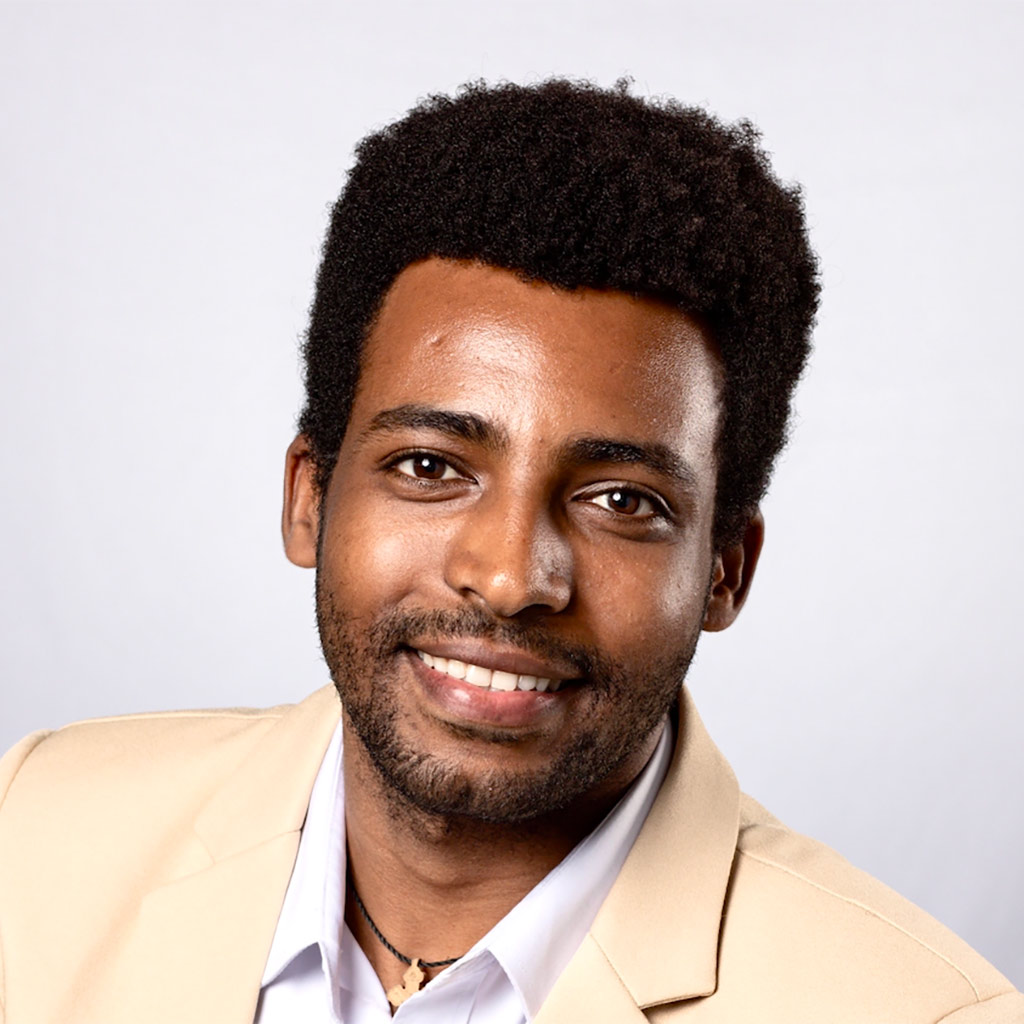 About Zelalem Ayalew
Major: Bioengineering
Zelalem Ayalew is a senior pursuing a BS in Bioengineering with a concentration in Biopharmaceuticals. He brings extensive hands-on research experience in cell and tissue engineering, supported by technical expertise in mammalian cell culture (hMSCs, CHO, smooth muscle cells, and neural stem cells), cryosectioning, histology, microscopy, lyophilization, decellularization, 3D bio-CAD design, 3D bioprinting, research design, and data analysis and visualization.
His current work focuses on regenerative medicine, advanced cell culture systems, and tissue‑engineered constructs. He is also deeply interested in stem cell engineering, immunology, and 3D bioprinting technologies that advance human‑tissue modeling and therapeutic testing. This research journey, and its potential to drive meaningful biomedical innovation, has inspired him to pursue a master’s degree in bioengineering beginning in Fall 2026.
Long term, Zelalem aims to contribute to innovative pharmaceutical R&D, medical technologies, and next-generation therapeutic platforms that address critical healthcare challenges and drive meaningful improvements in global health.