
Student(s): Lily Paschke
Project: Modification of the Surface Charge of Activated Carbon
Advisor(s): Derrick Brown
Abstract
Chemicals of emerging concern (CECs) are environmental contaminants that have the potential to cause adverse health effects and are often found in source waters for drinking water as well as municipal and industrial wastewater. Often, these CECs are ionizable organic chemicals (IOCs), such as dyes, pharmaceuticals, and pesticides, meaning they exhibit a pH-dependent charge in water. Sorption, often using activated carbon, is commonly used to remove these CECs because it is low-cost, efficient, and easy to implement. However, most IOCs are charged at neutral pH and don’t sorb strongly to activated carbon. Enhancing their sorption requires acidic or basic conditions to neutralize their charge, but it is not practical to change the bulk water pH to sufficient levels.
A potential solution to this problem is to localize the pH change immediately adjacent to the activated carbon surface. This can be accomplished through application of the Charge-Regulation Effect, which depends on the acid/base characteristics of the activated carbon surface. By manipulating the activated carbon surface chemistry, we can create a local pH shift that can enhance IOC sorption without bulk pH modification.
Activated carbon inherently has acidic surface functional groups. To add basic functionality, we are developing a method to attach quaternary amine functional groups to specified surface densities. We are evaluating the success of this modification through zeta potential and surface analysis, and our results to date demonstrate that we are able to modify the surface and make it strongly basic.
 About Lily Paschke
Major: IDEAS
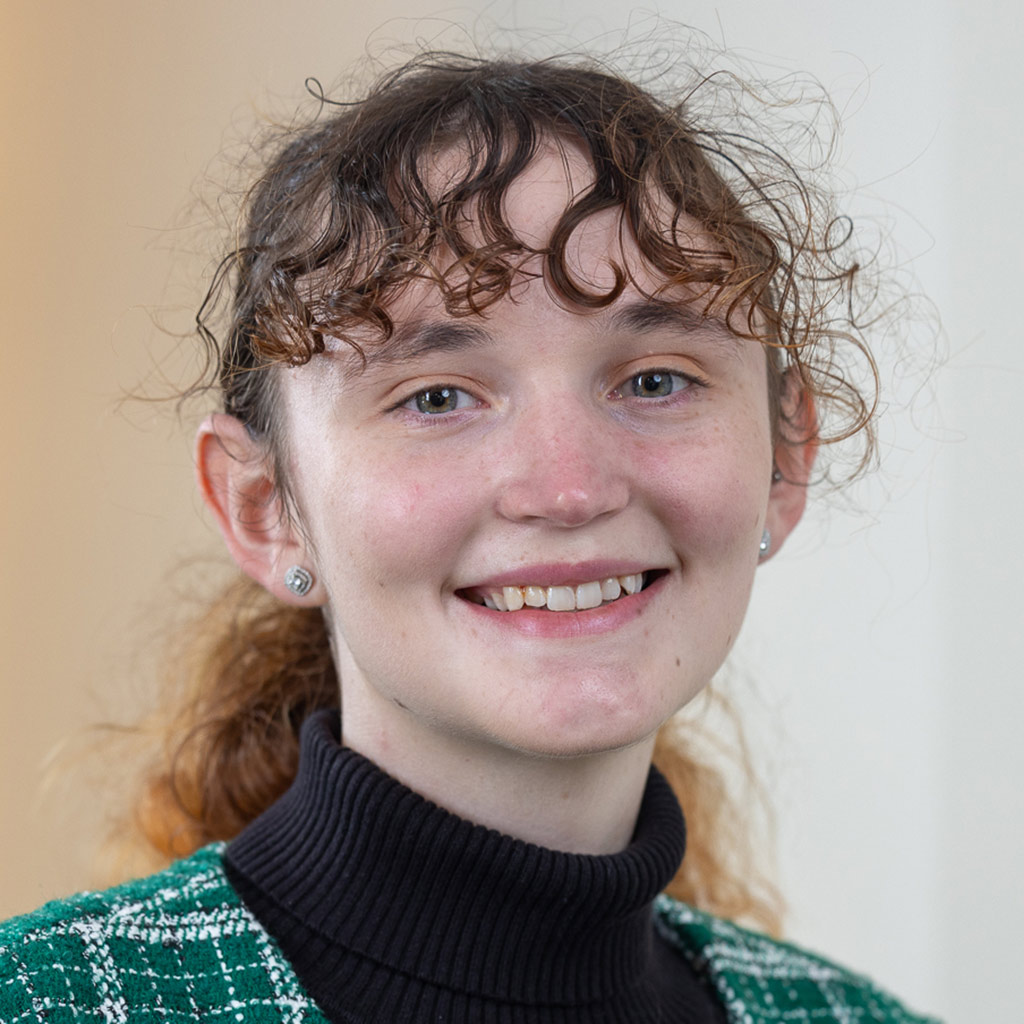
Lily Paschke is a third year undergraduate student in the Integrated Degree in Engineering, Arts, and Sciences program, concentrating on environmental engineering at Lehigh University. She is currently researching the charge regulation effect through surface modification of activated carbon in Dr. Brown’s lab. The goal of this research is to modify the surface of activated carbon without showing significant changes in surface area to allow for better adsorption of charged molecules and increased efficiency in biological activated carbon filters. She anticipates expanding her research to polydopamine modification in the future. After graduation, Lily plans to pursue her master’s degree in environmental engineering. Lily is from Riverview, Michigan, where she is an avid sailor. At Lehigh she has co-founded the Society of Engineering Ethics and has worked for the Office of First Year Experience as a Camp Hawk Counselor for the last three years.