
Student(s): Kai Puma-Stehlik, Sondo Yoon
Project: Multi-Task Learning for Predicting Customer Behavior in the Airline Industry
Advisor(s): Meng Zhao
Abstract
Accurately predicting passenger intent, booking timing, and upsell likelihood directly impacts airline revenue and personalization, yet most models ignore sequential patterns underlying traveler behavior. This work addresses that gap by reframing passenger prediction as a unified, time-dependent problem rather than a set of isolated tasks.
We present a Temporal Tri-Task Multi-Task Learning (MTL) framework that jointly predicts three targets from a single shared representation: trip purpose classification, advance purchase regression (days between booking and departure), and upsell/ancillary propensity. While prior work addresses these targets in isolation, our architecture captures their interdependencies end-to-end.
Two novel contributions distinguish this work from existing airline MTL literature. First, a GRU-based temporal encoder operates over each passenger’s booking history, constructing a context vector that summarizes prior travel patterns before fusing it with target-booking features in the shared trunk. This treats booking sequences as temporally ordered data rather than independent observations, allowing the model to exploit behavioral consistency signals that cross-sectional models discard. Second, we extend the standard two-task MTL formulation by adding an upsell prediction head, directly linking intent modeling to revenue conversion. GradNorm dynamically reweights task-specific gradients each training step, preventing any single objective from dominating the shared representation. Temporal integrity is enforced via Purged GroupKFold cross-validation with an embargo gap to eliminate leakage at fold boundaries.
Applied to 200,000+ bookings, our baseline bi-task MTL achieves F1=0.60 for trip intent and R²=0.90 for lead time with MAE under five days. The tri-task temporal model expects the largest gains on upsell propensity, where prior ancillary behavior provides the strongest predictive signal.
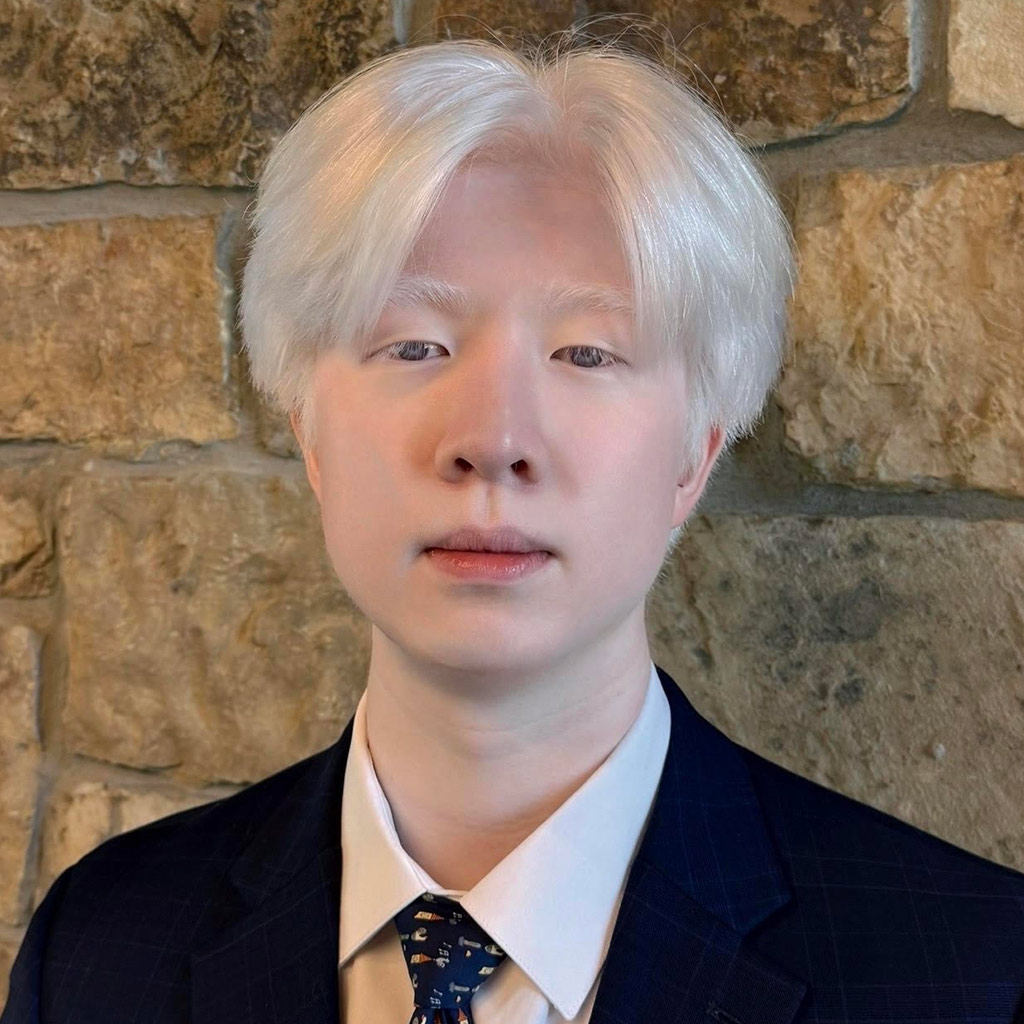 About Kai Puma-Stehlik
Major: Industrial and Systems Engineering
Reilly K. Puma Stehlik is a junior at Lehigh University pursuing a B.S. in Industrial and Systems Engineering with a 3.75 GPA. Under the supervision of Dr. Meng Zhao, he is co-developing a Temporal Tri-Task Multi-Task Learning framework for airline revenue management alongside partner Sondo Yoon. The project applies a GRU-based deep learning architecture trained on over 500k+ passenger booking records to simultaneously predict trip intent, advance purchase lead time, and upsell propensity.
This connects to Reilly’s broader work in data analysis and process engineering, including internships at Axalta Coating Systems and Monadnock Nonwovens where he built dashboards and consolidated large-scale operational data. Reilly intends on continuing his work as a global supply chain intern this coming summer at AT&T Headquarters. On campus, he serves as President and Founder of the IISE student chapter, Vice President of Rossin Junior Fellows, and Treasurer of the Japanese Student Association.
About Sondo Yoon
Major: Industrial and Systems Engineering
Sondo is a junior Industrial and Systems Engineering student at Lehigh University with a strong interest in systems optimization and operational efficiency. In collaboration with peer researcher Kai Puma Stehlik and faculty advisor Professor Meng Zhao, his efforts focus on developing machine learning models for the airline industry to improve scheduling, demand forecasting, and operational efficiency. This work reflects a broader interest in aviation and the complex systems that drive it, which he will further explore this summer while working at Boeing.
Beyond academics, Sondo is an avid rock climber and the Vice President of Lehigh IISE. Here, he contributes to professional development initiatives, outreach efforts, and the advancement of the ISE community.