
Duration: 28:33 | Published: December 5, 2022
Episode Summary
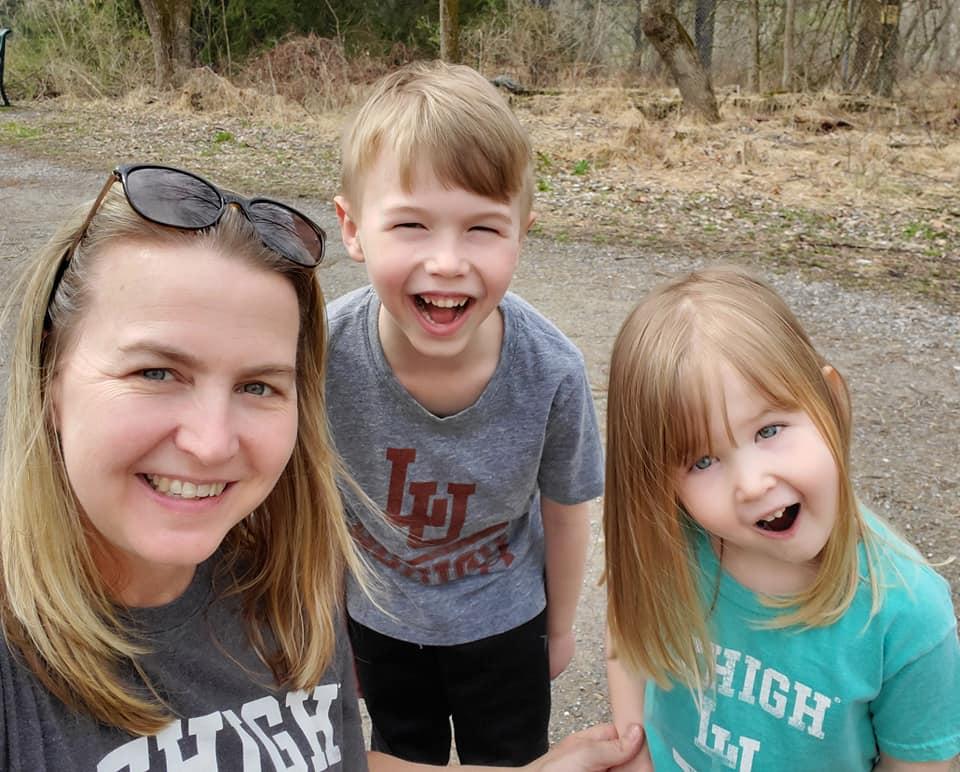
Angela Brown is quick to say that antibiotics can be lifesaving, essential drugs.
“But I think that it’s really important to save them for when they’re absolutely necessary,” says Brown, a professor in the department of chemical and biomolecular engineering.
Angela’s lab focuses on developing new ways to treat bacterial infections without relying solely on traditional antibiotics. Her team studies how bacteria communicate, adapt to their surroundings and use toxins to invade human cells, knowledge that could lead to therapies that stop infections before they cause serious damage.
In this episode, she explains how engineers are taking inspiration from bacteria themselves to design smarter drug delivery systems that target infections more precisely while minimizing harm to the body’s beneficial microbiome.
As you’ll learn, it wasn’t a direction she foresaw for herself. In fact, she was headed in a very, very different direction. But as a young student, she had a conversation with her parents that made her realize that engineering offered something she hadn’t expected: the chance to solve complex problems through creativity.
Angela talks about why antibiotic resistance continues to grow, how her own research has changed the way she thinks about taking antibiotics, and how, in mentoring her students, she does what her parents did for her all those years ago. She helps them see the creativity behind scientific discovery and why engineering is ultimately about solving problems that improve people’s lives.
She also explains why understanding bacteria may hold the key to developing more effective treatments for future generations. And why she finds the microorganisms to be such a worthy adversary.
“I think bacteria are amazing,” she says. “They can settle in an environment that’s not conducive to settling. But they can kind of make it a nice cozy home for themselves. I think there’s so much to learn from them.”
Key Moments
- 1:46 — Why Angela almost became an architect
- 3:56 — Discovering the creativity of engineering
- 8:35 — Why antibiotic resistance became her research focus
- 10:30 — Why bacteria are so fascinating
- 12:32 — Two engineering strategies for fighting bacterial infections
- 15:20 — How antibiotics contribute to resistance
- 17:01 — How studying antibiotic resistance changed Angela’s own decisions
- 18:08 — Developing anti-virulence therapies
- 21:57 — Using bacteria’s own delivery systems against them
- 24:05 — Improving antibiotics through engineering
- 25:47 — Why solving real-world problems matters
- 26:52 — The creativity behind designing scientific experiments
Featured Quotes
"Bacteria…they’re so cool." — Angela Brown
"Engineering was an opportunity to be creative." — Angela Brown
"One of the things I love about engineering is the fact that we solve problems." — Angela Brown
Full Transcript
Transcript is auto-generated and lightly edited for clarity.
Bacteria. They're so cool. They're, it's just one cell. They don't have any organelles. There's no nucleus, there's no brain. But they just have this amazing ability to adapt to their surroundings. They communicate with other cells nearby. I think there's just so much to learn from them.
Welcome to Rossin Connection, a podcast about all things Lehigh engineering. Coming to you from the P.C. Rossin College of Engineering and Applied Science at Lehigh University. In today's episode, we're talking about the wonders of bacteria and the dangers of antibiotic resistance with Angela Brown. According to the Centers for Disease Control, more than 2.8 million antibiotic resistant infections occur every year in the U.S. leading to the deaths of more than 35,000 people. Angela is a professor in the Department of Chemical and Biomolecular Engineering, and her research focuses on developing new strategies to fight bacterial infections. We learn why antibiotics are both helpful and potentially harmful. How her research has influenced her own decisions on when to take them. In the fascinating work her lab is doing to develop new drugs, to treat infections and improve the effectiveness of the drugs we have today. She also explains why engineering was actually not her first choice as a young student. Thanks for joining us. Were there any sort of clues early on when you were growing up that might have foreshadowed that this path that you took to being an engineer?
When I was younger, I was good at math and science and my father was an engineer. My mother was a scientist. I think they sort of assumed I was going to be an engineer. I, however, was dead set on being an architect. I was convinced that that's what I wanted to do. Engineering was not for me at all. But what's kind of funny is I used to do, in high school we did a lot of these like aptitude tests to figure out what's a good career for you. And every single time it came up that I should be an engineer and every single time I thought that was the dumbest test, there's no way I am gonna be an engineer, I wanna be an architect. What do those tests know? But it ended up turning out that they were right. My parents were right, the tests were right. And here I am an engineer.
What drew you to architecture?
I love buildings. I still love buildings. I have a lot of appreciation for really good architecture. I found out in college though that I'm not good at designing good architecture myself. So I can appreciate it. I just can't do it myself.
Well that's fair. So, so at what point did you sort of realize that you had this aptitude for engineering that you were trying to keep on a shelf, but like at what point did you sort of reconcile yourself with this aptitude? What would eventually made you go, I can live with this?
I was majoring in architecture and I wasn't doing very well and it was really the first time in my life that I kind of dreaded school. I think because I was struggling so much. So I had a bit of a midlife crisis in my early twenties. Um, trying to figure out what I wanted to do and it was a conversation with my parents that got me thinking about engineering. My father's an engineer and they told me that maybe the thing that I liked about architecture was the creative aspect of it, but what I didn't like was the artistic aspect. That's where I was really struggling. And so they suggested that if I thought about engineering as an opportunity to be creative, but not in a necessarily artistic way, but more in a math and scientific way, that that might kind of appeal to me. And that's really what got me into it. I could use math and science, but be creative while doing that. That's really what sold me on engineering. So I changed my major to engineering and then realized that I actually did really love math and science, which is standard for engineers and, and then I was sold.
Wow. That was so wise of your parents to put it that way.
Yeah, it really changed my perspective. I think I had always, and I don't know where I got this idea that engineering, because it's based in math and science, I thought, okay, you just kind of do these things. It's kind of, it seemed boring to me, which I hate to say now because it's not boring now that I know what it is, it's not at all boring. But for some reason in high school, to me it seemed boring. But definitely the, the creative problem solving part is what really spoke to me.
And so in your capacity as a professor, have you found yourself having a similar conversation with one of your students only this time sort of you are in the role of your parent, like trying to explain what makes engineering perhaps not boring and creative?
Absolutely. I love to tell that story when we're doing outreach activities every summer I participate in the Choices program at Lehigh. So these are middle school girls that are maybe interested in engineering, maybe not just kind of testing the waters. But I love to tell that story because I think there are a lot of people who would be great engineers that maybe come from it, not necessarily from a, I wanna solve this math problem, but more, I wanna solve this really important problem in the world and I wanna do it in a way that no one else has thought about it. And I think that that is a really important characteristic of a good engineer.
Wow. And have you seen that sort of realization dawn on a student's face like it did for you?
Definitely. I, I've seen students respond to it, especially students that are thinking about like maybe double majoring in engineering and something that's maybe non-traditional. So like engineering and math or engineering and science, it's a pretty standard or even engineering and economics. But sometimes students wanna major in engineering and music or something like that. And I think that there is not only space to do that, but I think that that's a really important combination. I think we need more of that in the field.
Yeah, yeah, definitely. You know, going back to your path a little bit, did you always know that you're gonna take the academic track versus going into industry?
I actually, when I graduated, um, my goal was to work in industry. I didn't really know what I wanted to do with my chemical engineering degree. I knew that I didn't wanna work in a big chemical plant, which is sort of the traditional path for someone with a bachelor's degree in chemical engineering. I took a job as an environmental engineer, which I, I enjoyed. I worked there for three years. I really liked that. And my plan was actually to get a master's part-time and I started taking classes and when I did that I realized how much I missed school and like full-time school and being able to devote myself to my studies completely. So I made a difficult decision to go back to school full-time and get a PhD. And even there when I was in graduate school full-time, my goal was just to get a PhD because I wanted to do research in industry.
My goal was to go to industry and it was a conversation with my advisor about partway through where I had done something that he was impressed with and he said, have you ever thought about being a professor? And I was like, no, actually I never thought about that because I don't know anyone who's a professor and what a strange path that is, but that actually sounds kind of cool. So that really got me thinking about the possibility of being a professor, which I'm so great. Every time I see him, I remind him of that conversation and I tell him how grateful I am that he saw something in me that maybe I didn't see because I really love this path.
That's so great to hear. I mean, how much of an impact like one person can have like that I mean totally just changed the course of your life. That's huge.
Yes, absolutely. Yeah.
And so how did you, how did you end up at Lehigh?
So I, I finished my postdoc at Penn and I went on the market. Um, a few of the reasons that I chose to come to Lehigh. First of all, the interview itself, it was two days long. I actually interviewed in both chemical engineering and bioengineering. So it was a really, really long interview. I met pretty much everyone on campus . So it was super intense, but it was actually one of the most enjoyable interviews I had because I found all of the people to be brilliant but also really kind and just nice to be around, which is really important to me. Another really important reason is I'm from the area, so my family is nearby, which is really, really nice. I guess the other thing that I loved about Lehigh, it's a unique place that you can be, you know, focus on your research, but also education is important to me. That's what I wanna do as a professor, is do some really cool research but also teach the next generation of engineering students. So the ability to combine those at a school where both of those are seen as important was something that really was important to me as well.
Well that's great. So let's talk a little bit about what your primary area of research is and how did you end up in this particular area of study?
Yeah, my, my research now is focused on developing new strategies to treat bacterial infections. Uh, we're really interested in antibiotic resistance and seeing if we can either develop new molecules that can kind of overcome antibiotic resistance or use the drugs that we already have in a better way. I came into this field kind of a roundabout way. It's not something that I knew I wanted to do. Right when I started grad school, I knew I was interested in the biological side of chemical engineering. So when I did my PhD, I worked in a biomolecular type lab. We were studying cell membranes and looking at the properties of those membranes and how they can change as a function of the chemistry of the membrane. I really enjoyed that project and I liked the biology, but I felt like I had a hard time understanding the papers that were written by biologists because I was an engineer doing some biology, but I was not a trained biologist, so I wanted to learn more about biology.
So I took a postdoc at Penn and I was working in a lab where they had been studying a bacterial toxin and my PI had been studying this toxin for, you know, 20 years or so. But he was really interested at this point when I joined the lab in looking at how that toxin interacts with cell membranes. So it was really a perfect way for me to, first of all, I was gonna get the opportunity to learn a lot of the biology, but I also had an opportunity to bring some of my own knowledge to this lab that wasn't focused on membranes before so I could bring the membrane part. And they taught me a lot about bacteria and toxins and I really enjoyed working with bacteria. I think they're just amazing things. And so that is sort of what led me into this antibiotic resistance. So we've been studying, during my postdoc, we were studying mechanisms of bacterial toxins. And then when I started my own lab, what I thought we could do is look at ways to prevent those toxins from doing what they do. We know those toxins, damage cells and so what we're doing now as an engineering lab is trying to prevent that from happening.
Okay. So that is fascinating. And first I wanna ask you, why do you say bacteria are amazing
Bacteria? They're so cool. They're, it's just one cell. They don't have any organelles. There's no nucleus, there's no brain. But they just have this amazing ability to adapt to their surroundings. They communicate with other cells nearby. We study pathogenic bacteria, the ones that cause disease and they can settle in a environment that's not conducive for settling, but they can kind of make it a nice cozy home for themselves. I think there's just so much to learn from them.
What's like one of the most surprising things that you've learned about bacteria since you've been doing this research?
One of the things that I find really interesting is we have worked with this toxin that gets internalized by the cell and then at some point in that internalization process it exits into the cytosol, which is like the, the main part of the cell. And then it goes on to do what it needs to do. And this is something as a biomolecular engineer, a lot of us are working on drug delivery and this is something that we want to do. We wanna be able to get a drug into the cell and then have it released where it's needed without getting degraded so the cell is set up to degrade things that come in. Somehow the bacteria with these toxins have figured out a way around that. But we, as you know, smart engineers haven't quite figured that out yet. So I think that's just a really good example of something where there's a lot to learn from the way the bacteria have figured this out already.
Can you elaborate a little bit more on what the two strategies are that your lab is working on? So you're working on trying to mimic that successful way that these pathogenic bacteria are able to invade cells and if you can do that with drug delivery then you can be effective that way. And then the other thing is to, is to actually hut the bad bacteria from getting into the cells. Is that in essence the two things you're trying to do?
Exactly, yeah. Yeah. So I see our work kind of split into two halves where one half fits into something that's called anti virulent strategies. So we're focused on toxins, but there are other molecules that bacteria produce that give them advantages over the host or over other bacteria. And all of those are sort of lumped into this group of molecules that are called virulence factors. So the thought in the field is that if you could prevent those factors from doing what they do, then what you're doing is eliminating those advantages so you're weakening the bacteria and that would allow the immune system or other cells to come in and clear that infection or at least maybe weaken the infection. So it's not quite as bad as it would've been. And then the other side of the lab or the other half of the work is focused on looking at ways to deliver antibiotics using drug delivery strategies. But we're taking sort of a bio-inspired approach. So looking at how bacteria deliver molecules naturally and seeing if we could take advantage of those pathways. Like I said, I think bacteria have figured a lot of this out. So if we can either use those molecules that they produce or understand those pathways a little bit better, then we might learn some information about how to design these in a better way.
Right. And so are there currently these drug delivery systems in in use?
There are some drug delivery systems out there for antibiotic delivery. A lot of the um, existing like FDA approved drug delivery devices are targeted towards cancer drugs because cancer drugs tend to be, they're expensive. Um, so you wanna use them in low quantities and they also are toxic to both cancer cells and human cells. With antibiotics, you don't have those challenges. Antibiotics tend to be less expensive and they're thought to be less harmful to the host. The way they're designed is to specifically target something in bacteria that's not present in the human cell. But I like to make the argument that I think we've realized more recently how important the natural microbiome is in human health. And so this idea that antibiotics are not toxic to human cells is true, but they do have some really nasty side effects and they do affect human health in ways that I don't think we necessarily considered several years ago. So I think the ability to control the delivery of those antibiotics prevent them from being released in the gut where the gut microbiome plays such an important role in human health. Wait until it reaches a site of infection and then be released. I think there's a lot of promise there.
Can you just elaborate a little bit more and and talk a little bit about the impact on our microbiome and some of the unintended side effects of antibiotics?
It's a funny thing about antibiotics. So every time you take antibiotics, what you're doing is killing bacteria that that's exactly what they're supposed to do. But that process in itself selects for bacteria that are somewhat resistant to that drug. So if you have a population of bacteria, some of them might have a mutation that allows 'em to kind of resist that drug that you're taking. And so if you kill all of the other ones, then the only one that's there to reproduce is the one that has this resistance to that drug. So essentially every time you take antibiotics, you are increasing at least the likelihood that you have resistant bacteria in your body. Not to say you shouldn't take antibiotics if you need them, you should take them. But it's just one of those things that the more often you take those drugs, the more you're selecting for those resistant bacteria.
And then it's been shown, um, pretty recently that if you're prescribed antibiotics, a lot of times it's a pill. And so that has to travel through your gut. And the gut microbiome has been shown to be, they call it a reservoir of antibiotic resistance genes. So those bacteria, they have genes that are able to resist those antibiotics that you take and then they can pass those to other cells that are nearby. So again, every time you take antibiotics you are increasing the likelihood of those resistant infections. So again, not to say you shouldn't take them, it really becomes a problem if you have an infection that requires multiple doses of antibiotics or if you take them unnecessarily, those sorts of things where it can really be a problem.
How has doing this work changed your own use or perception of antibiotics?
It's definitely changed. Both of my children struggled with ear infections and I'll be honest that sometimes I'm like, can I please just have an antibiotic because I need my kid to get better, I need to get back to work. Like I can't take two months off to wait for this to go away. But I also at the same time would never ask for antibiotics when they have a viral infection. I understand. Okay. We just have to wait this one out. Interesting story, once I was at the doctor, I had a sore throat, they did the rapid strep test and it came back negative and he said, you know, it was negative so you probably don't have streps so you probably just have to wait this out, but if you want I can give you some antibiotics. And I was like, you know what? I study antibiotic resistance for a living. I'm good. I'll just, I can suffer a couple days, I'll let you know. If it gets worse, it's fine. So yeah, it definitely has changed. You know, maybe before I would've taken that but I realized that, you know, I, I did, I really didn't need it. It was okay. Um, I could just wait.
Yeah, yeah, for sure. Okay, well now do you just wanna briefly describe a project that you've got going and on each side of your lab?
Sure. So with the anti-virulence strategies, we've been working with a toxin that bacteria release and it kills immune cells. So it basically is a way for the bacteria to fight back against the immune system so it prevents clearance of the infection. So there's a really close link between this toxin production and disease. So what we're trying to do is prevent that toxin from killing the immune cells. We think that's a good way then to prevent disease. And so the way that we've approached that is by during my postdoc work, we were looking at the mechanisms of how this toxin recognizes host cells, like what does it even see on the immune cell that allows it to kill that cell? And we figured out two different molecules. One is a protein called LFA-1 that was actually discovered before I joined the lab. And then the second molecule that it recognizes is cholesterol.
So cholesterol is actually present in all of our cells. And so this is actually a common mechanism for pathogens to recognize human cells because human cells have cholesterol but other types of cells don't. But it's a hard thing to block because it's an essential molecule. So you can't just pull it out of the cells and you can't just use an antibody to block it 'cause it's everywhere. So it's a really challenging molecule to inhibit. But what we're trying to do is we identified the part of the toxin that recognizes cholesterol. So our thought is that if we could block that site on the toxin rather than blocking cholesterol, we're gonna prevent the toxin from binding cholesterol. And we know that it has to bind cholesterol. If it doesn't bind cholesterol, it can't kill the cells. So our thought is that if we can block that site on the toxin, we could prevent the toxin from killing the cell and then that would allow the immune cells then to clear the infection.
So what kind of infections is this particular toxin responsible for? Like what are examples of things that it's causing?
So this toxin is produced by an oral bacterium. So it causes periodontitis, which doesn't sound like that big of a problem, but it's a particular type of periodontitis that affects adolescents and it's really aggressive. So by the time that the disease has been sort of identified, the child is losing their teeth, you know, it's not a deadly disease, but obviously a really terrible disease. And right now the only treatment really is to scrape off the bacteria, but they tend to come back and then you can prescribe antibiotics. But this would be sort of a long course of antibiotics and maybe multiple courses which can then lead to the problems of antibiotic resistance. So the thought is if we could develop a strategy that doesn't involve antibiotics or at least lowers the concentrations that are necessary, then we might be able to treat these infections in a way that leads to lower rates of resistance at least.
So this research is focused specifically on this very specific toxin that causes this specific disease?
It is, but there's also, I should mention there's a lot of broader applications. So this particular toxin that we've been studying is part of a bigger family of toxins. It's called the RTX family of toxins. But those toxins are produced by a lot of different bacteria. And so one of the things I'd like to do is show that we could do this with this one toxin that we've been studying and then show that it has potential to treat, as an example, pathogenic e coli, which is the strain that's associated with urinary tract infections, which is a big source of antibiotic resistance. That's a big problem these days. So right now definitely we're focused on this one toxin, but if we can show that the strategy works, then there's definitely applications beyond for sure.
Wow, okay. So that's one project that half of your lab is working on, uh, specifically around anti-virulence strategies. So let's talk about the other half of your lab, the side that's focused on drug delivery. Can you just describe one of the projects you're working on in that regard?
Yeah, so several years ago we started looking at these vesicles that bacteria release
And pardon my extreme ignorance, but define a vesicle,
Sorry. Um. So a vesicle is like a spherical object. In our case we're defining it as a membrane bound, sort of like a ball. It's released from the, the membrane of the bacterium. So it just kind of blebs off and forms this almost like a bubble that's encapsulated by this membrane. We were looking at them originally because they are a way that bacteria deliver toxins to host cells. And we've been really interested in bacterial toxins. As we looked into these vesicles a little bit more, we learned that they also deliver molecules to other bacteria so they can deliver proteins and enzymes. They can also deliver antibiotic resistance genes. It's one of the ways that bacteria deliver those genes to other bacteria. And that to me was really interesting because one of the challenges with antibiotics is getting them into the bacterial cell. So there's a class of bacteria called gram-negative bacteria.
They have two membranes and membranes are designed to prevent things from crossing. So the fact that these type of bacteria have two membranes means that it's really, really challenging to get drugs into the center of the bacteria where they're needed. That's where they act. And so we thought if bacteria can do this, maybe we could use that. So my student may has been looking at ways to encapsulate antibiotics in these outer membrane vesicles. So she's been purifying some vesicles. And then we're looking at a class of antibiotics and she has four different ones and she's looking at different strategies to get them into the vesicles. And then the next step is to try to show that these vesicles with antibiotics improve delivery, uh, to the bacterial cells.
Wow. So you're trying to take advantage of how these bacteria sort of communicate with each other so that if you can encapsulate them with antibiotics, they can communicate a cure very directly.
Exactly. Yeah. Exactly
Wow. And so like what's sort of the grand dream for the end of the road of this research?
I would love to show that this is a viable strategy. I think I, I mentioned that antibiotics are not usually looked at in terms of controlled delivery strategies. I really think that it's important to consider that and I think there's a lot of room in, in this space for engineers to look at this. So what I would really love to show someday is that if we use controlled drug delivery strategies, that we can increase the effectiveness of the drugs we already have, that we can overcome the mechanisms of resistance just by using these engineering approaches. That's really the ultimate goal. I think, and this is kind of why I see the research in two different areas. In the one half we're trying to develop new strategies, new drugs in the other half we have these drugs already. They just don't necessarily work super well. But if we could increase the effectiveness of them by a little bit of engineering, I think that would be really exciting. 'cause they're there, they work, we just need to improve their activity a little bit.
So can you talk a little bit about what makes Lehigh such a good place to do this type of research?
I think one of the things about Lehigh is we have really amazing students that are really focused on solving important problems. And so I think the students are really interested in this type of work. I think the biological research is something that Lehigh is interested in growing. Um, you know, with the new college of health and the new HST building, bioengineering recently became a department versus a program. And so I think there's a lot of changes on campus that are really kind of pushing us towards biomolecular engineering and really helping to do this type of research.
And I'd love to hear what you find most compelling or meaningful about the work that you're doing here.
One of the things I love about engineering is the fact that we solve problems. That's what engineers do. And I think my research, what I love about it is that we are solving a problem that affects so many people. I think it's really relevant to pretty much everyone in some way. And so that I really enjoy knowing that I'm hopefully making a difference in that big problem that we're facing. I also, one of the things I love about my research is I love working with the students. It's really exciting to watch them grow as scientists. You know, usually it's five years, so from when they start until they graduate, and then seeing them go out to do awesome things, even if they're solving a different type of problem, just seeing them mature as scientists and go do amazing things is also really, really exciting and fun.
So we started this conversation talking about how initially you wanted to go into architecture because you wanted to be creative and your parents convinced you that you would get that fixed as an engineer. So what do you find most creative now about the work that you're doing?
I really enjoy writing grant proposals. I, I kind of hate writing grant proposals 'cause the success rate is low. So it's sometimes a lot of work for no reward. But what I love is to think about a problem and then try to figure out what would be the best way to test that. So I love the scientific method. I love developing a hypothesis based on what's in the literature. It sort of feels to me as a kid, I wanted to be like a detective. And so I kind of feel like I'm a detective looking at like the data we already have and data that's in the literature and trying to put together the pieces to develop a hypothesis that makes sense. And then designing experiments that would test that hypothesis and making sure we have all of the right controls and what's the best technique to do this. That's really the creative part of the job that I love the most is sort of the design of experiments.
That's it for today's show. I'd like to thank Angela for taking the time to explain her trajectory as an engineer and the important work she and her team are doing to help us all live healthier lives. For more information about all the academic programs at the P.C. Rossin College of Engineering and Applied Science, and to find our show, head to engineering.lehigh.edu. Music in this episode is by Blue Dot Sessions. You can send us story suggestions or feedback on X at Rossin podcast. I'm your host and producer, Christine Fennessy. See you next time.
About the Guest
Angela Brown is a professor in the Department of Chemical and Biomolecular Engineering at Lehigh University. Her research combines biomolecular engineering, microbiology and drug delivery to develop new strategies for treating bacterial infections and combating antibiotic resistance. Her lab investigates anti-virulence therapies, bacterial toxins and bio-inspired drug delivery systems that could improve the effectiveness of existing antibiotics while protecting the body’s beneficial microbiome.
Episode Details
Related Episodes
- Episode 29: Making Medicines Easier to Deliver with Whitney Blocher McTigue
- Episode 31: Engineering Better Patient Care: Dhruv Seshadri on Wearable Devices and Finding Your Why
- Episode 32: Engineering for Global Impact with Eric Obeysekare