
Duration: 34:23 | Published: January 24, 2023
Episode Summary
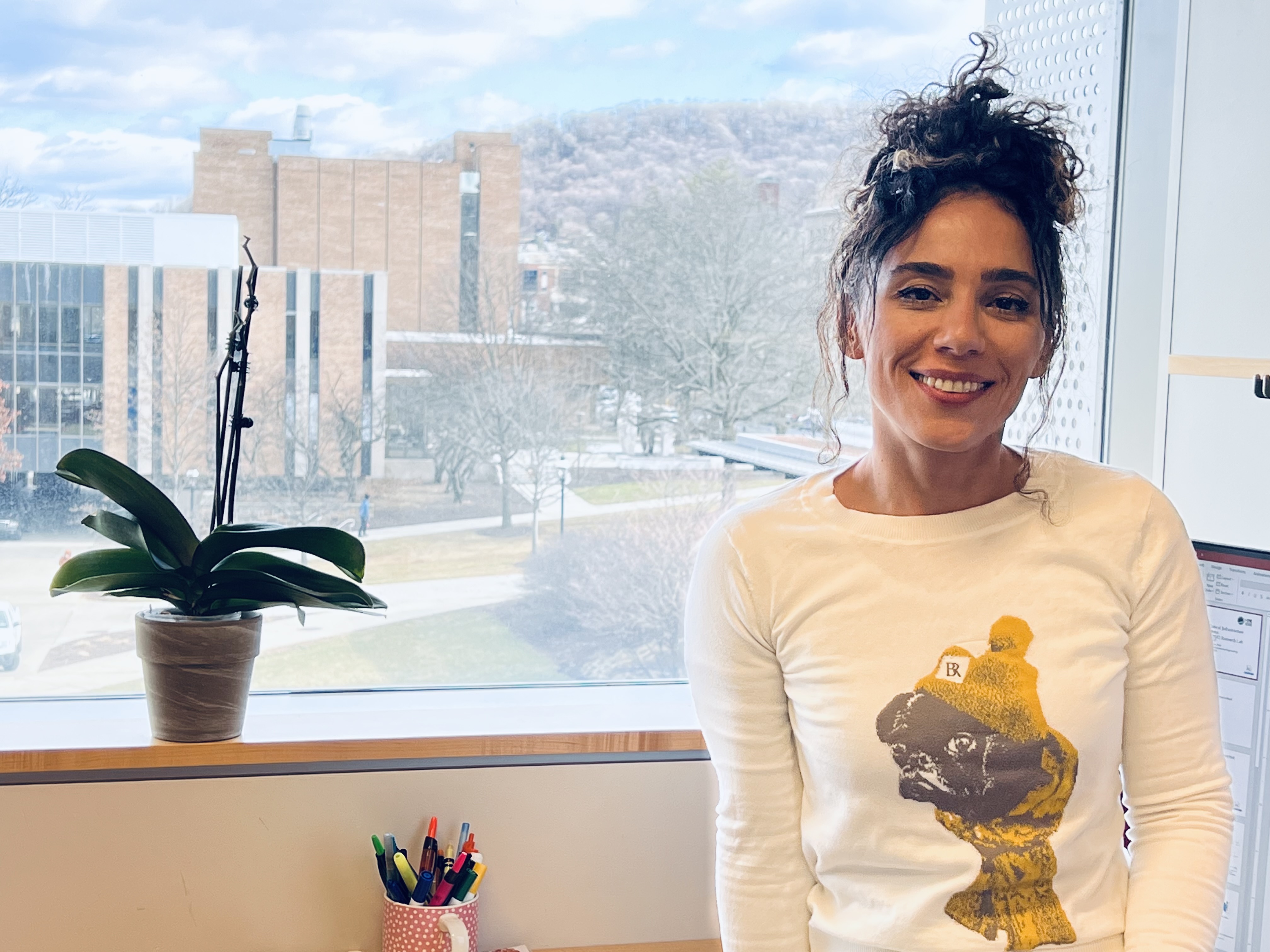
“Everybody should have equal access to energy and water,” says Farrah Moazeni, assistant professor of civil and environmental engineering. “Equity is, I think, the ideal goal for us.”
Farrah researches smart water infrastructure systems—how to make them more efficient, how to protect them against cyber attacks, and how to coordinate them with other urban systems like energy and transportation to reduce costs, energy consumption, and emissions, and to increase access.
It’s a different path than the one she originally set out on as a chemical engineering student in Iran, where the petrochemical industry was her logical next step.
“I started thinking about the impact of petroleum on our lives in terms of environment, water, energy, all of that,” she says.
In this episode, Farrah talks about switching educational gears, her journey from Iran to the United States, where she pursued graduate studies before working in industry and eventually joining Lehigh University as an assistant professor of civil and environmental engineering and researcher with the Institute for Cyber Physical Infrastructure and Energy (I-CPIE). Along the way, she learned to navigate unfamiliar cultures, prove herself in a male-dominated workplace and transform setbacks into opportunities for growth—experiences that now shape how she mentors her own students.
She also explains how advances in smart water infrastructure are helping communities operate water systems more efficiently, defend them against cyberattacks and better coordinate water, energy, and other critical infrastructure. For Farrah, the ultimate goal extends beyond technology. It’s about creating more resilient communities and ensuring that everyone has reliable access to essential resources, even in the face of natural disasters and other disruptions.
Key Moments
- 00:37 — Meet Farrah Moazeni and her passion for physics
- 04:19 — Why she shifted from chemical to environmental engineering
- 06:42 — Leaving Iran to pursue graduate school in the United States
- 10:43 — Lessons from working in the biofuels industry
- 12:00 — Earning respect as a young engineer in a male-dominated workplace
- 16:14 — Why she returned to academia
- 20:26 — What are smart water infrastructure systems?
- 23:19 — Protecting water systems from cyberattacks with AI
- 25:43 — Connecting water, energy and other urban infrastructure
- 27:13 — Why sustainability and equity drive her research
- 30:21 — Mentoring international students through challenges she once faced
Featured Quotes
"Everybody should have equal access to energy and water." — Farrah Moazeni
"I loved physics. I would die for physics." — Farrah Moazeni
"My students…are the reason why I think there is hope for this planet." — Farrah Moazeni
Full Transcript
Transcript is auto-generated and lightly edited for clarity.
When I started my job, nobody would even listen to me. It was an environment all male in Florida. I was freshly out of school and I had to manage the operators. They were all male and they had like plus 40 years of experience and I had black hair and accent, so, and I was literally the only female in the entire technical group.
Welcome to Rossin Connection, a podcast about all things Lehigh engineering. Coming to you from the P.C. Rossin College of Engineering and Applied Science at Lehigh University. In today's episode, we're talking with Farrah Moazeni about her obsession with physics, her research, which includes protecting water systems against cyberattacks and how she learned to hold her own when things got tough. Farrah is an assistant professor in the Department of Civil and Environmental Engineering. She was born in Iran in the capital city of Tehran. And when she came to the U.S. For graduate school, she left everything and everyone she knew behind. It wasn't easy, but as you'll hear, she got really good at turning challenges into opportunities. It's a skill she's paying forward today to her own international students. Thanks for joining us.
When you were growing up, what were some of the things that you loved to do that maybe looking back on it now, might have been some early signs of the engineer that you were going to become?
Oh. Okay. I loved physics. I would die for physics. I specifically remember that the birthday gift that I got for my 15th birthday were four editions of physics holidays, which later on we had it in college and I had already studied it. So, I loved physics and I loved astronomy. I didn't go for physics then because everybody told me that there is no future for it in Iran in terms of job securities. And then later on when my cousin started her engineering degree as a chemical engineer, I started learning about different things in engineering that are very related to physics because it's all physics-based laws. And I realized, okay, I don't have to go for physics, I can go for engineering, I still can do physics related stuff, but I believe it or not, I still have that excitement about physics and I have different books that I read about physics when I have free time.
Okay, so what is physics holidays? What is that?
Oh, it's a textbook or physics one and physics two that at least when I was an undergrad we would study based on those textbooks and I already had them when I started.
It's fascinating to me that you say you, you would die for physics. Oh yeah. So, so tell me where did that fascination first start?
I think it started with astronomy and how different planets are correlated and where we are in the whole universe as like a teenager because I also loved philosophy and somehow these two they met in my mind. So I figured that there are things that are the physics law and have nothing to do with people. But at the same time there are things in philosophy that are so rational that you can actually maybe come up with a physics law for them. I know it doesn't make that much sense, but it made sense to me when I was a teenager.
Oh that's, that's so interesting. And it's just amazing to me. We all have our things growing up and, and so you kind of touched on this a little bit, but how did you ultimately decide to study engineering and how did it end up becoming chemical engineering?
Yeah, so my background was chemical engineering and then my PhD was civil engineering. Uh, as I mentioned. So my cousin, she went to school before me and then she got into chemical engineering and she talked to me about thermodynamics, heat transfer, mass balances, mass transfer and all of that. And I got very, very interested into all of these topics. And then of course Iran had oil and petrochemical industry was part of chemical engineering or process engineering was part of chemical engineering. So it made sense for me to go to chemical engineering. And when I started it, I loved it because it had so many mathematical topics that I liked, physics related that I liked, and modeling all of them were translated into a huge business that was going on in Iran, which was petrochemical. Of course I never worked in Iran, but it was a huge thing growing up.
Uh, all the chemical companies and petrochemical and oil and piping and you know, drilling all of that. So that's how I got interested in chemical engineering. And then after that I started thinking about the impact of petroleum on our lives in terms of environment, water, energy, all of that. And then I figured, hmm, maybe this is not very good for us. What can I do to, you know, fix this? So I changed gears towards environmental engineering aspect of it that okay, what are the renewable energy resources that we can replace this? I know that I'm going to put my home country out of business (laughs), but hey, planet Earth is more important. So, uh, that's how I got into the whole renewable energy water. And then that's how I chose my PhD. And uh, then after that, this is what I'm doing now.
Wow, that's such an interesting transition and such a great transition. Like thank you for making it. We need, we need more people like you who think like that.
I hope I can have some affect.
So what brought you to the U.S.? How did you end up coming here to do your PhD?
Well, it's no brainer. Like the U.S. Is home to the best graduate schools in the whole world, right? So that was not a hard decision to make. The hardest decision was to say goodbye to everyone and to come to a country that I didn't know anyone, right? I didn't know the language, didn't know the culture, I didn't know anybody and all the people that I knew and all the things that I knew I was leaving and coming here for a greater purpose. But even now, I don't remember even one minute of my life to regret this. If I go back again, I will make the same decision, uh, maybe earlier even. And uh, I, I have been loving this, this is home now.
I mean, when you say that you didn't know the language or the culture, what helped you initially in those early years to sort of not get overwhelmed by all of these things that you didn't know and to really persevere and succeed when I imagine there were probably some pretty hard days.
Oh yeah, of course. Especially at the beginning and as an immigrant and international student and then later on international scholar there is always challenge. So what really helped me was the nature that this country has that uh, you see so many people from so many different countries. I was not the only one. Like I remember that when we would gather as graduate students together to have like potlucks dinner, everybody was from somewhere. So we had maybe one graduate student from the US and everybody was from Pakistan, Indonesia, Germany, India, Iran, I was, and you start learning new things that you wouldn't learn if you were not here. So you start learning how to cook Mexican food, what is the culture of Jews, you know, uh, what people do on Easter. So many interesting things that I truly believe that it's worth it because it expands your horizons and you start welcoming things and people who are not the same as you are and you realize that you can learn from them. So this is great.
Before you came to the U.S,.you already knew that you wanted to go this different track towards more environmental engineering. So what was your focus as a PhD student? What were you studying?
That's very interesting. Yeah, so two things that I was studying. One of them was my main research, which was algae biofuel. So I was trying to find a way to extract the algal oil and converted into something that is like petroleum. So the structure is the same. The difference is that the hydrocarbons don't come from petroleum, they come from algae. And that was the main focus. But in parallel to that, since my advisor then was an astrobiologist, I was also working on a project that we were trying to detect life on Mars and Europa, which is the moon of Jupiter, which was so, so surreal because that's exactly what I wanted to do when I was a kid. And this is a different aspect that we were developing a microscope that could go underwater and could send live pictures of Europa, for example, because it's filled with water and you could tell if there is microbial life underneath that. So that was a side project that I was doing, but my main focus was on algae biofuel process and how to design it.
Wow, that is just fascinating. both of those things. Completely fascinating. Um, okay, so you went into industry after your PhD. Can you talk a little bit about why you chose the industry route and what you gained from that experience?
Sure. Yeah. So when I finished my PhD, I was still interested in biofuel. So this industry job was for a biofuel producer and I was in the research department and we were trying to generate biofuel out of waste cooking oil. And the process is a little bit different from algae biofuel, but the engineering basis was the same. So I wanted to see how things are in real world, right? So it had its benefits. Certainly I grew, I grew big time because now I was not pampered. I was in an environment that I was expected to generate results. It's not like a school that you go slowly based on your pace. I realized in industry everything was on really, really fast forward mode because it was money they were talking about, right? So they would just call me, there is an issue in the production line, we need it fixed by tomorrow, noon, and what was the time now?
Five o'clock in the evening, right? So, and it was like that. And I said, okay, I need more time. They're like, no, handle it. Handle it. We cannot go down. The production cannot stop. So I learned how to be very efficient because I didn't have time to waste on, you know, figuring things out. I had to find a way and make it work. So I think that was one of the biggest accomplishment. The second one, as a female professional, I grew a lot. When I started my job, nobody would even listen to me. It was an environment all male in Florida,, you can imagine the environment. I was freshly out of school. I had a mid-level management position and I had to manage the operators. They were all male and they had like plus 40 years of experience and I had black hair and accent.
So I, I was literally the only female in the entire technical group. So it took me I think six months to buy their trust because nobody believed that I know what I'm talking about. But after that, I was the first person they would come to ask what to do. And I think I earned that with really hard work and so many hours of crying and you know, getting back to work again and believing in myself. And of course it was not easy because we are not used to be confident unfortunately as female professionals in engineering. And I think it was a great experience. Even now I'm in touch with many of them, the people who didn't want me there, the people that thought I didn't deserve that job and now they believe in me. And I think that alone is a huge accomplishment.
Oh my gosh, yes. An enormous accomplishment. Because as you're listing all of these things about being right outta school, being around people with 40 years of experience, everything that you just listed added to my anxiety of listening to this. And I mean that would be so intimidating. Yeah. Like how did you avoid or overcome, and I don't know if you experienced this, but how did, if you did imposter syndrome or how did you just tap into yourself enough to recognize that you deserve to be there, you deserve to be heard? How did you persevere in that situation? Because I think that this is such a valuable kind of experience to share with people. Yeah,
Honestly, I didn't try to prove myself. I focused on my goals and every time that I was given an assignment, I tried to go beyond that because I thought, okay, I'm not like them. That if I do something at the minimum level, it's acceptable. I have to be outstanding to show that I'm able to do this. And I try to avoid any politics and I try to just look at the goals and focus on the goals. And every time that I had a breakdown and there were many occasions that I did have that I just try to just bring my focus to why I'm here. And I always told myself that, hey, you came all the way from the other side of the country, lived alone here. These were the problems that you had in the first six months you were accomplished. So you took care of that. You can do this too. So this is part of it, this is part of the path you will do fine and just try to finish this assignment and do your best to do this. And as I did that, things just worked out. So people started seeing that, okay, so she's not here to take our jobs, she's here really to help us and it seems that she's doing okay and she knows what she's doing, so maybe we should, you know, give her a chance. So these were, yeah, these were the things.
Oh that is so excellent. That is so excellent. Okay, so, so you have this pretty remarkable experience in industry. And so what eventually led you back to academia? Did you always know that you wanted to teach?
No, no, no. Uh, actually it happened after that. I experienced industry. I always thought I wanted do industry forever. But then when I started doing that, I realized that there are things missing in my life. For example, doing research for a company is very different than doing research in at university because a company has its own products and the bandwidth and the range that you can do research is limited within that bandwidth. And I wanted to do more. So I read a paper yesterday, I think, okay, I wanna do this. So I start doing my own research. Nobody's telling me this is the research you have to do and this is the time that you have and this is the resources that we have. So no, I have that flexibility. That's number one in terms of research. Number two, the interaction with students is something that you miss when you are not in academia.
Like of course the industry is great, is very vivid, is you know, because it's very fast. But it's very, very different from talking to students who are at the very beginning of their professional life and career and you can actually make a difference in their lives, you know? So you know that, okay, I have a chance with this student, if I work with them, they are gonna do great things. And number three was that I was missing really talking to people who know what is going to happen in the future and who want to be part of it. Like in an industry, everybody else is like you. They have a limited space and their understanding, their knowledge, their study and their research is limited within that. It's not like your colleagues at the university who had read another paper like you did and they have great ideas and they tell you, Hey, let's do this. So you brainstormed that never happened. So these are the three main reasons that I wanted to come back to academia.
Well, that makes a lot of sense. Alright, so you have these very good reasons for wanting to go back to academia. How did you end up at Lehigh?
Oh, that's a great question. Well, Lehigh is, is a great school, right? So that's not a secret. But um, I had a visit with my husband who had a colleague here about two years before I joined Lehigh. He had a research meeting here and I came with him and I saw campus there. And then when I was in the job market to apply, I saw the ad for Lehigh. And as I was reading about it, I got excited because number one was the emphasis that they had on diversity and inclusion. And you want to be in an environment that they celebrate inclusion, they celebrate diversity. And especially with my experience, I know the value of it. I don't want to be pushed aside because of the differences. I want to be included because of the differences. So that was number one. Number two was ICPIE,
Quick interruption here, ICPIE stands for the Institute for Cyber Physical Infrastructure and Energy. And as an institute it develops and promotes interdisciplinary teams working in these areas. ICPIE is one of three interdisciplinary research institutes, or IRIs at Lehigh.
I saw, okay, my research is very interdisciplinary and they have an institute for it. So what's better than that? That was number two. Number three, which was the most important one, was when I was interviewed. I just loved the feeling that I got back from everybody in the search committee. Everybody was super nice. They were very polite. So I thought, okay, I wanna be in that environment.
Well, all right, let's talk about your research. So, you know, you said that your research is very interdisciplinary. Can you just talk about what is your primary focus?
Yeah. So my primary focus is on modern water infrastructure systems. And by the word modern, it means it's smart because they are enabled by internet of things assets. So nowadays, thanks to all the smart meters, all the IOT-based devices, now we can actually get data from different points of water distribution system, for example, which is very scattered. So you, you look at a city, the water distribution system is as a scattered and as big as a city. And when you have data, then you can do a lot with it. Because then you talk about, okay, how can I use this data to make the system more efficient? Right? Number two, how can I use this data so that if something bad happens to any of these, you know, assets, how can I get back to the normal condition as soon as possible? Okay.
Or how can I prevent that? Another thing that comes with this is that now that all of these infrastructures are getting smarter, they communicate with each other, they can communicate with each other. For instance, many people don't know that when you are utilizing more water in your system, in your household, you are putting more burden on your power system because all the treatment facilities are energy intensive. And when you use more water, it means that you are sending more water to wastewater treatment plants and you are receiving more water from water treatment plants. So you are increasing your energy consumption as well. So my work is that how can I actually leverage these interdependencies to make the water system operate even better? How can we reduce the energy consumption of the water system by optimizing different assets, by coordinating different assets?
Wow, that is, that's a lot. Um, so first of all, can you just define a water distribution system?
Of course. Yes. Yes. So a water distribution system has a water resource. For example, you can have a reservoir, you can have wells, sometimes you have ocean water that has to go through desalination plants. So you have a source of water that provides water, and then you have pumping stations that pump the water to give them more pressure, more energy so that they can travel longer distance. You have pipings that they carry the water, you have valves, and eventually it gets to your house. So this combination of piping valves, pumping stations, and storage tanks, and you know, reservoirs, they are all called water distribution system.
Well, alright, well would you mind talking about a project or two that you're currently working on?
Oh yeah, absolutely. So one of the projects is about the resilience of smart water systems against cyberattacks. Because yes, the smart system is great, it gives you lots of leverages and opportunities to make the system operate more efficiently, but at the same time it makes your system vulnerable, right? So cybersecurity is a real thing for a smart water system. And for that we utilize machine learning and AI. Uh, the other one is the controlling of interconnected water energy systems. And in that project, I'm not alone. We have a PhD student from the civil department, we have a PhD student from electrical, my colleague Dr. Khazaei from electrical. So there are many of us involved in this project. And the reason for it is because each one of these infrastructure systems is complex alone. So imagine you want to integrate them and you want to control and optimize them simultaneously, considering that you have to meet both water and energy demand. So the more challenging, the more interesting it gets.
All right. Well, so what about that first project? What's the ultimate goal for it?
So the particular goal is one, to really identify the vulnerable points of smart water distribution systems. That if someone attacks, they can just impact the entire, you know, water distribution system. That's number one. And we also want to make sure that even if that happens, that is mitigated at the shortest amount of time and people are not going to be outta water for a long time. Look at Mississippi, so Jackson, Mississippi was out of water for how long? Maybe two weeks. But not because of cyber attack, because of flooding, right? That one of the treatment plants went out of operation and because of that they were out of water. The exact same thing can happen as a result of a cyber attack. So someone can actually attack a component in the water system and people can be out of water for like two weeks. And we are trying to avoid that. Uh, even if that happens, how can we mitigate it in the shortest amount of time so that people are not affected?
Okay. And so what about the second project? What's the goal for that one?
For this, we are hoping that we can utilize this to add other infrastructures that are interdependent with water and energy. For example, transportation, for example, buildings, natural gas, these are all interconnected infrastructure systems that are running our urban systems, right? Our urban systems are made of all of these highly, highly interconnected systems. We want to see an urban system that has all of these interconnected infrastructures working in a coordination with each other, which will result in lower energy consumption, lower CO2 emission lower costs, and very equitable to everybody because why someone who lives in a coastal area should pay higher for electricity than me who lives here. So everything should be equitable. Everybody should have equal access to energy and to water. So by doing all of this, imagine if you do that for the entire United States. So you have all interconnected systems that are lending and borrowing from and to each other, so you can actually have better access in all areas that are remote and right now are disadvantaged. So that's the ideal, equity is I think is the ideal goal for us.
And what do you find most compelling or motivating about being involved in this particular line of research?
I really think the most meaningful part is the sustainability and equity part of it for me, because to me, the fact that maybe someday people who live in ska or people who live in other remote areas are not going to have to deal with frequent water outages after a hurricane, for example. Look at Puerto Rico, they have not recovered yet. So the fact that we can actually come up with a solution that after a hurricane, okay, things go down, but then in no time everything is back up and working. So that's the ideal picture that I can see for my research, that eventually everybody has the same access to uninterrupted, reliable resilience source of water for me, and eventually energy as well.
And you know, as someone who is very much an outdoors person and really loves being in the environment, I find our current state as a planet to be very, it's very scary and disheartening and I feel very pessimistic a lot of days. So how do you feel when it comes to the state of the planet? How do you stay optimistic and what gives you hope that this isn't the beginning of the end?
My students, really. So one of the things that I was surprised by after joining Lehigh was the quality and the passion of the students. And I'm not the even talking about PhD students, I'm talking about my senior undergraduate students, and you'll look at them, they are full of ideas and they are so, so open-minded and they want to make things happen. So I assign them with a class project, they drag down the VP of the biggest, you know, companies and have them explain why they are emitting this much of carbon into the atmosphere. You know, so they are that passionate. And I look at them and I'm like, okay, so maybe our future is not that bad because they are smart, they are passionate, they are hardworking, and I think they are up to something good. And I believe in them because I see them very, very, very focused on the goals. And when you assign them with something, they are go-getters. They will not come back until they have results. So they are the reason why I think there is hope for this planet.
That is such a perfect answer. I just love that. Okay. I, I realize you haven't been teaching for very long, but have you had any instances where you are giving advice to students that are similar to you, that are feeling alone and perhaps out of their depth and wondering if they are doing the right thing? Like how do you tap into your own experiences to help your students succeed?
So all my three PhD students, they are international students. And I had this conversation with one of them specifically because she didn't feel like she's up for it at first. I was very honest with her. I told her that there was not one day that I wouldn't cry when I had started my PhD alone here in the United States. I was the same age when I came and I told her, look at me now, and I tell you for sure that even with all of that hardship, I never ever felt like maybe I shouldn't have done that. Even when I lost my father and I was here and I couldn't even go to say goodbye to him, I didn't feel like that because I knew that this was what he wanted. And he was so proud of me and he would tell me all the time.
And I told her that this is not going to be easy and this is not the end of it. Even when you start your job, it's not going to be the end of it, but it makes you a great scholar and a great person if you use it, yes, of course you can use it as an excuse, but if you use it to grow, you are going to accomplish things that you would never ever think that you could. And I think they are seeing it now that one semester has passed, even within this short amount of time, I have seen them grow. I remember the day they started crying in my office because they thought they couldn't do it. And now yesterday one of them was telling me that I cannot believe that I did that.
Well, your students and Lehigh are very lucky to have you.
I think I'm the luckiest here. Seriously.
So I'm gonna interrupt here one last time when this interview was recorded, there were demonstrations happening across Iran in response to the death of Mahsa Amini by the country's morality police. And a lot of these protests were being led by young women, and it was considered an unprecedented display of defiance. So I asked Farrah if she'd like to say anything about the situation.
This is so surreal because I live here, but I live in a different space now. Like I'm here. But my mind and my thoughts are with all the girls that are in the streets in Iran and chanting for the rights. And they are so brave, I'm so proud of them. Like you look at them, they are 16 years old, they are 20 years old, and they know that things can get ugly for them and they don't care. They want to have a free country that everybody respects their rights. And I'm so humbled by their level of understanding the courageous things that they do. And if ever I go back, I just wanna go say to every one of them that thank you and thank you for not giving up on this, and everybody's watching you and everybody's suppor ting you and zan, zendegi, azadi.
Say that one more time.
Zan, zendegi, azadi. That's what they chant. It means women life freedom.
That's it for today's show. I'd like to thank Farrah for a time and for the important work she's doing to make sure we all have access to the resources we need. For more information about all the academic programs at the P.C. Rossin College of Engineering and Applied Science, and to find our show, head to engineering.lehigh.edu. Music in this episode is by Blue Dot Sessions. You can send us story suggestions or feedback on X at Rossin podcast. I'm your host and producer, Christine Fennessy. See you next time.
About the Guest
Farrah Moazeni is an assistant professor in the Department of Civil and Environmental Engineering, PhD program director for the department, and member of Lehigh’s Institute for Cyber Physical Infrastructure and Energy (I-CPIE). She is the director of the Interconnected Critical Infrastructure Systems Engineering (CONCISE) Laboratory, and her research focuses on smart water infrastructure, cyber-physical systems, artificial intelligence and the resilience of interconnected water and energy networks. Her work aims to improve sustainability, strengthen critical infrastructure against cyber threats and expand equitable access to reliable water and energy systems.
Episode Details
Related Episodes
- Episode 19: How Sibel Pamukcu Helped Pioneer Environmental Remediation and Women in Engineering
- Episode 23: How Fish Are Inspiring the Next Generation of Underwater Robots and Renewable Energy
- Episode 27: Powering a More Reliable Electric Grid with Javad Khazaei