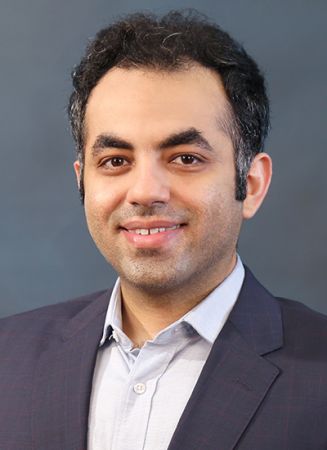
 BioE New Faculty Spotlight: Dr. Amirtahà Taebi
This article was written by Juliana M., a Bioengineering undergraduate student and student office worker in the Department of Bioengineering.
Dr. Amirtahà Taebi joined Lehigh University’s Department of Bioengineering in August 2025. Before Lehigh, he served as a faculty member in the Biomedical Engineering program at Mississippi State University (MSU), where he taught a wide range of courses including: physiological systems, biomedical signals and sensors, and an introductory Python programming class for all engineers. He also co-led a study abroad program in Rome, Italy, where he spent a month teaching engineering mechanics to a multidisciplinary cohort of students.
While at MSU, Dr. Taebi developed his current research focus in cardiovascular monitoring through seismocardiography. Seismocardiography works by measuring subtle chest vibrations caused by the heart, as if it were an earthquake causing seismic waves. By using extremely sensitive sensors, Taebi aims to detect cardiovascular diseases in a more comfortable and less invasive way. This method complements tools such as ECG and ultrasound, allowing for faster diagnoses and safer procedures.
The patient-centered nature of Taebi’s work requires collaboration with hospitals and access to clinical populations. At MSU, the geographic distance from medical centers posed challenges to advancing this aspect of his research. That experience shaped his search for a university with strong medical partnerships and a collaborative research culture—qualities that ultimately led him to Lehigh.
 Dr. Taebi was drawn to Lehigh’s close connections to nearby hospitals, its vibrant research environment, and its strong emphasis on undergraduate engagement. He was especially impressed by the university’s commitment to supporting student involvement in research and the breadth of interdisciplinary collaboration across departments. At Lehigh, he sees an opportunity not only to expand his research with clinical partners, but also to work alongside students and faculty who are equally driven to innovate.
Dr. Taebi’s path to bioengineering began during his undergraduate years as a mechanical engineering major. Interested in both math and physics, he chose a broad discipline that would allow him to explore different career paths. Over time, his academic experiences took him through a variety of research environments: from biomechanics to fluid mechanics to surgical device design. One particular project in laparoscopic surgery stood out to him and helped spark a lasting interest in medical technologies.
Although he briefly explored other career possibilities—including filmmaking and politics—he ultimately chose bioengineering because it combined technical problem-solving with human impact. This decision wasn’t the result of a single moment, but rather a process of trying new things and learning by doing.
Dr. Taebi encourages students to take a similar approach to their own career paths. For him, hands-on experiences were essential to discovering what truly excited him, and he believes the same is true for others. Whether in research, policy, public health, or engineering, he urges students to seek out opportunities that allow them to actively engage with the work. Even if a project isn’t directly related to their major, the experience can help clarify their goals and uncover new passions.
He emphasizes that it’s okay not to have everything figured out from the start. What matters most is being open to new experiences and saying yes to the opportunities that come your way.