
The Summer and Fall 2025 semesters bring the retirements of nine Rossin College faculty members. Collectively, these esteemed professors have advanced their fields, strengthened academic programs, and supported generations of students. The Rossin College celebrates their achievements and many years of dedicated service to Lehigh.
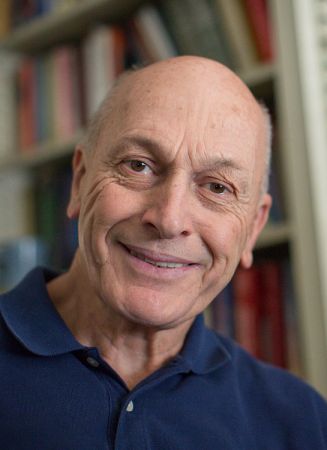 Hugo S. Caram has been a distinguished faculty member in the Department of Chemical and Biomolecular Engineering and a core member of Lehigh’s Energy Research Center. Professor Caram joined the Lehigh faculty in 1977 and made significant contributions in reaction engineering, reverse-flow reactor design, sorption-enhanced hydrogen production, and process intensification, integrating carbon dioxide capture with energy processes. He led multimillion-dollar research projects—including collaborations with the U.S. Department of Energy and international partners—authored over 100 publications with thousands of citations, and advanced Lehigh’s research mission by helping to chart a sustainable energy future.
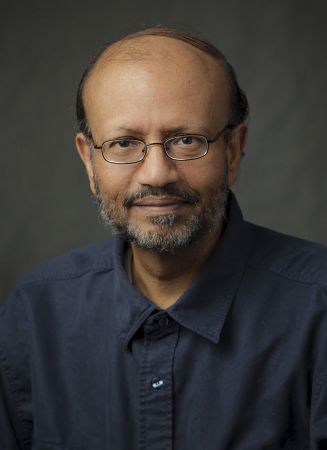 Manoj K. Chaudhury served as the Franklin J. Howes Jr. Distinguished Professor in the Department of Chemical and Biomolecular Engineering. Professor Chaudhury came to Lehigh in 1994 after working in central research at Dow Corning Corp. (now Dow Chemical), joining the faculty through a Dow Corning–supported chair professorship that also funded several doctoral students. His research focused on fundamental aspects of wetting, adhesion, friction, and interfacial fluid mechanics—work that helped launch the field of open surface microfluidics. He has published in high-impact journals, including Science, Nature, PNAS, and Physical Review Letters. He is an elected Fellow of the American Physical Society and a recipient of the Adhesion Society Award for Excellence in Adhesion Science (2005) and Lehigh’s Libsch Research Award (2015). His work was supported by the Office of Naval Research (ONR), the Department of Defense (and its Strategic Environmental Research and Development Program), the National Science Foundation (including a Small Business Innovation Research Phase II award), Boeing, and other industry partners. He served on editorial and advisory boards for several journals. A dedicated teacher and mentor, he advised numerous graduate students and postdocs who now occupy university, industry, and national laboratory positions.
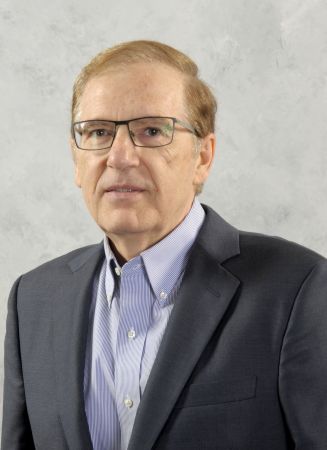 Panayiotis (Panos) Diplas served as the P.C. Rossin Professor in the Department of Civil and Environmental Engineering and was department chair from 2013 to 2020. Professor Diplas made important contributions to environmental, fluvial, and infrastructure hydraulics, especially in advancing understanding of sediment transport, scour around hydraulic structures, and the impact of human activities on the environment. His research group published over 250 peer‑reviewed papers, and his work was supported by NSF, the U.S. Environmental Protection Agency, the U.S. Army Corps of Engineers, ONR, the U.S. Geological Survey, the Federal Highway Administration, and the Defense Advanced Research Projects Agency (DARPA), as well as by industry partners. He is the recipient of several awards, including the NSF CAREER Award, as well as the Hans Albert Einstein Award, Hunter Rouse Hydraulic Engineering Award, and Karl Emil Hilgard Hydraulic Prize from the American Society of Civil Engineers (ASCE). He joined the editorial board of many journals and is currently the editor in chief of the Journal of Hydraulic Research. Recognized for his leadership, he is an elected Fellow of both the Environmental and Water Resources Institute and ASCE.
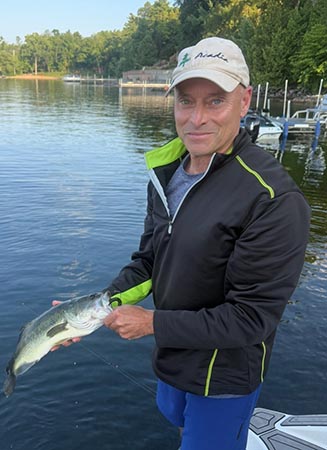 John N. DuPont served as the R.D. Stout Distinguished Professor of Materials Science and Engineering, with a joint appointment in mechanical engineering and mechanics. He was a research scientist in the Energy Research Center (ERC) from 1990 to 1999, and then joined the faculty of the Materials Science and Engineering Department in 1999, where he became a global leader in welding metallurgy, solidification processing, alloy development, laser-engineered net shaping, and high-temperature corrosion. As associate director of the ERC and site director of the NSF Manufacturing and Materials Joining Innovation Center, he co-founded and oversaw one of the world’s largest welding-research centers that included four universities and over 50 companies that linked the power generation, aerospace, automotive, and electronics industries. He authored over 300 research articles, edited seven books, holds multiple patents, and has raised more than $15 million in research funding. He served extensively as a consultant to industry and national laboratories and was elected as a Fellow of both the American Society for Materials and American Welding Society. In retirement, he is looking forward to outdoor recreation at his new lake house in the Adirondacks, time with family and friends, traveling, reading, volunteering, and many other activities he still hasn’t thought of.
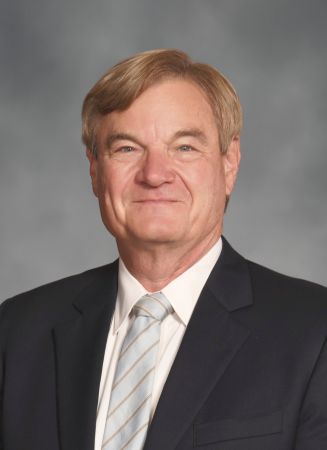 Herman F. Nied MS’78 PhD’81 joined the Department of Mechanical Engineering and Mechanics in 1995 and served as department chair from 2002 to 2008. Professor Nied made major research contributions in polymer processing, flexible composites, fracture mechanics, electronic packaging, welding, and shock-and-vibration loading. He developed advanced finite-element simulation tools that have been widely adopted in manufacturing and materials-processing research. His work has been supported by NSF, DARPA, the Semiconductor Research Corporation, and numerous industry partners. A dedicated educator and mentor, he supervised 30 doctoral and 39 master’s students, published 115 scholarly works, and holds 11 U.S. patents and three European patents. He was elected as a Fellow of the American Society of Mechanical Engineers and is a member of the scientific research honor society Sigma Xi. He is a recipient of the NSF CAREER Award and he received a Fulbright Scholarship to teach and conduct research at Graz University of Technology in Austria.
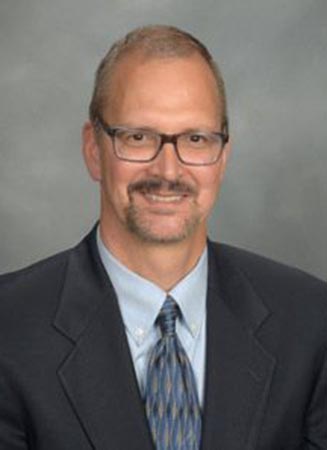 Raymond A. Pearson joined the Department of Materials Science and Engineering in 1990. Professor Pearson conducted pioneering research on the processing, deformation, yield, and fracture of polymers, as well as adhesive and interfacial behavior in polymeric systems. He directed Lehigh’s Center for Polymer Science and Engineering, led development of online graduate programs in polymer science and engineering, and served as interim associate dean for graduate studies and research for the Rossin College. He is a Fellow of the Society of Plastics Engineers and was elected to its executive board. The Adhesion Society honored him with its award for Excellence in Adhesion Science. As a teacher and mentor, he guided more than 40 graduate students and contributed dozens of refereed publications and book chapters. He is a recipient of Lehigh’s Hillman Award for Excellence in Graduate Student Advising as well as the Hillman Award for Excellence in Undergraduate Student Advising.
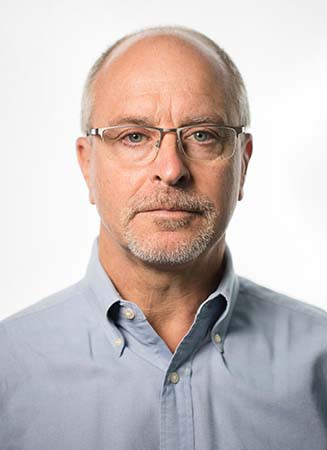 Richard Sause served as the Joseph T. Stuart Professor of Structural Engineering in the Department of Civil and Environmental Engineering and was director of the Advanced Technology for Large Structural Systems (ATLSS) Engineering Research Center for more than 20 years. Since joining Lehigh in 1989, Professor Sause has led groundbreaking research in earthquake‑ and blast‑resistant structural systems, high‑performance materials, structural dynamics, and in‑service durability of bridges and large structures. His research portfolio included large‑scale experimental investigations and more than 130 peer‑reviewed journal articles and 230 conference papers. He led the university’s Institute for Cyber Physical Infrastructure and Energy (I-CPIE) as its inaugural director from 2018 to 2022. He has received numerous professional honors, including the Raymond C. Reese Research Prize, J. James R. Croes Medal, and Charles Pankow Award for Innovation presented by ASCE, as well as the Charles C. Zollman Award from the Precast/Prestressed Concrete Institute and the Raymond C. Reese Structural Research Award from the American Concrete Institute.
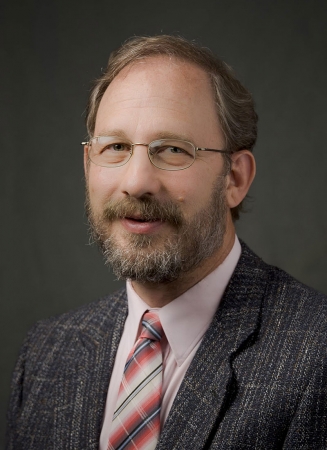 Greg Tonkay joined the faculty of the Department of Industrial and Systems Engineering in 1986. Professor Tonkay served as the ISE department’s associate chair (1999-2010), the Rossin College’s associate dean of undergraduate studies (2010-2020), and interim ISE department chair (2007-2008). He was the recipient of multiple departmental and college teaching awards, the Lehigh University Christian R. and Mary F. Lindback Foundation Award honoring distinguished teaching, and the Lehigh University Hillman Award for Excellence in Undergraduate Advising. He served as lead investigator for research contracts from NSF, the Ben Franklin Partnership, the U.S. Army, and several industrial companies. He taught courses in manufacturing processes, automation, production systems, robotics, material handling, operations management, programming, and databases.
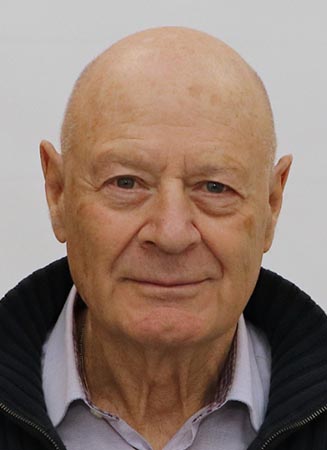 Arkady Voloshin served as a professor in the Department of Mechanical Engineering and Mechanics. He joined the Lehigh faculty in 1984 after serving on the faculty at Iowa State University and as a senior research officer at the Institute of Non-Destructive Testing in Russia. Professor Voloshin’s research focused on modeling cell motility and surface interactions; developing MEMS-based systems to evaluate cellular mechanical properties; and studying the effects of dynamic loading on the human musculoskeletal system. His work also examined thermomechanical deformations in micro- and optoelectronic packages using interferometric techniques. He received the M. Hetenyi and Brewer Awards from the Society for Experimental Mechanics and was active in professional societies spanning mechanics and biomechanics. He was named an academic advisor by the International Academy of Science in Russia for his scientific achievements in engineering mechanics, held visiting appointments at institutions in Brazil, Japan, Israel, Slovenia, and France, received a Certificate of Recognition from NASA for technical innovation, and holds a U.S. patent related to vehicle safety systems.