
Duration: 26:00 | Published: January 4, 2021
Episode Summary
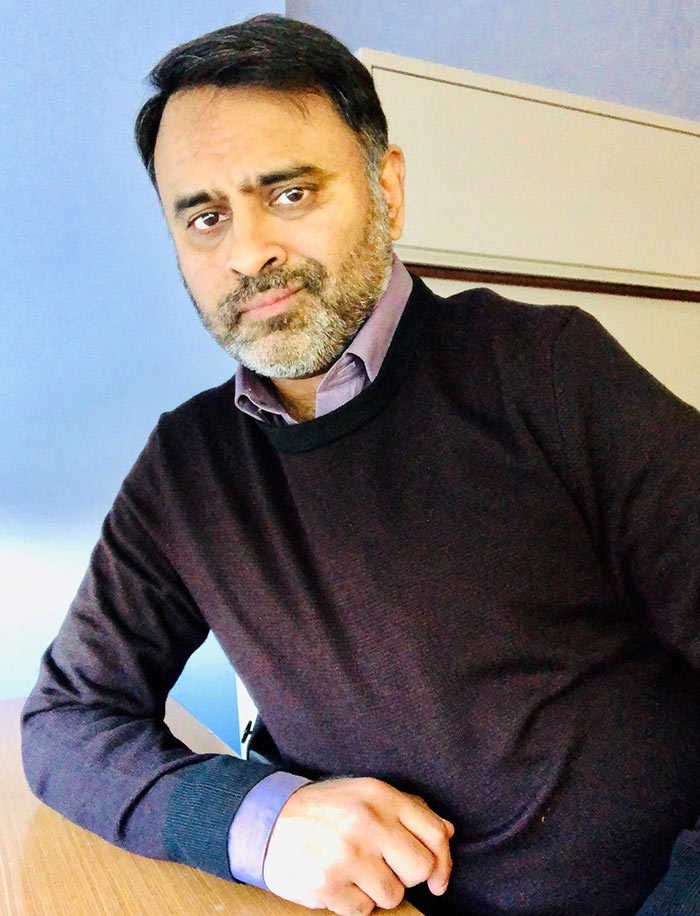
Bioengineering sits at the intersection of engineering, biology, and medicine, bringing together researchers from multiple disciplines to solve some of healthcare’s most difficult challenges.
In this episode, Anand Ramamurthi, a professor in Lehigh University’s Department of Bioengineering, explores how engineers are helping transform modern medicine through regenerative medicine, biomaterials, drug delivery, tissue engineering, and computational modeling.
Drawing on a career that spans chemical engineering, biomedical engineering, and cardiovascular research, Anand explains why engineers are becoming increasingly important partners in preventing, diagnosing, and treating disease.
It’s a subject that has captivated him since he was young.
When he first took biology in high school, Anand was immediately hooked. “I was fascinated with the human body,” he says. “How did all these organs work? What happened to them in disease? What goes wrong? These questions started me on my path to developing solutions for these problems.”
It was a path he initially thought would take him to medical school, but instead, morphed into an interest in chemical engineering that eventually brought him from India to the U.S.
In this episode, Anand traces that path from chemical engineering into biomedical engineering after discovering how engineering principles could be applied to problems in medicine.
His research has focused on cardiovascular disease, particularly developing minimally invasive treatments for conditions such as abdominal aortic aneurysms, which currently have few non-surgical treatment options. His laboratory investigates how biomaterials, stem cells, and regenerative medicine can restore damaged blood vessels by encouraging the body to rebuild elastic tissue that naturally declines with age.
One of Anand’s primary research areas is nanomedicine, an emerging field that uses nanoscale materials to deliver therapies directly to diseased tissues. By engineering nanoparticles that can travel through the bloodstream, target damaged blood vessels, and release therapeutic compounds precisely where they are needed, researchers hope to develop safer, more effective treatments while minimizing side effects.
He also discusses tissue engineering, artificial heart valves, biomaterials, and drug delivery systems that could eventually provide alternatives to conventional surgery for cardiovascular disease.
Looking ahead, Anand describes a future in which bioengineering increasingly overlaps with artificial intelligence, machine learning, biocomputational engineering and healthcare data science. He explains why computational models are becoming essential for understanding diseases, designing therapies and responding to emerging public health challenges.
As former chair of Lehigh’s Department of Bioengineering, he also shares his vision for expanding clinical partnerships, interdisciplinary research, and experiential learning opportunities so that students can work alongside physicians, scientists, and engineers to develop the next generation of medical technologies.
Key Moments
- 2:19 — Discovering biology and engineering
- 4:13 — Moving from chemical engineering into biomedical engineering
- 8:03 — Why clinical partnerships matter
- 11:03 — Research on cardiovascular disease and regenerative medicine
- 13:08 — Nanomedicine and targeted drug delivery
- 15:01 — Lessons from mentoring graduate students
- 17:11 — Vision for Lehigh Bioengineering
- 18:50 — What is biocomputational engineering?
- 19:40 — AI, computational modeling and COVID-19
- 20:30 — Partnerships with Lehigh’s College of Health
- 22:41 — The role of bioengineers during the pandemic
Featured Quotes
"Engineers do have an increasing role in treating disease." — Anand Ramamurthi
"Bioengineering sits at the interface of engineering and medicine." — Anand Ramamurthi
"Bioengineers are ideally suited to develop low-cost solutions." — Anand Ramamurthi
Full Transcript
Transcript is auto-generated and lightly edited for clarity.
Welcome to Rossin Connection, a podcast about all things Lehigh engineering. Coming to you from the P.C. Rossin College of Engineering and Applied Science at Lehigh University. It's a show for students, alumni, faculty and staff, current, former, and future, and for anyone interested in the many creative ways that engineers are solving the world's problems. I'm your host and producer Christine Fennessy. Today's show features my conversation with Anand Ramamurthi. On September 1st, Anand started as professor and chair of the Department of Bioengineering after getting his bachelor's degree in India, Anand got his PhD in chemical engineering from Oklahoma State University.
He was a postdoc at the Lerner Research Institute at the Cleveland Clinic Foundation. Then he joined the bioengineering faculty at Clemson University in South Carolina. He returned to the Lerner Research Institute where he was an associate professor in both the molecular medicine and biomedical engineering departments. And finally, he spent the last two years as a full professor at the Cleveland Clinic Lerner College of Medicine. Today, Anand talks about that journey, both as a researcher and as a professor. He describes his vision for Lehigh's bioengineering department and why he thinks engineers are uniquely suited to solving some of the problems brought on by the pandemic. Thanks for joining us. So can you just tell me a little bit about where you grew up and how you first got interested in engineering?
Well, my, uh, early upbringing was in Singapore. I was born in India, moved to Singapore when I was three years old, did my schooling there, and I moved back to India when I was in high school. And that's for the first time I, I came across biology in my curriculum and I was fascinated how the human body works. And, um, my initial plans were to go onto medical school, but somewhere along the way I got interested in chemistry as well. So I ended up doing chemical engineering and thereafter moved to the United States to do my higher education in, uh, chemical and petroleum engineering. Would you believe it? So once I came here, I got more information about a new emerging field in engineering called bioengineering or biomedical engineering. And so I did my PhD in chemical engineering with a focus on drug delivery and biomaterials, and that's how my journey started.
Wow. Okay. All right. Well, and so, you know, what was it about the human body that caught your attention so early on? What, what stoked that fascination for you?
Alright, so initial exposure with regard to, uh, the different organs in the body. And you realize how complex these organs are. So the questions automatically that come to mind, who created all these things and how do these work and what happens to them in disease? What goes wrong? And so these are fascinating questions. And so I think that started me on my path to understanding how the human body works and, uh, developing solutions for many of these problems. And I came to realize that engineers have a big role in this. You wouldn't expect that, but engineers do have a increasing role in treating disease.
And at what point in your trajectory did you come to that realization and what did it mean for you?
So during my PhD, I was trying to apply chemical engineering principles to understand how drugs may be delivered at surface of biomaterials, for example, in extracorporeal circulative devices to prevent blood clotting on those surfaces. And then moving on, I got an opportunity to do a postdoctoral fellowship at the Cleveland Clinic, which as you know, is at the forefront of cardiovascular research. And when I was at the Cleveland Clinic, I delved into a very interesting problem of developing an artificial heart valve, which is based off human cells and scaffolds. This was a time, uh, in the early two thousands or late 1990s where the field of tissue engineering and regenerative medicine was really setting off. It essentially means taking a biomaterial, a scaffold on which you put human cells or patient derived cells and grow them in an artificial environment such as in a bioreactor in the lab, providing it nutrients and allowing a tissue to grow and a tissue that can be then taken and implanted at the site of a diseased tissue. So there was a big problem with no effective replacements for defective heart valves. And uh, so, you know, I moved into this project where I was looking at developing these artificial heart valves using human cells on grown on biomaterials scaffolds. And as a chemical engineer, I was brought in to develop a bioreactor to grow these tissues in the lab. And that's how my journey into biomedical engineering actually started formally, I think at that point.
Wow. And so, okay, well, when I talk to graduate students, you know, they often tell me that they weren't necessarily planning on graduate school, but that something happened while they were in undergrad that really sort of changed their minds and changed their trajectory. It was maybe a professor or a class or some experiential learning project. Did you have a similar experience as an undergrad or did you just always know that this was the path that you were going to follow?
Well, I always knew that I would do something past my bachelor's degree, although at one point of time when I was pursuing my undergraduate degree, um, you know, I was actively interviewing with companies in, in my senior year back in India. And, uh, I went to all these interviews and one thing that I realized at that point of time is that the options were very extremely limited. You know, you end up going to work in a pharmaceutical factory or a petroleum distillery. So the options were really limited, and somehow I had that sense of lack of fulfillment because my original interest was in medicine and there was really no way I could get back to that. But having realized that I wanted to do something further with my life and I needed more skills and more applied skills. And so that is one of the reasons I applied to grad school. And I'm really mighty glad I actually applied to school in the United States because when I did, I came to know of all these other options, this entire field known as bioengineering, which I am in today.
Oh, okay. So now you've said that you want to make the bioengineering department here at Lehigh an academic center of excellence. And when you think back specifically on your graduate student experience, is there anything that you draw on from that time that you'd like to either replicate or build on, uh, here at Lehigh, maybe in terms of the interactions or the collaborations or maybe the research opportunities you had when you were a graduate student?
Definitely. So I went to graduate school, uh, at Oklahoma State. Uh, it's in Stillwater, Oklahoma, and it does not have a medical school. So as a chemical engineering student who is working on a biomedical, uh, research problem, which was drug delivery at biomaterial interfaces to improve blood compatibility of extracorporeal circuits, it's medically applied, but you don't have any kind of collaboration with a medical institution or input from a clinical person. So that is something that I ran a problem I ran to, uh, early on during my PhD and wonderfully my, uh, research advisor at that time, he was a young faculty who had completed his, uh, degree from MIT and had a number of connections in Boston. And one of the things he did was to have me apply for an internship at a company in Boston. And that trip was an eye-opener. During those few months, I also had a chance to visit with, uh, many professors at Harvard, and I started a collaboration with one of them, Simon Robson in Gastroenterology and Immunology.
And it resulted in a wonderful publication at the end of my PhD. So what this really told me is it's very important to interact and collaborate with clinical experts. And it is also important to have outside experiences such as internships and co-ops and industry because the world outside is very different from what you experience it within a, the confines of a university lab. So that is something I would like to stress upon in our department moving forward, uh, and continuing its emphasis on co-ops, internship experiences as well as clinical collaborations. And as you know, Lehigh University, uh, does not have a medical campus either. And so one of my, uh, priorities is to be developing a clinical partnership.
And, and what would that look like?
So the way I en envision this is a clinical partnership where research, our faculty would have joint appointments with a clinical department. And the other way around, we foster collaborative projects. We enable new programs for medical students and MD program with an ms again from Lehigh University. We gain, uh, immersion experiences, clinical immersion experiences for our graduate students and undergrads at clinical institutions and so forth. And so there's a lot of opportunity here and I think it really has possibilities to greatly enhance the our research footprint as well.
Oh, that's great. Well, okay, so now talking a little bit about your research over sort of the trajectory of your career, can you talk a little bit about how your research interests have evolved and what problems you've become most committed to solving?
I'm glad you asked that question because my research experiences have, uh, greatly changed over the years. At the same time, I think it would be safe to say we focus on, uh, cardiovascular disease, treatment of cardiovascular disease and, uh, importantly developing minimally invasive solutions and alternatives to surgery. Um, so early on when I finished my postdoc and assumed my first faculty position, and this was in South Carolina at Clemson University, so my research was very heavily based on the biomaterials area, and gradually that evolved and, uh, we started working more with biological materials, biological components of tissues that may be used for my more biocompatible solutions. And then gradually we moved into the area of stem cells, um, because many of these tissues that we are talking about, these blood vessels are formed during early development. So one of the issues that came up at that time is we discovered some growth factors and other biomolecules that stimulate regenerate and repair of these vascular tissues.
An example of a condition we are trying to, uh, address are abdominal aortic aneurysms. So these conditions really involve bulging of the vessel, the major blood vessel, the aorta, and they're prone to rupture and they occur in very elderly people in male smokers. So this condition doesn't have any non-surgical solutions. There are no drugs to reverse these conditions. Uh, one of the problems being that the, uh, vessel loses its elasticity and weakens and ruptures. So the component which causes this elasticity, it's called elastic matrix or elastic, and it's primarily produced just before or just after birth. And it pretty much shuts down during adolescence and in adulthood. So what we have been looking at is what causes this to be formed in the first place during early development, and can we provide those same conditions and environment and cell types to produce that in a disease scenario?
And we actually found certain biomolecules identified certain biomolecules, which actually stimulate this regeneration and repair. Unfortunately, there's a problem of how we can get it to the disease vessel wall non-invasively. To address that, we started working on nanomedicine approaches, and that is one of our major thrusts today. Um, so nanomedicine is a great new area. It's nanomaterials are materials at the nano scale, right? Uh, let's say you have a material X and the same material when it is, uh, made into a small particle at the nano scale, it has completely different properties, whether it's biocompatibility or it's degradation properties has completely different properties than when the same material is taken at a macro scale. So these are very interesting because they also have a very small degradation footprint, which means that when they degrade in the body, they generate very few remnants of byproducts. So they are pretty much non-toxic if you use the right polymer, for example. So we use these as drug delivery carriers and they can be modified in such a way that when you put them in the bloodstream, they actually hone it into the injured tissue, go stick there, and then start breaking down to release a drug which is encapsulated. So that in a sense is what we do, and we test this in various animal models of the disease and we look at its safety, its ability to treat the disease and reverse the disease.
Wow. And so now over this, the arc of your career, how do you think that you have evolved as a professor? What, what do you think you've learned from your work with students over the years that you hope to bring to Lehigh students?
So one of the things that I've learned from interacting with my students is that as a researcher, you need to be very precise in your communication. uh, I'll give you an example, and this is something that I have been guilty of as well as a student. So when my advisor came to the lab and said, so Anand, tell me a little bit about your experiment. Uh, I took my cells and I plated them, and then they, I looked at the matrix and I imaged it. This is highly non-specific information, so we need to be very technical. I took 50,000 cells, put it on a well plate, and I cultured it for one week in presence of X, Y Z growth factor. And this is the analysis I performed, which is A, B, C, right? So you need to be very technical in your com communication and precise.
Number two, you need to be extremely well read. You need to know what is going on in the world, in the research world. You need to read your literature. You can't be limited to your just your own research. Just as other people read our manuscripts, we have to look at other literature as well. And the third thing is we need to be collaborative. So there's a tendency as a student to assume you know everything. Well, you do know a lot by the time you finish a PhD, but you know a lot about one thing. And as researchers, we cannot just do one thing, especially in the field of bioengineering because it is such an interdisciplinary field. You have to interact with other engineers or a scientist in the biological sciences or a vascular surgeon. So you have to interact with people from other fields. So you need to be precise in your communication. You need to be collaborative. So this is something that I'm really stressing to all my students today.
Well, okay. So you are now a professor and chair of the Department of Bioengineering here at Lehigh. And that position just started on September 1st. Do you have some specific goals that you have that you are targeting that could further strengthen the department and its influence on the field?
Yes. Uh, so we have a number of interesting initiatives that you're working on, some of which are already on the ground. One is the, uh, development of our new biocomputation major in bioengineering department. And this is meant to dovetail with the starting of the, uh, college of health. It's meant to leverage a growing interest in the area of, uh, computational modeling and biocomputation has applied to the medical data sciences, which dovetails into artificial intelligence and, uh, machine learning and topics such as those. So that's one interesting initiative. The second one is, uh, to develop a clinical partnership with a leading medical institution. And this can greatly enhance our access to resources, both in terms of educational resources and opportunities for clinical immersion of our students, as well as opportunities to bring in new students from other medical fields who would want to do a minor in bioengineering, for example. And the third thing is to develop new programs that can bring outside non-traditional students into bioengineering. For example, can we bring in students from computer science into bioengineering and give them a bioengineering edge so that they can, uh, move into areas such as bioinformatics, which are these new hot areas, so to speak, within the biosphere.
Okay. So speaking specifically of the new bio omputational undergraduate degree program that launched just this fall, can you just explain quickly what biocomputational engineering is?
So biocomputational engineering is a field of the interface of bioengineering and the computational data sciences. For example, mathematical modeling of, uh, molecular phenomena at the larger scale biological processes such as what cells and tissues are involved in and mathematically representing these developing diagnostic models based on these and predictive models. And more recently, the definition of biocomputational engineering has evolved further because of, uh, developing computational models to analyze medical data. And so that also involves machine learning and artificial intelligence.
Well in, has the pandemic at all maybe heightened the need for biocomputational engineers?
The pandemic has definitely motivated us to make further progress in the field of computational engineering. There are certainly applications where we have to, uh, develop these models to understand how the coronavirus, for example, interacts with human tissues, looking at protein folding and uh, protein presentation on surface of the virus and its recognition, things like that. And these biocomputational models are great to simulate these, uh, kind of phenomena and to understand these better so that they can even be used to predict the virus responses to certain conditions or response to certain therapies that we actually design such as vaccines.
Okay. Okay. And you also talked about the New College of Health. Are there specific ideas that you have on how the bioengineering department may partner with the College of Health?
So some of the areas we can potentially interact with the College of Health and develop fruitful partnerships are in the area of healthcare data analytics, modeling of epidemiological data development of point of care devices for patients, wireless devices for diagnostics, as well as patient monitoring. So these are some of the areas we are really interested in growing. And with our increasing faculty numbers in this area in the future, I think that'll become a reality.
Oh, that's exciting. Okay. Well now as you know, the university is working to improve diversity. Do you have any ideas on how the bioengineering department might better attract and retain more diverse faculty, students, and staff?
Well, we really, really need to go all out as far as recruiting a diverse pool of, uh, students. We really need to increase our outreach, right? And, uh, this is something that we are actively working on and we are encouraged by and supported by the college and the university. So one of the things that we'd like to do is, for example, have our faculty go to historically black universities, HBUs or high schools, talk about our research, try and partner with them, develop grants for funding summer research opportunities for these students who are not otherwise exposed to research perhaps, uh, to come on campus and work with our faculty and possibly engage with them and show them the possibilities so that they can join our field as well. And as far as, uh, diversity among our faculty members, we are a very diverse faculty body as, as we have, uh, almost, uh, 50% of our faculty are women. We have faculty members from a number of different countries. And again, I'd like to engage with recruiting students. I mean faculty from many of these professional organizations which are focused on enhancing diversity, for example, Society of Women Engineers or Society of Black Engineers, for example.
Um, has the pandemic influenced how you view the field of bioengineering and the role that you would like Lehigh to ultimately play in the field?
So the pandemic has really taught us that we are extremely important as bio engineers to developing low cost solutions that may be adopted on a wide scale. For example, when this, uh, pandemic started, there was a shortage of protective masks. And, uh, bioprinting is a great solution. And, uh, a number of faculty came up with, uh, bioprinting solutions to, uh, generating masks on demand at low cost. So similarly, you know, developing strategies to clean surfaces, uh, to provide surfaces which are resistant to viral contamination, right? So these are examples of how bioengineers might contribute, but the key is low cost solutions, and I think we are idly suited to be the people to accomplish those solutions.
Oh, that's good. And where do you see the bioengineering department in 10 years?
Well, in 10 years, that's a long way off. But we have some grand plans. We see a, a robust and thriving department. We see a doubling of our faculty numbers, uh, doubling of our student numbers. We see more, uh, different graduate programs, maybe master's programs, which are targeted towards working professionals. We, uh, joint interdisciplinary programs. We are looking at, uh, growing research in terms of our funding as well as outreach and applications, uh, number of patents and, uh, commercialization of our technologies as well generated by our faculty. So we have grand plans, we have, uh, great hopes and, uh, hopefully those won't realize.
Well, I hope so too. Okay. So it's been a rough year. So for you, when you look back on 2020, what do you feel most grateful for and what are you most looking forward to?
So I'm really grateful, despite the challenges, uh, that the year has presented, I've been really grateful that, um, my family and I have our health. And I'm grateful for the great move to Lehigh and looking forward to 2021. I really hope the year, uh, turns out to be great for all of us in terms of having a vaccine available and people to move around again, socialize, interact with one and another, with renewed gusto without the fear of, uh, COVID-19 lurking.
That's it for today's show. I'd like to thank Anand for making time to talk during a busy end to his first semester here at Lehigh. For more information about all the academic programs at the P.C. Rossin College of Engineering and Applied Science, and to find our show, head to engineering.lehigh.edu. Music in this episode is by Blue Dot Sessions. You can send us story suggestions or feedback on X at Rossin podcast. And as always, thanks for listening and stay safe.
About the Guest
Anand Ramamurthi is professor and chair of the Department of Bioengineering at Lehigh University. His research focuses on regenerative medicine, cardiovascular tissue engineering, biomaterials, and nanomedicine, with an emphasis on developing minimally invasive therapies for vascular disease. His work combines engineering, biology, and medicine to design targeted drug delivery systems, regenerative biomaterials, and next-generation biomedical technologies that improve patient care.
Episode Details
Related Episodes
- Episode 18: How Mechanical Engineers Help Broken Bones Heal
- Episode 22: The "Magic" Behind the Materials That Power Modern Technology
- Episode 24: How Angela Brown Is Engineering New Ways to Fight Antibiotic Resistance