
BioE New Faculty Spotlight: Dr. Juan Aceros
This article was written by Rida M., a Bioengineering undergraduate student and student office worker in the Department of Bioengineering.
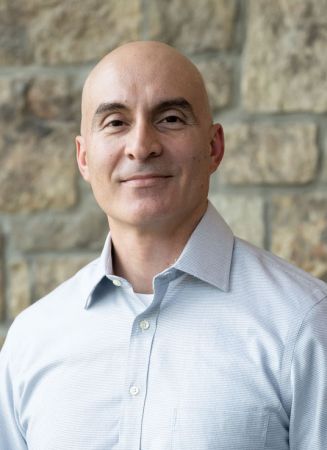 We are excited to welcome Dr. Juan Aceros as a new Associate Professor in Lehigh University's Department of Bioengineering. Dr. Aceros has built a dynamic career at the intersection of engineering, medicine, and innovation. His expertise spans mechanical, electrical, and biomedical engineering, all driven by a passion for solving complex, real-world problems, from nanoscale fabrication to the development of sophisticated medical devices.
Originally from Colombia, Dr. Aceros earned his M.S. in Mechanical Engineering and Ph.D. in Electrical Engineering from Northeastern University in Boston, Massachusetts. His early career reflected a dedication to interdisciplinary research. Initially drawn to thermal fluids, he quickly shifted his focus to nanotechnology, a field that captured his interest deeply. After his Ph.D., Dr. Aceros had the choice between industry and a postdoctoral fellowship at Brown University’s Neuroengineering Laboratory. He chose the latter, reflecting that "it felt like an exciting opportunity to create something that could truly help people."
These experiences deepened his appreciation for the convergence of diverse fields. While he initially considered mechanical and electrical engineering interdisciplinary enough, working in biomedical engineering revealed a much broader collaboration. Dr. Aceros shares, "Once I started working in biomedical engineering, I fell in love with how interdisciplinary it was... We all think and solve problems differently, so learning how to collaborate across those boundaries was really exciting."
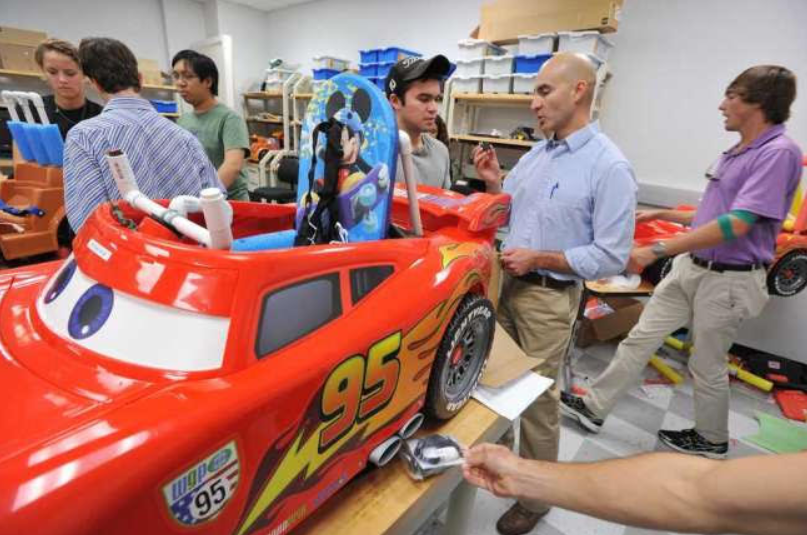
Before joining Lehigh, Dr. Aceros served as an Associate Professor of Electrical Engineering at the University of North Florida. There, he established the Adaptive Toy Project, a community-driven initiative inspired by the national Go Baby Go program. This project transforms ride-on toy cars into custom mobility devices for children with disabilities, incorporating custom electronics, controls, and supports to meet each child’s unique needs. For Dr. Aceros, the most rewarding aspect of this work was seeing the immediate, meaningful impact. He states, "It’s not about publications or grants; it’s about impact." He also shared, "Working with children with disabilities has been incredibly rewarding. Seeing how our projects directly improve their quality of life—and how it affects their families—is the most fulfilling part of my job."
 Today, at Lehigh University, Dr. Aceros holds a joint appointment with Good Shepherd Rehabilitation Hospital. This unique position allows him to collaborate directly with clinicians and patients, ensuring that the technologies he designs directly address real-world rehabilitation challenges. "I have a joint appointment at Lehigh University and Good Shepherd Rehabilitation Hospital. I’m not a clinician, but my job is to develop technology for patients," he explains. His research focuses on integrating engineering, materials science, and medicine to develop assistive devices and rehabilitation tools that genuinely improve quality of life.
He also strongly emphasizes involving students in this patient-focused process. By engaging future engineers in interdisciplinary projects, he teaches them that collaboration and empathy are essential drivers of innovation. He stresses the need to start by understanding the clinician and patient perspective, explaining, "Many devices fail to reach patients because they’re designed in isolation. By starting with the clinician and patient perspective, we can design solutions that actually get used and make an impact."
Outside of his research, Dr. Aceros is an avid triathlete, bringing the same dedication to movement and health to his personal life. He sees mobility as essential to living fully, a value that inspires both his research and his personal fitness. He affirms, "Mobility is something I value in both my research and my personal life. I think it’s essential to keep moving as we age." He welcomed the move to Pennsylvania and Lehigh from Florida, stating, "I wanted to pursue research at a higher level, in an environment that encourages deeper collaboration and interdisciplinary work. Lehigh offered that opportunity—a place where I can continue to grow and make meaningful contributions."