
Lehigh ISE team places 3rd in an international simulation competition
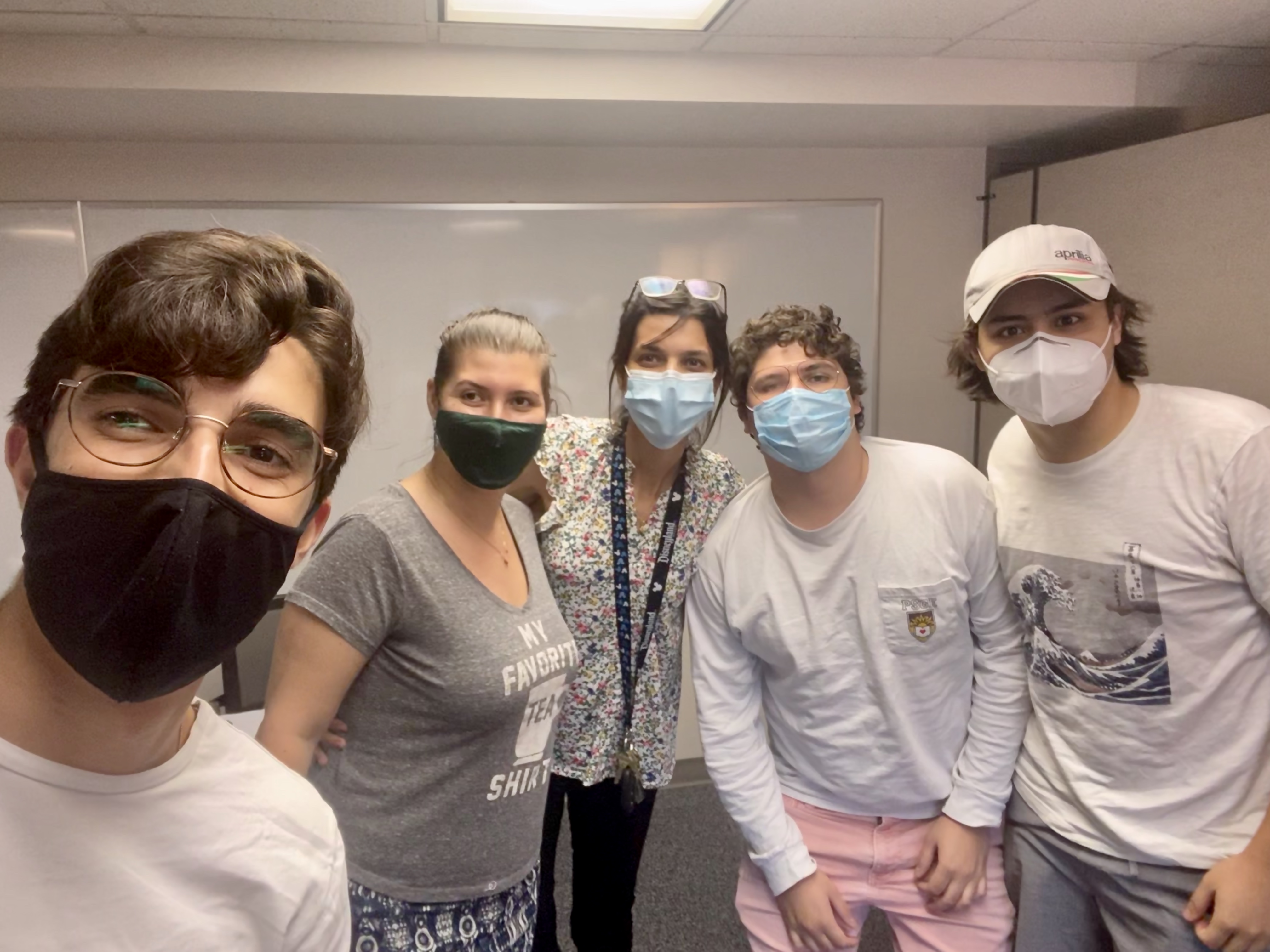 Congratulations to the team Lehigh 502 Marcos Leal Wittkowsky, Jose Andres Castillo Anzueto, Rodrigo Gonzalez Masselli and Lehigh ISE Professors Ana I. Alexandrescu and Karmel S.
Congratulations to the team Lehigh 502 Marcos Leal Wittkowsky, Jose Andres Castillo Anzueto, Rodrigo Gonzalez Masselli and Lehigh ISE Professors Ana I. Alexandrescu and Karmel S.
Lehigh engineers were among the 27-student cohort for LehighSiliconValley 2022. The 8-day program was held in a hybrid format—combining remote-from-home and in-person sessions in San Francisco—for the first time.
There’s a good chance that in the next decade, autonomous vehicles (AVs) will navigate the streets around Lehigh’s campus in South Bethlehem.
According to a recent report from market and consumer data company Statista, industry forecasts predict that by 2030, one in every 10 new vehicles produced globally will be fully automated.
The fifth-year PhD student in Lehigh’s MATS lab will conduct nitride synthesis research from a new perspective. Could perfecting the growth of single-crystal boules change the future of electronics?
In this video, chemical and biomolecular engineering doctoral student John McGlynn explains how he's using a technique called microrheology to enhance wound repair and tissue regeneration.
McGlynn, a fifth-year PhD student, is advised by Kelly Schultz, an associate professor of chemical and biomolecular engineering. The Schultz Lab focuses on the "focus on the characterization of colloidal and polymeric gel scaffolds and the development of new techniques to characterize these complex systems."
Jordan Inacio '11 '12G '17G is a fourth-year PhD student in mechanical engineering. His research utilizes a unique computational approach to improve clinical healing outcomes for bone fracture patients.
Inacio is advised by Hannah Dailey, an assistant professor of mechanical engineering and mechanics, whose research group "emphasizes imaging-driven engineering approaches to clinical problems in orthopaedics and currently collaborates with surgeon-investigators in hospital health networks across the world."
John Kershner is a second-year PhD student in the Department of Mechanical Engineering and Mechanics. He's researching owl-inspired aeroacoustics to design mechanisms that may one day help planes fly with less noise.
The back of owls' feathers are "layered in an interesting way where they are essentially porous," he explains. "Our goal was to be one of the first groups to actually fly an aircraft and demonstrate owl-inspired noise reduction."