
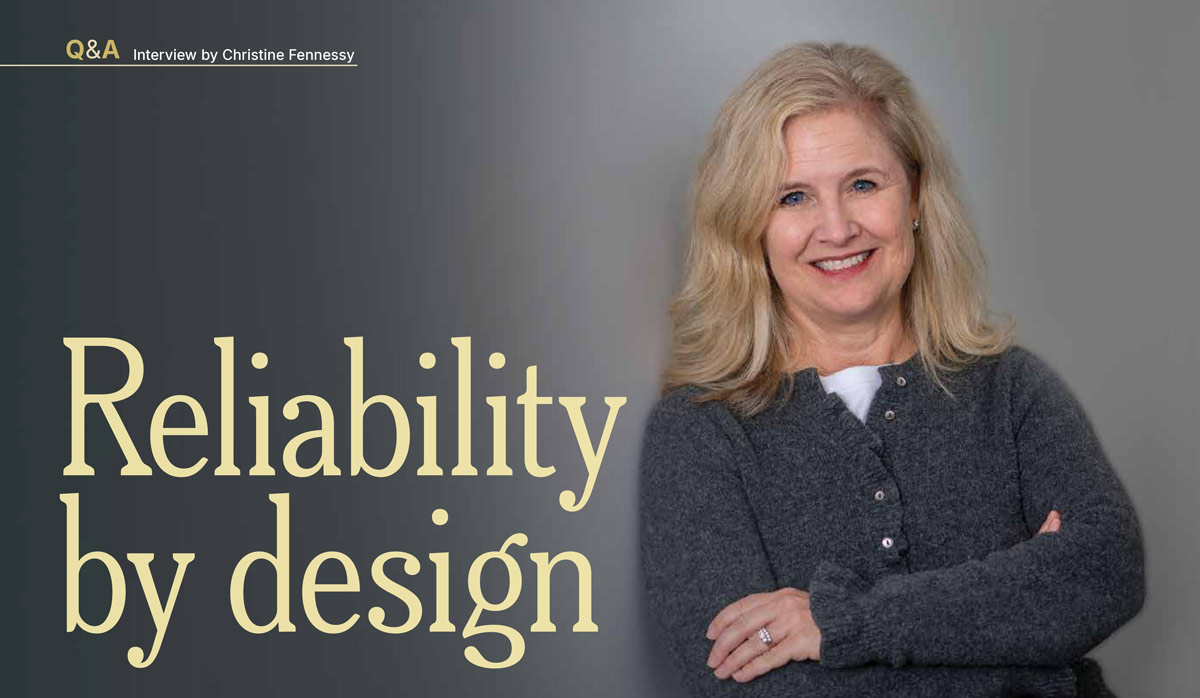
At a time of unprecedented transformation in the global space sector, Dr. Michelle Parker ’92 is steering the technical direction of one of the industry’s most expansive defense and space enterprises. The mechanical engineering alumna and Dean’s Advisory Council member was recently named vice president and chief engineer for Boeing Defense, Space & Security programs, where she oversees design and execution across the division’s portfolio.
Over more than 25 years at Boeing, Parker has helped guide some of the company’s most visible and complex programs—from leading Boeing’s Space Mission Systems business, which includes national security space systems and commercial and government satellites, to serving as Chief Engineer of the Space & Launch Division, supporting the system that powered NASA’s Artemis I mission. She began her career in thermophysics, designing satellite thermal systems, and rose through the company in leadership roles spanning engineering, strategy, and enterprise technology.
Here, Parker reflects on the Lehigh experience that shaped her career, the evolution of the space industry, and how graduate programs such as MS-AERO—Lehigh’s new master’s degree in Aerospace and Space Systems Engineering—can prepare the next generation of engineers to design systems that must work—the first time, every time.
 Q: In what ways did your time at Lehigh shape your path to a career in aerospace engineering?
A: As a mechanical engineering major, I focused on thermodynamics, fluids, and heat transfer. I appreciated the hands-on nature of those classes—you immediately applied what you learned in the classroom. I also gained a deep understanding of how collaborative engineering really is; it’s far more team-oriented than people expect. Learning to work across disciplines while attending Lehigh provided a foundation that has been vital throughout my career.
Q: How do you foster cross-disciplinary collaboration?
A: It starts with understanding the overarching objective—what we’re delivering and why it matters. If you can communicate the mission, you can get people from different technical backgrounds aligned around a common goal. It also helps them recognize each other’s constraints. I often find myself acting as the translator or connector among team members. When you’re building complicated systems, that integration is essential.
Q: How would you describe your leadership philosophy?
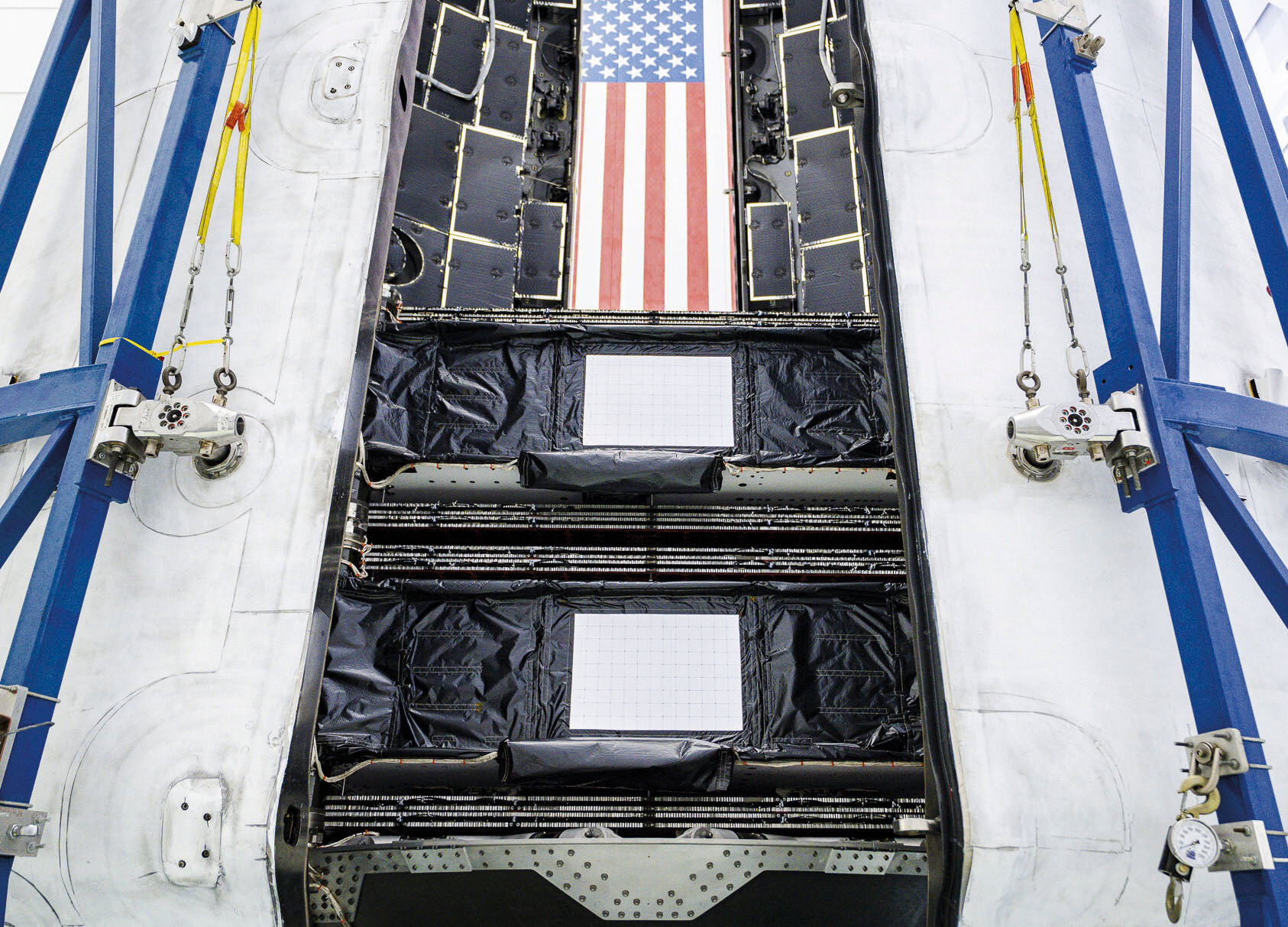
A: It’s always about the team. I do not like finger-pointing. We win or lose together. As a leader, technical integrity is also incredibly important. Once a satellite is in space, you can’t bring it back—it has to work. We’re building sophisticated systems for high-stakes missions, so operational reliability is huge.
Q: What industry trends excite you most right now?
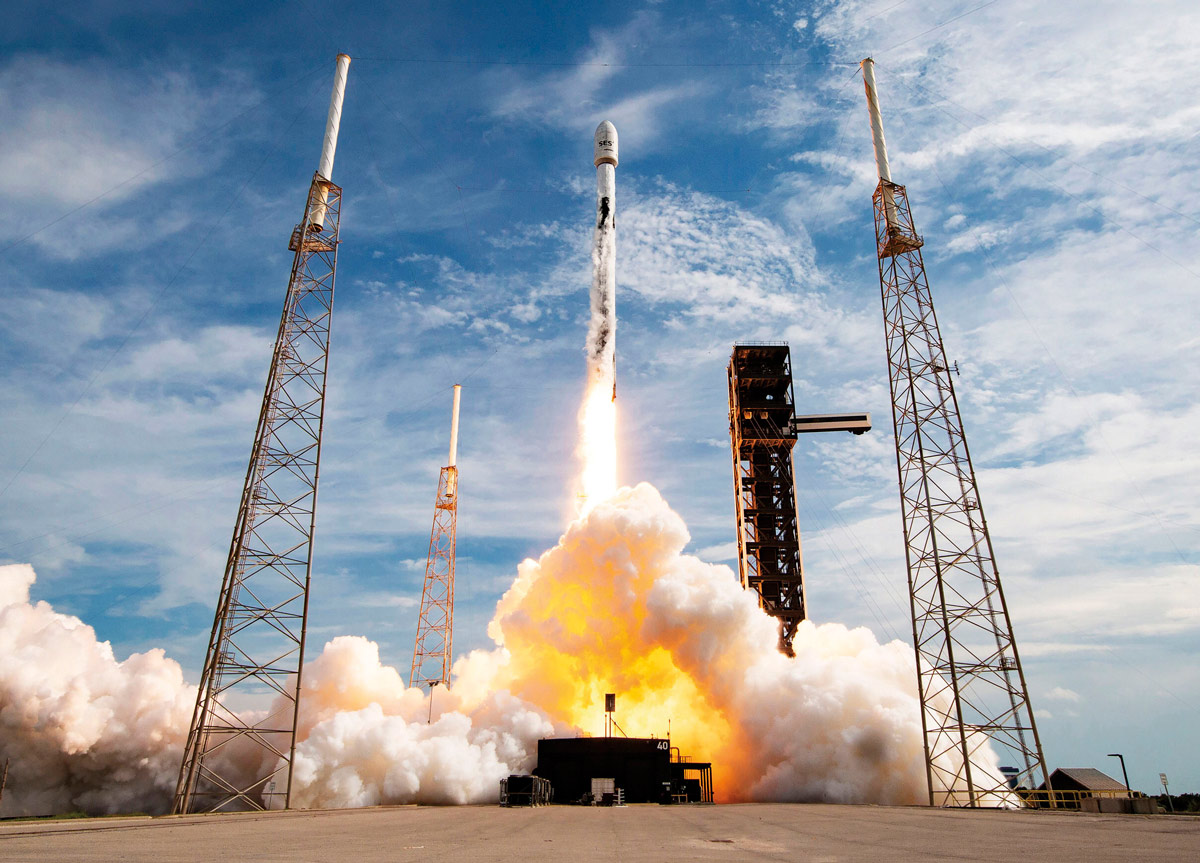
A: Space has always been exciting, but the industry has really blossomed over the last decade. We’re seeing an expansion in exploration—returning to the moon, going to Mars, launching heavy-lift rockets. We’ve also shifted from handcrafted satellites to “hot” production lines where we’re manufacturing dozens of similar satellites. To increase the velocity of that production, we’re introducing automation into our processes wherever possible. The satellite industry is at an inflection point where schedules matter more than ever. Delivering at pace is critical.
Q: What skills do engineers need as the industry moves in this direction?
A: Fundamental mechanical and electrical engineering skills are non-negotiable. But we’re seeing production engineering, manufacturing engineering, and industrial engineering take on a much more prominent role. At Boeing, we’re hiring a lot of production engineers because speed depends on manufacturability. It’s not enough to design a product; you have to ensure it can be built efficiently. The systems that build the vehicle become as vital as the satellite itself.
Q: How can engineers better communicate the importance of their work?
A: As engineers, our language tends to be highly technical because specificity matters. But to capture the interest and imagination of the broader public, you have to describe how engineering impacts daily life. Take GPS, for example. Without GPS satellites, we couldn’t navigate with our phones. Weather forecasting, real-time banking, global internet connectivity—these are just some of the daily essentials that rely on space-based infrastructure. Most people don’t think about what’s powering those services, which is actually a testament to how reliable our satellites have become. However, making that connection is crucial if we want to inspire the next generation to join or support the industry.
 Q: How do you see Lehigh’s MS-AERO program equipping students for future success in the industry?
A: A master’s degree allows for specialization that the industry now demands. My undergraduate studies at Lehigh focused on thermofluids. I went on to earn my master’s and PhD from the University of Pennsylvania in that area, with research focused on loop heat pipes for spacecraft thermal control. That deeper, specialized knowledge gave me an edge in my career. Lehigh’s program will allow students to focus on areas unique to aerospace—such as launch, mission operations, and propulsion. In this field, systems engineering is critical. Our technology is profoundly interconnected, from the components within the satellite to the links between ground stations and users. A master’s program helps students understand how integrated design works, teaching them how subsystems come together to ensure the entire product operates as intended.
Q: Mentorship is a key component of the program. How has mentorship shaped your own trajectory?
A: At every stage of my career, my mentors have emphasized one thing: Be technically excellent. If you want to solve big, complex problems or lead technically driven businesses, your technical expertise and integrity come first. I also had a mentor whose advice has always stayed with me: Hire people smarter than yourself, and always seek to understand where the other person is coming from. Whether in a negotiation or a design review, every difference of opinion has a root cause. If you take the time to find that root, you’ll reach the best solution.
Q: What advice do you have for early-career engineers?
A: Build a strong foundation. It’s natural to be eager for the next step, but whether your expertise is in engineering, business, or another field, you need a base to build upon. It’s also imperative for future leaders in the space industry to be resilient. This is a challenging business. You will face setbacks because you are constantly pushing the boundaries of what’s possible. When failures happen, you have to identify the source of the problem, make the corrections, and get right back to work.