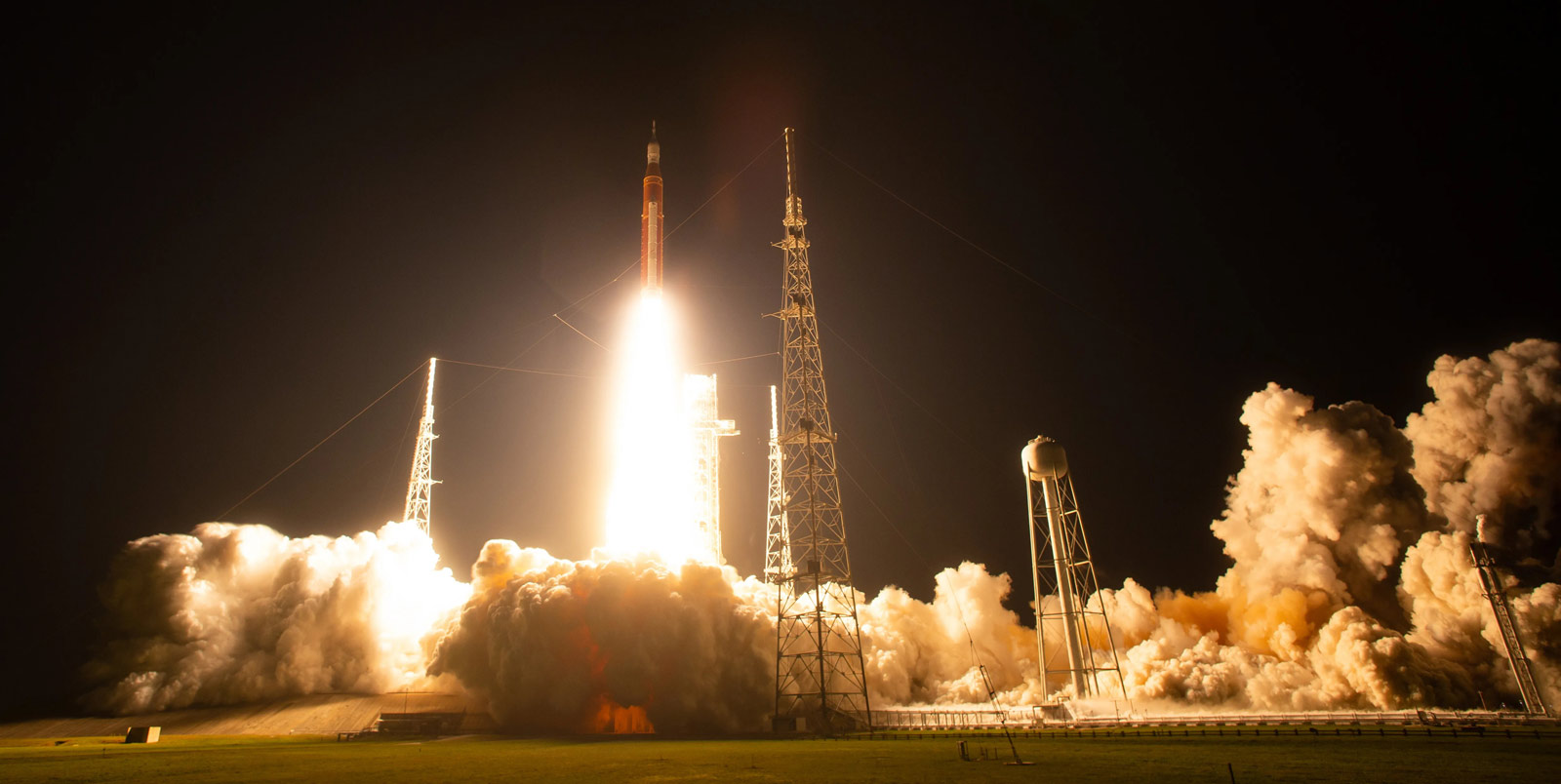
The principles that allow an automobile to deploy an airbag and a launch vehicle to fly into space share an unexpected connection. In both cases, these are split-second actions that depend on technology that translates an electrical signal into a carefully controlled and precise actuation event.
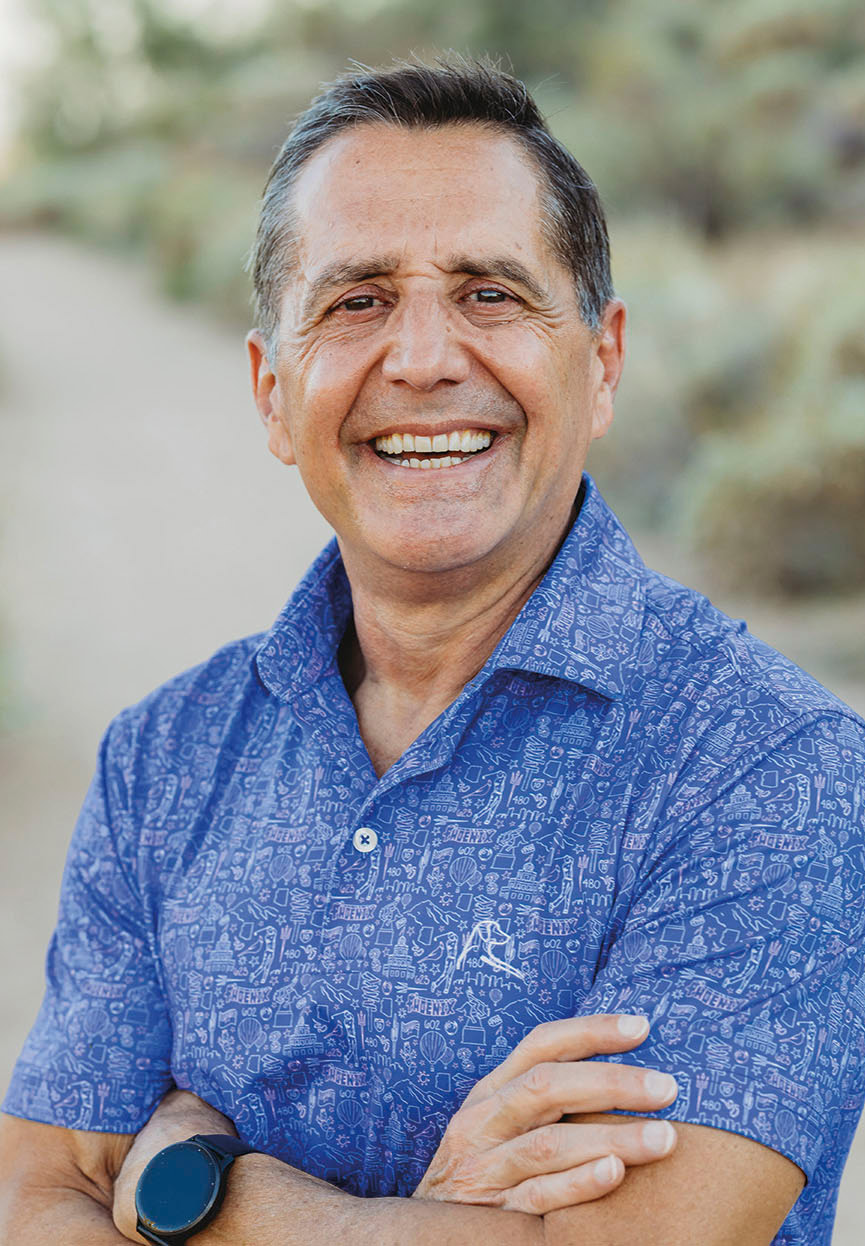 “They both rely on pyrotechnics,” says Greg Scaven ’85 (pictured).
That shared technology helped shape Scaven’s career, which has involved pyrotechnics, explosives, and propellants used in the defense, automotive, and aerospace markets. His work has led to lifesaving innovations.
Scaven’s journey to Lehigh and chemical engineering started with the U.S. Army Reserve Officers Training Corps (ROTC) program. After graduating from the university, he was commissioned as a second lieutenant in the Army’s Chemical Corps. While on active duty, he earned a master's degree in chemical engineering from the University of Pennsylvania and was later deployed to the demilitarized zone in Korea. After returning to the United States, he began working on next-generation flame weapons. Following deployments overseas during Operation Desert Storm, Scaven left active military service and joined a defense contractor in Arizona.
“In the early days of my civilian career, I worked on rockets,” he says. “Think of them as a way to deliver a payload from point A to point B. The propulsion system delivers the payload to its intended destination or target. The business end is the payload, where, in the case of a rocket or missile, a warhead is used against a target. I was a warhead guy, maximizing the terminal effects upon initiation.”
In the mid-1990s, that same company, Talley Defense Systems, was improving the propellant systems for the first driver’s-side airbags in vehicles. Scaven spent the next decade advancing airbag technology for the automotive industry, eventually working for—and then leading—the company that developed the world’s first side-impact head airbag.
“When airbags first appeared, they protected drivers and passengers in frontal crashes, but people still died in side collisions because the crush zone on a vehicle’s side is very small,” says Scaven. “We knew if we could place an airbag in that area, we could save many lives. And we did it! Those same airbags are now standard in most production vehicles today.”
In 2006, Scaven started leading a division of Pacific Scientific Energetic Materials Company (PacSci EMC), which produced thousands of highly specialized pyrotechnic components for military, space, and aerospace uses. “I always tell people that if something flies or launches—and this is still true today—PacSci EMC plays a role in making it happen,” he says, “because the company provides the initiation mechanisms that make it all work.”
That extensive list of applications includes rockets and satellites launched by organizations such as Blue Origin and NASA; military missile defense systems manufactured by Lockheed Martin and Raytheon; and ejection seats used in high-performance military aircraft. Scaven remembers grateful pilots coming to speak with his employees.
“They’d been flying at over 500 miles per hour and had to punch out at a relatively low altitude due to engine failure. They said, ‘Hey, you guys saved our lives. Thanks to your attention to quality, we are celebrating the holidays together with our families this year.’”
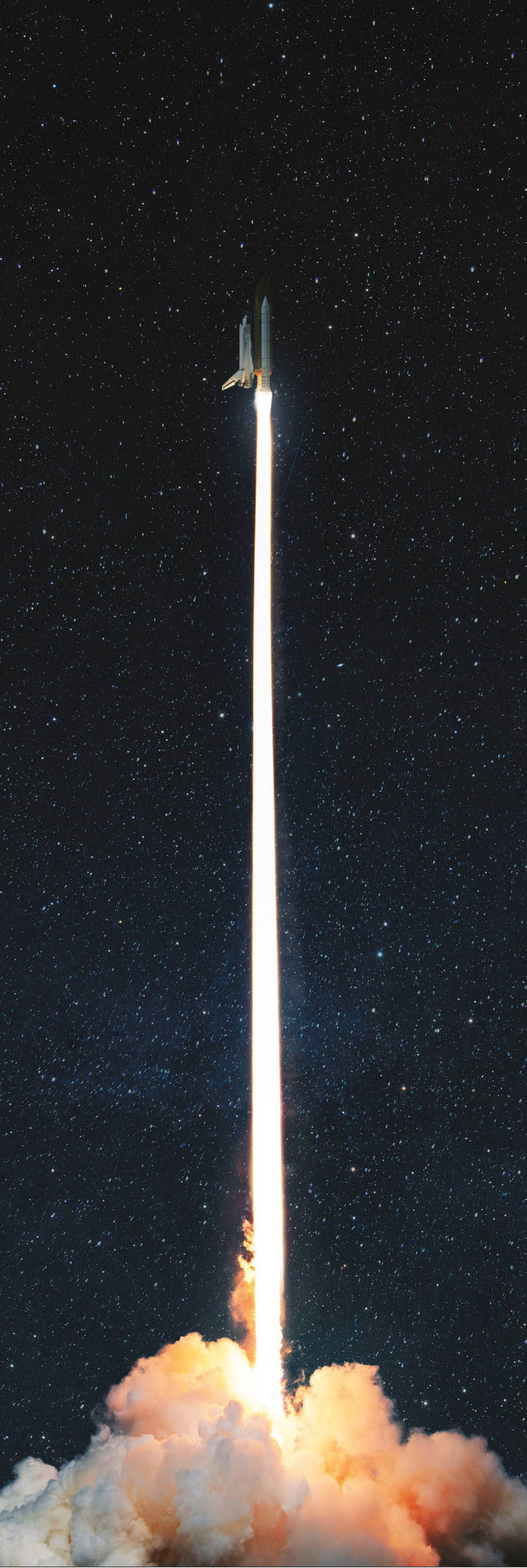 The company also developed the separation nuts used in the Space Shuttle program. Known as “sep nuts,” these devices tethered the shuttle to the ground just before liftoff while it was generating around 7 million pounds of thrust. Overall, says Scaven, the space shuttle used more than 100 pyrotechnic mechanisms made by PacSci EMC, each essential to its flight.
Scaven, an incoming member of the Rossin College Dean’s Advisory Council, has become the go-to alumni expert whenever rocket-related topics come up on Lehigh’s campus. In 2023, he started advising upper-level students involved in capstone project teams, and the following year, he remotely co-taught a class on the history of explosives. As part of the curriculum, he recommended that students study the Takata airbag scandal, where millions of vehicles were recalled after airbags deployed with too much force, sometimes sending metal shrapnel into drivers and passengers. The defect, linked to an unstable ammonium nitrate-based propellant system, caused multiple deaths and injuries.
“The Takata airbag recall is especially unfortunate because it exposed a lack of corporate ethics,” he says. “Production schedule deadlines were prioritized over safety and quality concerns, and that decision ultimately led to the company’s downfall.”
Scaven knew some of the people involved in this case, and at the end of the semester, he visited the class to share more about this now infamous recall.
“You had a lifesaving device that ended up killing people,” says Scaven. “That fact cannot be reconciled. Takata is an important case study because it helps students understand that when you’re making a device like that, the most important thing you can do is speak up if something doesn’t seem right. Yes, there are real-world financial implications, but in the end, people may be harmed or killed if you work in a culture where that communication doesn’t happen.”
So while he’s more than happy to “geek out,” as he puts it, on all the technical aspects of engineering with students, what Scaven really wants them to understand is the importance of teamwork. How they will have to work—and communicate—with people across multiple disciplines to achieve a business's overall objectives and goals.
“We win as a team,” he says. “It’s those relationships between all team members that enable us as engineers to deliver the best products and services to surpass our customers’ expectations. I really enjoy discussing that holistic approach with students.”
Scaven also stresses that throughout his career, he has rarely been just a chemical engineer. He’s had to apply mechanical and electrical engineering, materials science, systems engineering, and management skills. Aerospace engineering, he tells students, is a little bit of everything. That’s one reason he’s excited about Lehigh’s MS-AERO program and its focus on real-world projects guided by industry experts.
“These students are going to learn that the field isn’t just about doing calculations involving distillation columns,” he says. “They are going to see how everything comes together to deliver a product to a customer that works in the field as it was designed on paper.”
He knows that when that occurs, the outcome can be life-changing: people walk away from crashes and pilots go home to their families.
“I care deeply about people in motion not getting hurt,” he says. “We have an obligation as engineers to design systems that keep people safe. Looking back over my career, I’m most proud of all the things we’ve made as a team that have helped save lives.”