
IT’S BOOM TIMES FOR THE AEROSPACE INDUSTRY.
Once driven primarily by exploration, aerospace now underpins critical economic infrastructure and national security. Private companies like SpaceX and Blue Origin have disrupted the industry with reusable rockets, enormous satellite constellations, and platforms that could one day support a space-based economy. Government agencies are racing to build resilience and deterrence into their tracking and communications satellites, while adopting faster, more agile, and more scalable approaches to developing air and space systems.
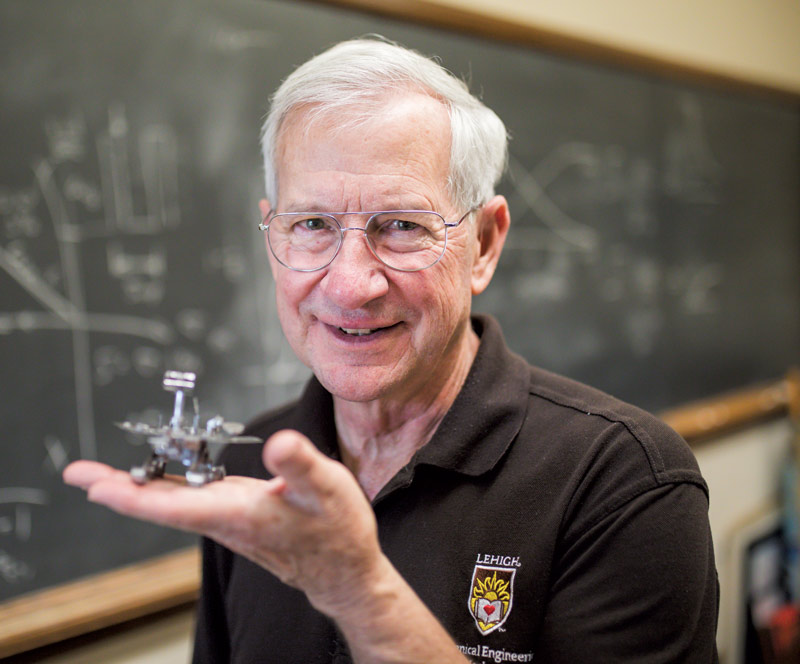 “There’s just so much happening in both the commercial and government sectors, that the demand for engineers is extremely high,” says Terry Hart ’68 H’88 (pictured), a former NASA astronaut and teaching full professor in the Department of Mechanical Engineering and Mechanics (MEM). “With our new MS-AERO program, Lehigh can accelerate the path for students to enter careers where that demand is most acute.”
MS-AERO, a 30-credit Master of Science in Aerospace and Space Systems Engineering designed for engineers and others looking to begin or advance their careers, officially launched in the Fall 2025 semester with 12 students. The program is a natural extension of two converging trajectories at the university, says Arindam Banerjee, Paul B. Reinhold Professor and MEM chair: the increasing popularity of the department’s minor in aerospace engineering, and decades of faculty research contributions spanning aerospace engineering and space-relevant technologies.
“Modern aerospace problems are systems problems, not single-discipline ones,” says Banerjee. “The MS-AERO program offers a systems-level curriculum that reflects how aerospace is practiced today, with formal pathways connecting coursework, labs, and project work. It equips engineers to meet growing technical complexity, workforce shortages, and the strategic demands of a transforming aerospace and space sector—one that’s increasingly central to the nation’s scientific, economic, and national security priorities.”
In addition to taking eight new graduate courses in aerospace engineering, students can choose from more than 40 technical electives across six departments in the Rossin College and Lehigh’s College of Arts and Sciences.
“Because aerospace is so interdisciplinary, we are drawing from our faculty across Lehigh to prepare our students for careers in the aerospace industry,” says Hart. “For students who would prefer to focus on a particular area of aerospace engineering, we’re also planning to offer 12-credit certificates in one of three technical concentrations, as well as a 12-credit certificate in aerospace project management, jointly with the College of Business. These concentrations will give our students a competitive edge, especially if they’re looking to go into research and development.”
For example, a mid-career engineer pursuing a master’s degree could also earn a certificate in aerospace project management or in one of the three technical areas. For those who don’t have time to complete the full master’s program, a 12-credit certificate can be pursued independently. Although students can complete MS-AERO in a single full year, the program is intentionally designed for working professionals. All classes are offered remotely and asynchronously, and many are taught by full-time industry professionals—some of whom are Lehigh alumni.
“They’re all subject matter experts, which is a major advantage for students,” Hart says. “Our visiting lecturers are teaching in an experiential way that’s bringing students right up to the state of the art in the industry.”
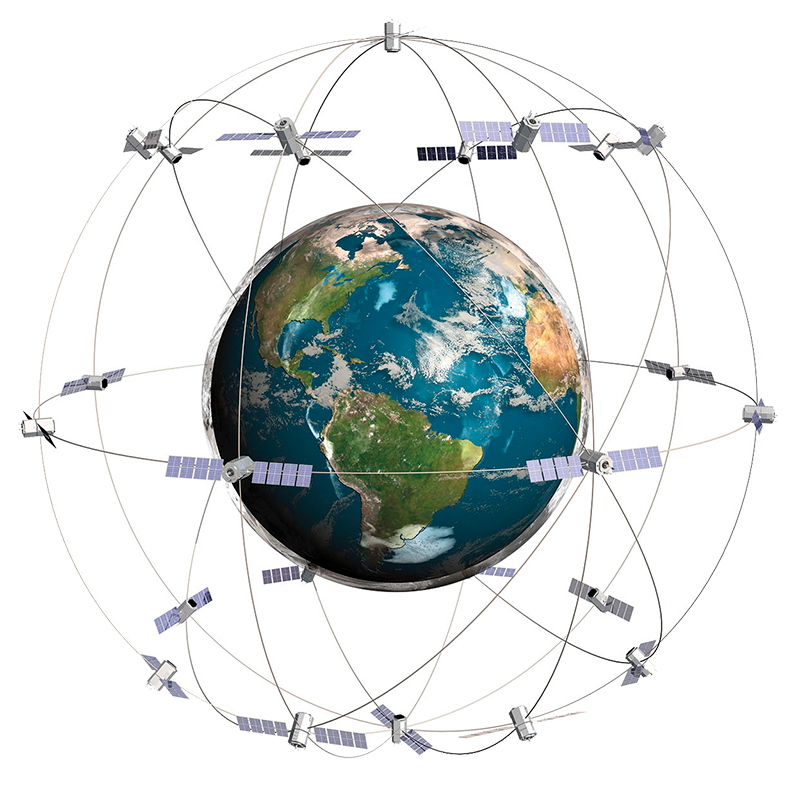 At the heart of the MS-AERO model is a focus on project-based learning coupled with individualized mentoring by industry experts. “The theme throughout all of my classes is application,” says Chris Schulz, a space systems consultant who teaches the Data Fusion and Introduction to Aerospace Engineering courses.
Schulz has an expansive resumé: he has served as director of hypersonic research at the Air Force Flight Test Center at Edwards Air Force Base, California; as a flight and weapons systems architect at Draper Laboratory; and as a senior director at Blue Origin. He says he sees a recurring deficit among new recruits to the aerospace industry.
“We tend to see high-performing young graduates with an incredible depth of theoretical knowledge but little hands-on experience,” he says. “I structure my classes to bridge that gap and simulate the experiences they’ll have in industry. My students need to actually make something.”
For the introductory course, Schulz tasked his students with simulating the 188th flight of the X-15 program, which set the world record in 1967 for the fastest speed ever—Mach 6.7—for a crewed aircraft. But first, they had to work through the math of flight dynamics, or the forces that act on an object to make it move.
“A lot of them reacted with, ‘What the heck—another transformation matrix? For real?’” says Schulz. “But then they got to see how those equations went into simulating a flight profile—how the vehicle and engine would perform, and the sequence of events required to meet the mission objectives. These are the same simulations used in industry. The students not only built the model, but also completed every step required for a flight test demonstration. The project directly connects academic theory to a real-world event and mirrors the kind of work they might do in the future.”
As a doctoral student working under Hart, Andrew Abraham MS’11 PhD’14 studied how spacecraft can travel efficiently between Earth and the Moon. Now the senior space traffic coordination specialist at The Aerospace Corporation in Virginia taps into his years of industry experience to guide student projects at Lehigh.
Students in his Advanced Astrodynamics class design a mission that provides regular deliverables to a hypothetical client. One student, for example, proposed a constellation of satellites for forest fire detection. Abraham helped him work through the trade-offs between early detection and cost.
“We worked through questions like: how big does the fire have to be in order to reach the threshold of detection, and how many satellites do you need to place in orbit in order to achieve that performance?” says Abraham. “Students have to balance performance against cost, making deliberate trade-offs that shape the final design. Drawing on my experience, I can guide them toward the aspects of the project they’re most interested in, while helping shape their path as engineers.”
If a student is primarily interested in achieving high fidelity with their images, for example, Abraham helps them with orbit propagation to predict the path of the satellites. If the student instead wants to develop the business case for their project, Abraham leads them through optimization problems that enable them to present a range of solutions to a potential client.
“These are absolutely the types of skills that are used in industry,” he says. “And students develop them through these projects.”
Thanks to the project-based coursework and small class sizes, MS-AERO students have invaluable access to their instructors, who also serve as mentors. Schulz says that students frequently come to him with questions about how and where their skills and interests might fit within the aerospace industry.
“We often discuss—this is what you’ve studied, but what do you actually like to do? And then I end up telling them about who does what in industry and where they do it,” he says. “That conversation gives them the opportunity to vector toward a meaningful position.”
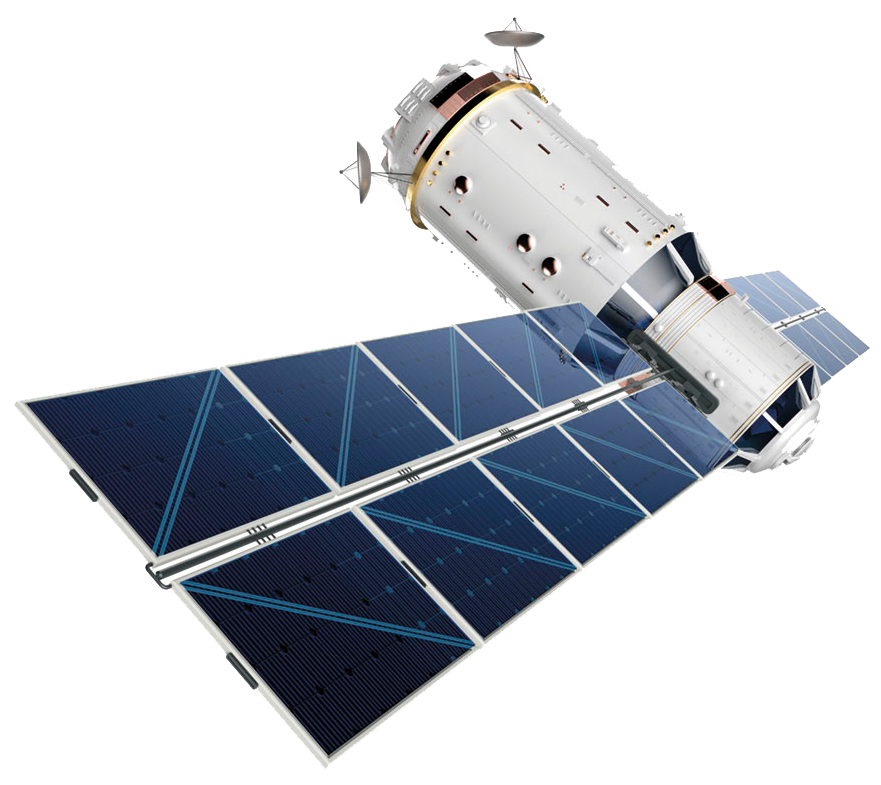 Identifying that alignment early on is key. Without making that connection, Schulz says, students risk landing jobs that ultimately aren’t a good match, wasting valuable time and formative experiences.
“It’s a disservice to the company, and to the employee,” he says. “I’ve seen recent graduates spend two years going through the paces of a job so they could find out where they really wanted to go, and it puts them way behind. This program can guide students and connect them with industry contacts to apply for positions that align with their interests. It’s a win-win for everybody.”
For companies, the benefits extend beyond hiring well-trained employees to include opportunities for scientific collaboration. “Our lecturers could bring ideas to the students stemming from their own companies’ needs, which could spawn research projects,” says Hart. “Or companies may hire our undergraduates, then send the student back for a master’s degree to work on a specific topic area. These relationships create the potential to build a strong research portfolio within the program.”
While professors can help their students connect with companies and secure interviews, internships, or even jobs (several have already received offers), those who choose to continue in academia also benefit from their instructors’ extensive backgrounds.
“This program is an excellent launch point into highly specialized—and highly competitive—graduate programs,” says Abraham. “Because of my background and connections, I can help guide students toward the best ones. Our mentorship is not limited to industry work. It can extend deep into academia as well.”
For those who do opt for the industry route, however, the program’s project-based training will give them a significant edge, he says. Wherever they land, students will almost immediately be confronted with the company’s goals—and its problems.
“Our students are going to be able to speak to those challenges in an informed way,” he says. “They’ll already be partway up the learning curve, and that’s just going to accelerate their ability to progress in their career.”
That elevated insight will be evident in the next generation of systems engineers thanks to the program’s collaboration with Lehigh’s College of Business. It’s rare, says Schulz, for new graduates to enter industry with experience in systems-level thinking—designing, integrating, and managing complex systems so all their parts work together to achieve a goal. “But at some point in their careers, these engineers will be responsible for running projects and making sure they’re completed on time and on budget,” he says. The 12-credit certificate in aerospace project management, offered in partnership with Lehigh Business, is designed to meet that need.
“We need systems engineers because the world is, generally speaking, becoming more complex,” says Karl Fetzer ’07, staff research scientist at Siemens Research and Development.
Fetzer, who teaches the Guidance, Navigation and Control of Aerospace Vehicles course, says the role of systems engineer is typically learned on the job. Someone might start out as a propulsion analyst or avionics hardware specialist, and as they work with other teams, they develop the cross-disciplinary knowledge that enables them to manage and coordinate the various groups toward a common objective.
“Every product is integrating systems of very different types,” he says. “If you had told an engineer who designed refrigerators in the 1980s that they needed to interact with a software team and a computer hardware team, they probably would have said, ‘Why is there a computer in my refrigerator?’ But now, every industry is integrated, so systems engineering is increasingly important. This curriculum lends itself to helping people along that path.”
Fetzer describes his own course as understanding the systems that tell aircraft and spacecraft where they are in space, where they should be, and how to get there. “The vehicle has to answer all three in order to move safely from point to point,” he says.
 For their project, Fetzer’s students choose an aerospace vehicle—such as the Hubble Telescope—and from the perspective of guidance, navigation, and control, analyze and design how those systems work to enable its safe travel. “I want students to be able to appreciate that if they’re working with a GN&C engineer, this is what goes into the tasks they’re going to be doing,” he says.
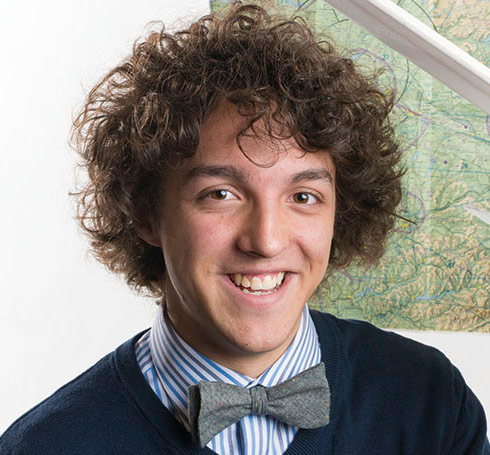
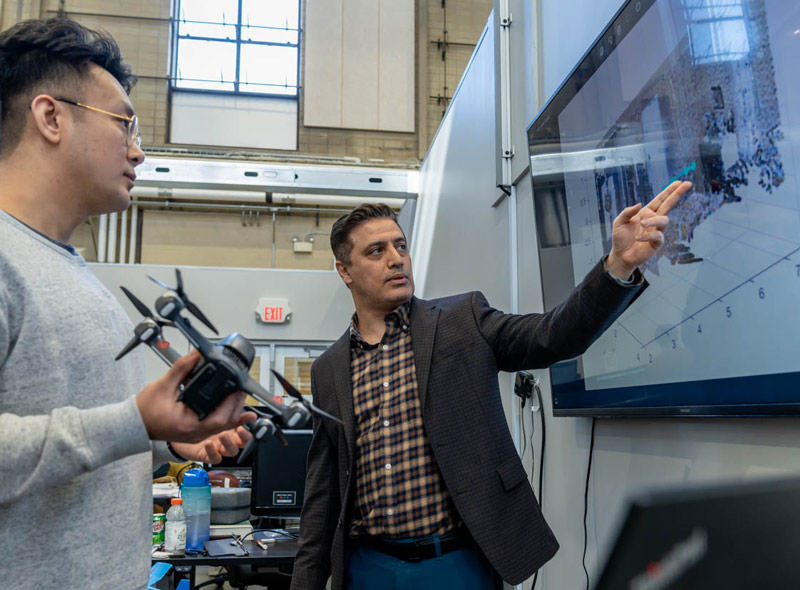
Looking ahead, Fetzer sees abundant opportunities for collaboration across campus, in particular with MEM professor Nader Motee (pictured), who directs the Autonomous and Intelligent Robotics (AIR) Lab. Motee’s group conducts research into guidance, navigation, and control systems in aerial robots.
Fetzer’s students could team up with Motee’s to conduct research, and Motee’s research could inform his students’ projects. “It would be great to be able to give and take with labs like his across campus,” says Fetzer. “There are exciting real-world applications coming from those research projects that we could integrate into these courses.”
Schulz believes the research opportunities within the program could also serve as a pathway for students to launch new businesses and startups. “We absolutely have the caliber of students who have the capability, character, and enthusiasm to take on these types of challenges,” he says.
It’s a perspective grounded in experience. Students in the MS-AERO program are now recipients of the expertise and insight that come only from those working in an ever-changing technology landscape with never-ending deadlines. It’s a rare opportunity—for both students and instructors.
“As someone who has been in the industry for a long time, I feel a responsibility to pass on the lessons I’ve learned that helped further my own career,” says Schulz. “Our students want to develop areas within the aerospace industry that will, frankly, help us grow as a human race. It’s not easy working full time and teaching, but helping students achieve their goals makes it all worthwhile.”