
There was a moment in the Fall 2025 semester when Christina Haden could almost see the transformation happening in the students around her. They were leaving the classroom after their first day in Design and Making Foundations, the inaugural module of Lehigh’s First Year Rossin Engineering (FYRE) program.
In their hands, they held placards they had created after learning how to solder electrical components and use a laser printer to engrave and cut their names.
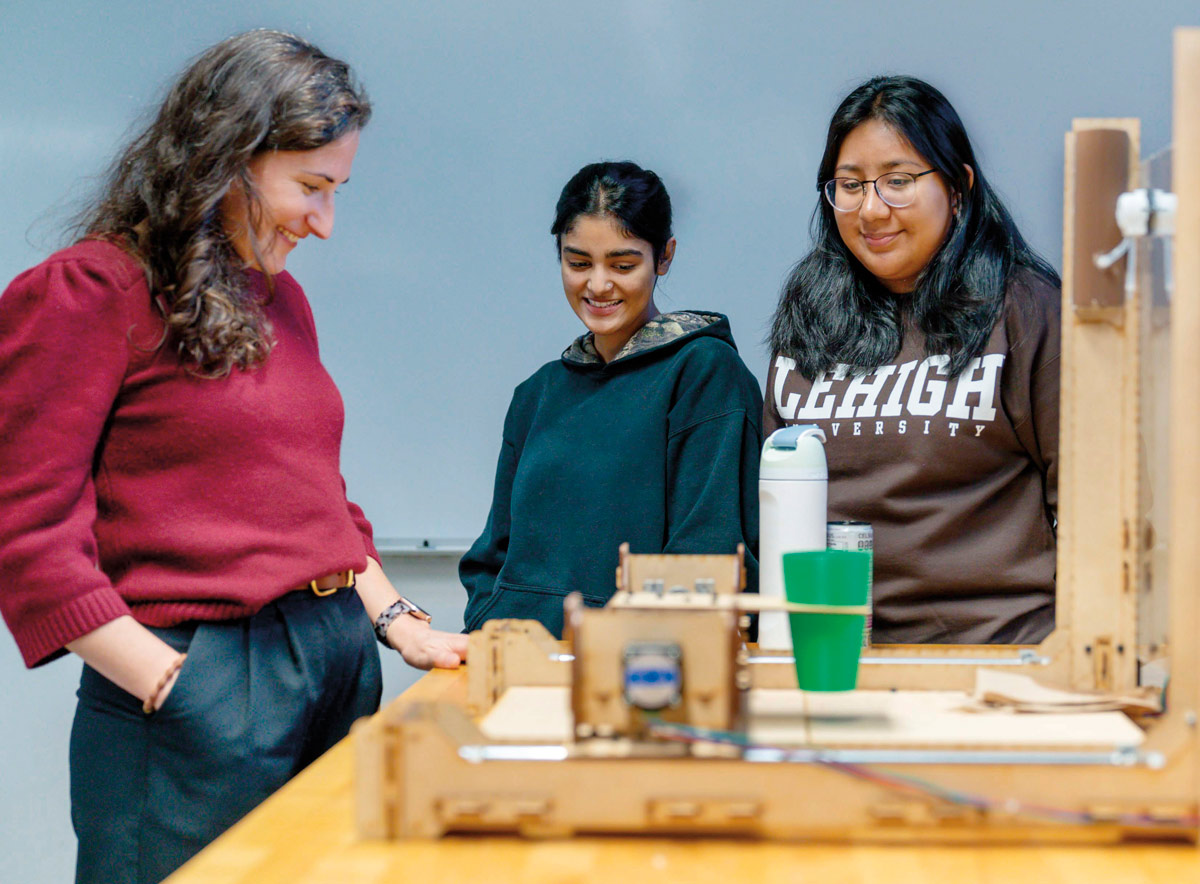 “I could see the excitement and sense of belonging in their eyes,” says Haden, a teaching associate professor of mechanical engineering and mechanics and the director of FYRE. “They were recognizing the resources and tools they had at their fingertips already, from day one. They had been high schoolers just moments before that class, and they were now college students with meaningful, hands-on experience in what it means to be an engineer.”
FYRE is an innovative approach to guiding incoming students toward a meaningful and fulfilling future in engineering. Last fall, the program, which is still in the pilot phase, consisted of two 7-week, project-based modules that introduced students to a range of engineering disciplines and professional tools. The novelty and promise of such an approach instantly attracted students like Paige De Caro ’29 and Jayden Altamura ’29.
“I liked the idea of a pilot program because it meant they were trying something new, and I was looking forward to having a hands-on experience,” says De Caro, who plans to major in civil and environmental engineering. “When they said we would be working across disciplines, I was excited about that, too, because even though I already knew my major, I wanted to experience all the aspects of engineering that FYRE offered.”
Altamura, who intends to major in mechanical engineering and mechanics, applied for the program as soon as he read the email introducing it. He found the approach intriguing. “I wouldn’t just be learning about engineering,” he says, “I’d be learning how to be an engineer.”
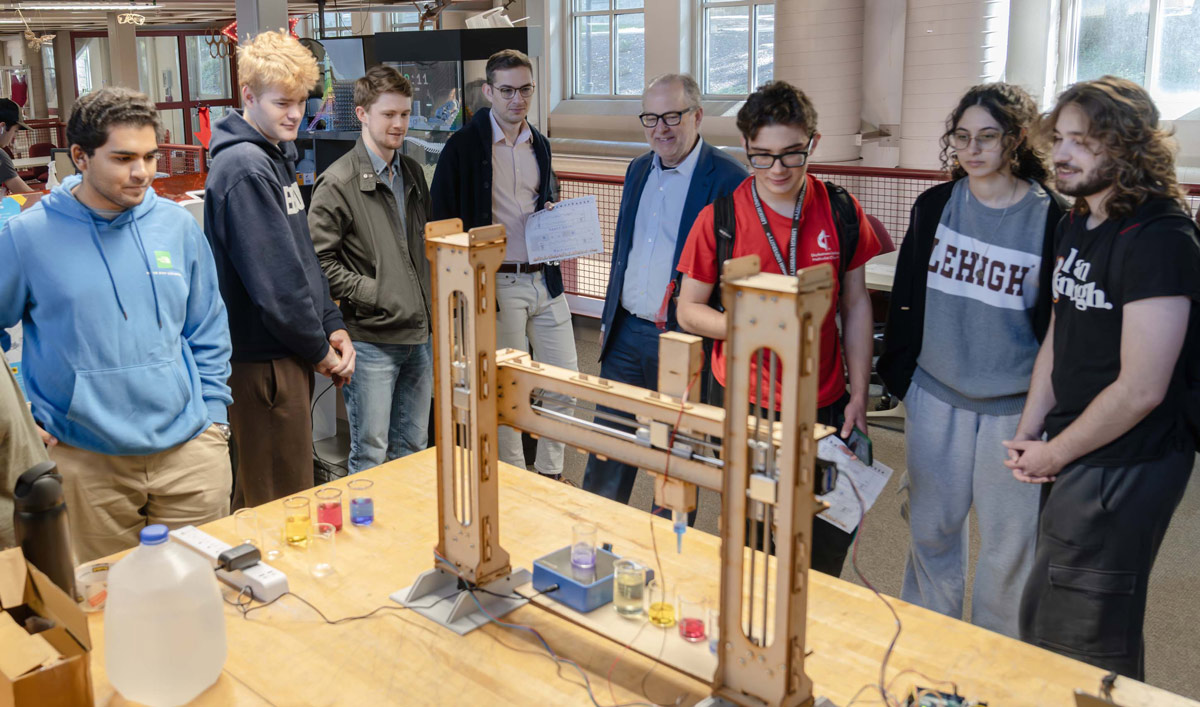
Both students joined 32 of their peers as part of the inaugural FYRE cohort, and as a group, they were immediately steeped in the language of engineering. The Design and Making Foundations module required them to build a functioning machine using 3D printing, laser cutting, Arduino programming, and basic electronics. Working in teams, the students designed, tested, and refined their creations.
“The students had to learn the design language of how you get an idea off a piece of paper, bring it into reality, and then iteratively make it better,” says Haden.
De Caro and Altamura worked together on a four-person team to conceive of and build a prototype of a machine that could help people with limited mobility access items they couldn’t physically reach. The idea came out of brainstorming sessions aimed at identifying a problem they could solve within the module’s timeframe. Altamura felt a personal connection to the project: “My mom had spine surgery a few years back, and she has trouble bending down, so a machine like this could probably help her.”
Building the prototype meant acquiring a range of skills. While De Caro had some woodshop experience, she had never operated a 3D printer or written code. However, the environment encouraged experimentation over perfection.
“The instructors were always telling us, ‘If it doesn’t work, that’s okay,’” she says. “In a way, they want you to fail because they want you to learn. So I didn’t feel pressured, because I knew they were looking for us to understand the process.”
For both students, the most rewarding takeaway was the value of teamwork. “I learned that everyone has something to contribute, and being part of a team isn’t just about the product you’re producing, it’s also about the people you’re working with,” De Caro noted. Altamura echoed the sentiment, noting they found an efficient way to use their different skills.
Beyond technical rigor, FYRE is designed to support the transition to university life. “It’s a holistic approach that allows students to get to know each other, figure out what they are passionate about, and, in the process, learn the importance of belonging,” says Haden.
After the first module, students moved into Energy Foundations, where they gained practical experience with electrochemical cells, Raspberry Pi–powered potentiostats, and constructing coin cell batteries. Joseph Menicucci, who led the module, highlighted the importance of energy storage technologies in future industrial advances.
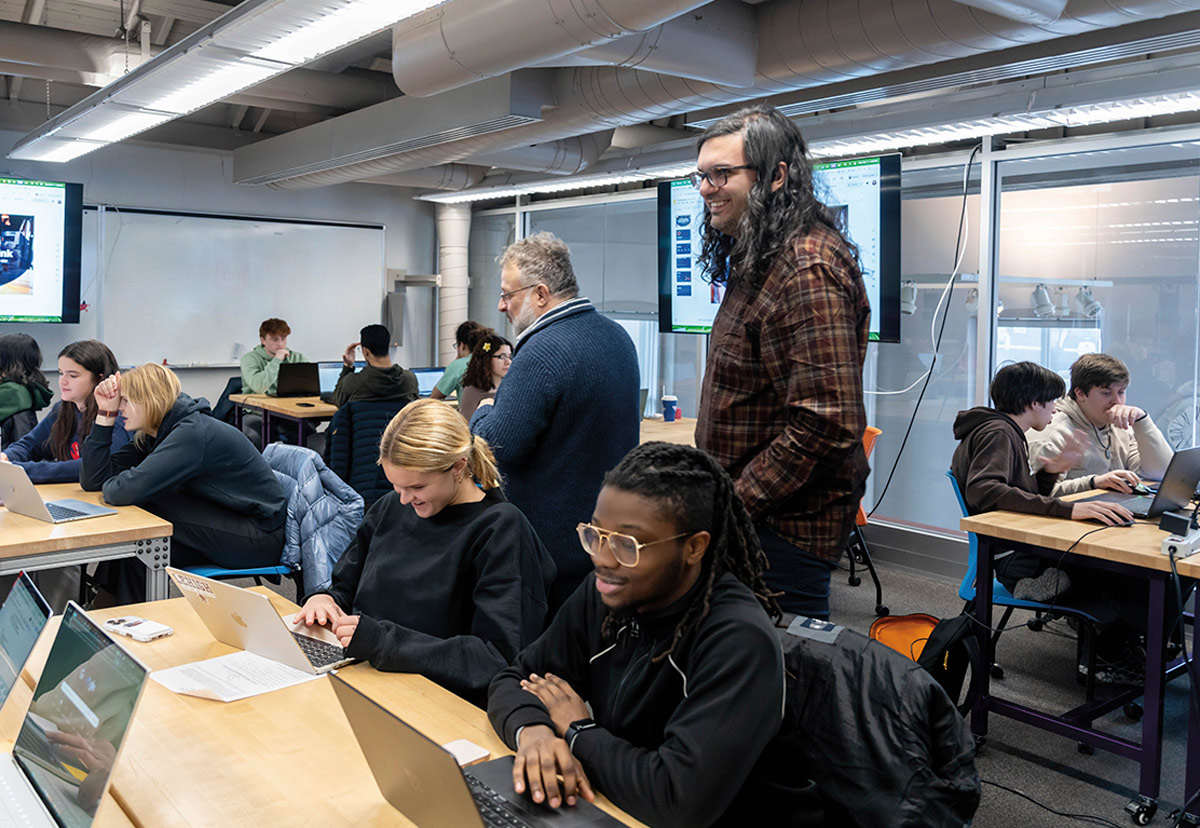 In the Spring 2026 semester, a new group of first-years are test-driving FYRE through Design and Making Foundations and a new seven-week module called AI Foundations. It’s taught jointly by Eric Obeysekare, a teaching assistant professor of computer science and engineering who has a joint appointment with Lehigh’s Office of Creative Inquiry and is the associate director of FYRE, and Charalambos Marangos, an associate teaching professor of industrial and systems engineering. (The AI module was also open to, and attended by, members of the inaugural cohort.) Students are learning the programming language Python and applying those skills toward building chatbots, artificial intelligence agents, embedded systems, and other tools.
“AI, and in particular large language models like ChatGPT, are having a huge impact on education,” says Obeysekare. “It’s easy to think that AI can do anything. But as you build an understanding of how these LLMs actually work, and what they’re able to do well—and what they don’t do well—then you can think more critically about their application.”
Although still in its nascent stages, FYRE is already setting students up with the confidence, skills, and support they need to become tomorrow’s problem solvers. Students like De Caro and Altamura are now proficient in techniques that traditionally weren’t taught until upper-level engineering classes. Neither hesitates when asked if they would recommend the program to other students—“a hundred percent,” says De Caro. It’s the hands-on aspect they appreciate most; the opportunity to make something that does something. Something important.
“It’s been extremely encouraging to hear the students’ feedback,” says Obeysekare. “They’ve already developed the engineering mindset. They’re building real machines that can solve real problems, and at the end of the day, that’s what engineering is.”